by CGS Blog Archive | Oct 21, 2009 | Climate Justice, Global Cooperation
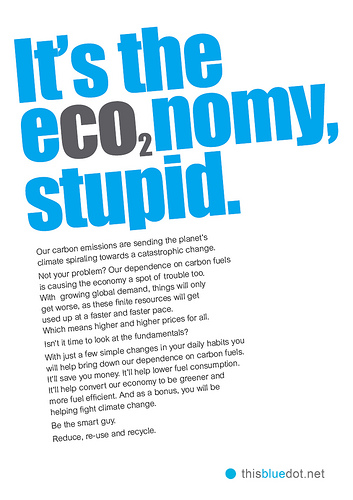
The global community has a moral obligation to reduce its greenhouse gases. Climate change talks in Copenhagen are set to begin in slightly over 46 days. And yet the United States is far from passing any legislation that would truly curb our greenhouse gas emissions below the scientific recommendations of 25-40 percent of 1990 levels. The House passed the American Clean Energy and Security Act of 2009. This bill, also known as the Waxman-Markey bill, proposes to reduce greenhouse gas emissions by only 17 percent of 2005 levels, or in other words: 4 percent of 1990 levels. Additionally, the Boxer-Kerry bill in the U.S. Senate has requested a reduction of 15-20 percent of 2005 levels, only 7% of 1990 levels. Both of these goals, according to the legislation, would be reached via a cap-and-trade program; thus using the all glorious (see: sarcasm) market forces to regulate greenhouse gas emissions. However, those opposed to the bill are now referring to this as “crap-and-trade” Good for them, using the same language as a five year old. This really furthers the debate in our country.
There is a moral imperative to stop the search for bi-partisanship if it does not advance the U.S.’s responsibility to reduce our carbon footprint. In an op-ed written by Senators Graham and Kerry they announced their efforts to find bi-partisan support for climate change legislations. Sen. Lindsey Graham suggested that republicans would be willing to sign a bill if it included drilling, “clean coal” technology, nuclear power, and carbon capture and sequestration. While I personally support nuclear power, there are many things that do not make sense. There have been attempts to find any excuse to drill for oil, and here is another one. How does this advance our carbon reduction and environmental protection? Carbon capture and sequestration is a science that is not completely understood. The earth has a well developed system for regulating itself and converting pollutants, thus we do not know what will happen to our system if we start burying pollutants underground. They have to go somewhere, just because you can’t see them doesn’t make it go away. Additionally, “clean coal” is a minimalist effort and gives the green light to coal-fired plants.
Although some jobs, in particular sectors and constituencies- may be lost, it does not negate our greater responsibility to our general citizenry, and the global environment. The Atlantic Slave trade employed thousands of people, from ship builders, sailors, capturers, traders, auctioneers, and more. However, the United States eventually decided to end slavery because our sense of justice and morality outweighed the fear of job loss. However, we were grossly behind Britain and other European nations in abolishing slavery. Now we look back on our participation and we are ashamed, particularly because we were not the first to abolish the slave trade. I am afraid the same thing will happen here. I am not equating those working in the coal industry-particularly the hard working blue-collar Americans-with slave drivers. I use this example only to illustrate that the time has come for the United States to take a principled stance. We are already grossly behind Europe once again, and just a few generations from now they will look back and ask “what were they thinking? Didn’t they see their own hypocrisy?” We claim to be a world leader yet are continually following in shadows. Everyone’s lives are in danger with as climate change is accelerated. We DO have a moral obligation. The idea that our children will have a better future than we had will not come to fruition if we ignore our environment. They will not have the same bio-diversity, their air will be dirty, their water polluted, their rivers dried, and their cities flooded.
by Komal Hiranandani | Oct 16, 2009 | Climate Justice
“We refuse to accept the argument that the United States cannot lead the world in addressing global climate change.”
This is the kind of support that the climate debate needed from members of Congress as the Kerry-Boxer bill introduced in the Senate battles for time on the heavy legislative agenda. Giving momentum to climate legislation once again, Senator John Kerry (D-MAS) and Senator Lindsey Graham (R- SC) published an op-ed in the New York Times making a strong statement in favor of the U.S. assuming a leadership role in climate change mitigation.
Though they come from opposite sides of the aisle, Senators Kerry and Graham found much common ground as they called for bipartisan support for climate change. They said: “climate change is real and threatens our economy and national security. That is why we are advocating aggressive reductions in our emissions of the carbon gases that cause climate change… We are confident that a legitimate bipartisan effort can put America back in the lead again and can empower our negotiators to sit down at the table in Copenhagen in December and insist that the rest of the world join us in producing a new international agreement on global warming. That way, we will pass on to future generations a strong economy, a clean environment and an energy-independent nation.”
The innumerable harmful effects of climate change do not respect borders or political ideologies- they affect us all. This is why we all have to come together in search of a solution.
Act NOW to support strengthened climate legislation in the U.S.!
by Robert Enholm | Oct 14, 2009 | Climate Justice, Global Cooperation
Ron Brownstein has an interesting article in The Atlantic (October 2009) that describes California’s efforts to create sensible energy regulation and promote green technologies:
http://www.theatlantic.com/doc/200910/california-energy
As the United States and the world attempt to make meaningful progress in addressing climate change and moving toward renewable energy, the ideas underlying California’s energy regulatory system may be ever more important points of reference.
(Full disclosure: In 1976 and 1977, immediately after college, I worked as a staff economist for the California Energy Commission and witnessed the beginnings of the regulatory movement described here.)
Robert A. Enholm
Executive Vice President
Citizens for Global Solutions
by Citizens for Global Solutions | Sep 25, 2009 | Climate Justice, Global Cooperation
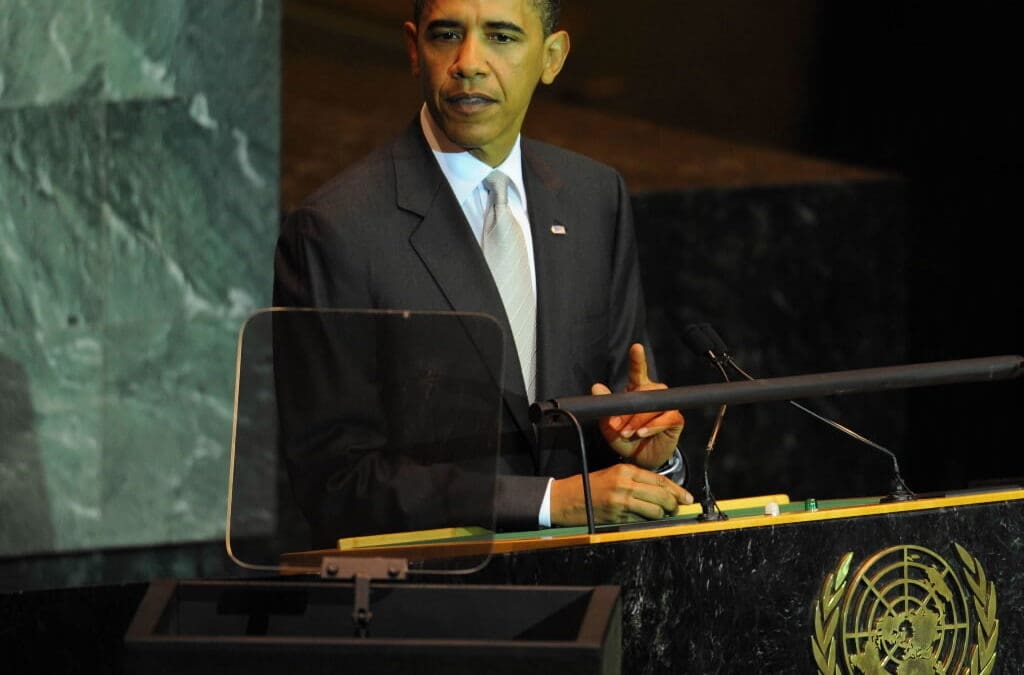
Multilateralism is again the focal point for American foreign policy, in a way that has not been seen in a number of decades. The new U.S. engagement is manifesting itself in both word and deed. President Obama’s whirl-wind tour of multilateralism is a refreshing sight. President Obama started his tour with a speech to the U.N.’s Secretary-General Ban Ki-Moon’s Climate Change Summit. In his remarks, as he repeated in his address to the General Assembly, he stated that the U.S. is ready to address global problems on the global stage. He recognized that, while the U.S. and other Western states have contributed the most to climate change, the least developed States will bear the greatest burdens. He pledged that the U.S. will do more to combat climate change and help mitigate the effects, but reaffirmed that all nations must make legitimate commitments to reverse greenhouse gas emissions. His words were strong and forceful but more importantly his deeds are echoing more forcefully. Domestically the U.S. is making progress to reduce our emissions.
Next, the President spoke to the General Assembly. His speech covered many topics, but emphasized the U.S.’s commitment to engagement and finding comprehensive solutions to global obstacles. He focused on disarmament, peace building, environmental protection, and economic development. However, the U.S. has not only spoken wisely about multilateral policies, the U.S. has taken important steps to ensure cooperation. The U.S. has taken bilateral and unilateral steps to this end. The administration signaled its willingness to sign new treaties with Russia and has unilaterally withdrawn plans to station missile interceptor systems in the Czech Republic and Poland. The following day he chaired the Security Council as he forwarded a new resolution calling on all member states to increase their nuclear non-proliferation regimes, and reinvigorated the IAEA’s role in nuclear arms control.
The multilateralism tour has yet to cease. He is now meeting with the G20 to address climate change initiatives, economic recovery and development. These issues must not be fractionalized/ compartmentalized. The U.S. and political leaders in every state must spend the necessary political capital to ensure that economic growth is also environmentally sustainable.
by Citizens for Global Solutions | Sep 17, 2009 | Climate Justice, Global Cooperation, News
181 of the world’s largest investors – collectively managing over $13 trillion in assets – have signed a U.N.- backed statement for concrete action against climate change.
The statement calls for a new global climate treaty to reduce pollution, catalyze global funding for energy-efficient and low-carbon technologies and to include a target for emissions reductions of between 50 and 85 per cent of 1990 levels by 2050.
It also appeals for action to reduce deforestation and support, as well as for support for adaptation measures.
The move comes ahead of this December’s UN talks in Copenhagen, Denmark, where nations are expected to create a new pact to curb greenhouse gas emissions.
Rob Tacon, Chair of the UN Environment Programme’s Financial Initiative said, “Climate change has quite rightly been framed as the greatest market failure ever…The magnitude of the negative economic impacts and the potential of climate change to bankrupt our global financial system, as well as to threaten the planet’s life-supporting natural ecosystems, are calling.”
by Citizens for Global Solutions | Sep 9, 2009 | Climate Justice, Global Cooperation
The Partnership for a New America, a bipartisan group of 32 former secretaries of State, national security advisers, senators, military leaders and senior foreign policy officials, is urging Congress to act on climate change.
The group recently released a statement calling for Congress to do just that, as well as reduce the country’s dependence on petroleum and cut greenhouse gas emissions.
One of the signatories, Frank Wisner (former Ambassador to India, Philippines, Egypt and Zambia), said that climate change affects water and food supplies, contributes to mass migration and refugee crises, and destabilizes weak governments. “”We must take this issue on as a matter of foreign policy and exercise leadership”, he said.
The statement does not specifically endorse the Waxman-Markey Bill which passed the House in late June and is under consideration by the Senate, but it does urge the Senate to act soon and create a bipartisan plan to address the crisis. Another one of the signatories, R. James Woolsey (CIA director 1993-1995) criticized the Waxman-Markey Bill for not doing enough to reduce U.S. dependence on oil. “It’s not a question of imported oil versus domestic oil — it’s oil,” Woolsey said. “We need to destroy its monopoly on transportation.”