Originally published on the CGS blog on October 11, 2007.
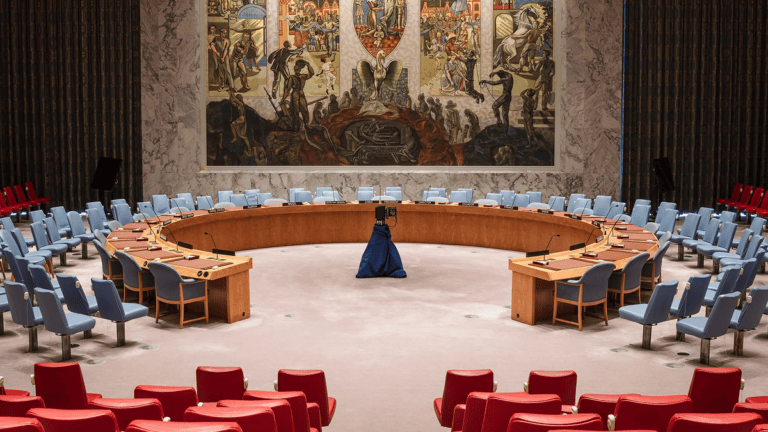
The relationship between the United States and the U.N. has often been compared to a marriage. This October will be their 63rd anniversary. Like most marriages there are moments when life is wonderful, and moments when it is not. As in any relationship, we need to find common ground and rules we can all live by. We need to sit around the table and iron out the family’s problems.
 Yesterday I had the pleasure of moderating a briefing held in the Capitol on U.S. policy for the 62nd United Nations General Assembly. The program featured Kristen Silverberg, the Assistant Secretary of State for International Organizations. This is one in a series of briefings and discussions sponsored by the United Nations Associations’ Council of Organizations. The Council is a coalition of over 100 nongovernmental organizations and I serve as a member of its Washington DC executive committee.
I have often been at odds with the administration’s policies regarding the U.N., but I had no complaints regarding Secretary Silverberg’s presentation. She had recently returned from New York where she attended the opening sessions of the 62nd General Assembly. If you get a second you can look through her blog posts on the recently created DipNote (when I asked Secretary Silverberg if there had been internal negotiations at State about
the blog’s name, she said she wished that there had been). During a 4 day marathon she was part of a team engaged in issues ranging from the U.N.’s role in Iraq, Afghanistan, progress on bilateral middle east talks, climate change, Burma, North Korea, a Round table on Democracy, Darfur, HIV AIDs, a new Security Council sanctions resolution on Iran.
Her presentation was a quick snapshot of current U.S. efforts at the U.N. In her discussion of Burma and Darfur Silverberg noted that:
“…as we survey the great threats to global peace and stability, we find more and more proof of Shakespeare’s lament that ‘when sorrows come, they come not single spies but in battalions.’
The UN is well-positioned to confront these battalions of sorrows and the tyrants who lead them. Its vast organization includes not only expert bodies on health and development, but on elections, anti-corruption, economic reform, and other issues critical to good governance. Furthermore, to many nations, the UN has special legitimacy and moral authority to intervene in support of political and economic reform. We need, therefore, a UN prepared to advance democratic reform and good governance.”
This is a refreshing change from the anti-U.N. comments that used we regularly used to hear from former U.N. Ambassador John Bolton.
On the peacekeeping front Silverberg said:
In 2005, our annual assessment for UN peacekeeping was $1.26 billion. In 2008, we anticipate assessment of over $2.4 billion including over $1 billion for Sudan alone.
During the Q & A session I asked Silverberg how the FY09 peacekeeping request was looking, noting the huge shortfall the U.S. has in keeping up with its peacekeeping dues. She noted how difficult it was to budget for peacekeeping missions, considering their ad hoc nature, but stressed the administration’s commitment to paying our fair share, noting how difficult it is for the U.S. to ask other nations to contribute peacekeepers when we don’t pay our all of our dues. Hopefully the number crunchers at OMB will agree with her assessment.
I also asked about the administration’s position on the Coburn amendment to the Senate Foreign Ops bill, which would withhold funds to the U.N. and its programs and specialized agencies unless the Secretary of State could certify that they are fully and publicly transparent and have posted on the web all contract, grants, audits, budgets and progress reports for the 2007 fiscal year. Silverberg replied that while the administration supports the intent behind the amendment (its hard to argue with transparency) it paints with too broad a brush. Not only would it apply to the UN Secretariat, but to all the funds and programs. That means that it could cut off funding to important funds and programs like UNICEF, the World Food Program, and a number of peacekeeping operations in places like Lebanon and Darfur. The bottom line is that they have concerns about achievability and scope of the Coburn amendment. I couldn’t agree more.
Based on this conversation, I’d say the U.S. / U.N. marriage is in better condition than it has been in a very long time.
And speaking of marriages according to the Washington Post , congratulations are in order for Secretary Silverberg’s recent engagement. So Secretary Silverberg, congratulations and thank you for the good work that you are doing.
Don Kraus