
Originally published on the CGS blog on July 10, 2013.
U.S. relations with Latin America have not always been exemplary, but climate change is an issue that presents an opportunity for the U.S. to cooperate with its southern neighbors and to provide the leadership that such a global threat requires.
According to the Pew Research Center data cited in Harrison’s blog, Latin America as a whole is a region very concerned with climate change. In each of the seven Latin American countries polled, climate change was the most widely recognized threat. Sixty-five percent of Latin Americans identify climate change as a threat to their respective countries, compared to 40 percent of people in the United States. In Brazil the percentage is as high as 76, and Argentina is not far behind at 71 percent. Furthermore, not a single Latin American country reported numbers below 50 percent. Even in the oil-rich country of Venezuela, 53 percent of the public recognizes climate change as a threat. This is significant considering that oil-exporting countries generally resist the implications of climate change.
A 2012 study by the World Bank shows that Latin America is at greater risk to the dangers of climate change than most of the world. To make matters worse, many regions within Latin America have insufficient capability to cope with these potentially devastating effects of climate change.
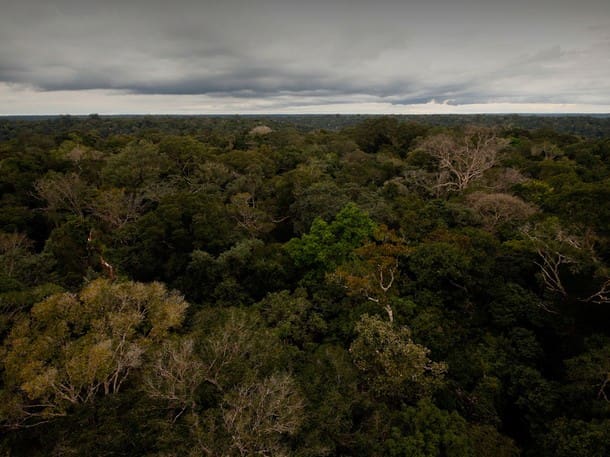
The Amazon rainforest, one of the most delicate regions of Latin America, is already experiencing negative effects from climate change. The indigenous peoples who depend on the rainforest are also among the most vulnerable populations in the world, according to a 2010 World Bank study. Climate change in the Amazon not only affects Brazil’s population, but also has a far reaching impact on many other parts of Latin America, as explained by Amazon Watch:
“The Amazon Basin’s hydrological system plays a critical function in regulating the global and regional climate…Among the regions directly linked to the Amazon by a complex weather system is the Rio de la Plata basin of southeastern South America, one of the most important agricultural zones on the planet.”
The success of the region’s agriculture rests largely on the conditions in the Amazon. Environmental economists S. Niggol Seo and Robert Mendelsohn, through a project with the World Bank, found that climate change could lead to as much as a 62 percent loss in farm earnings in Latin America, with the Amazon and Equatorial regions likely losing the most. Given this information, it is no surprise that Brazil and Argentina reported the highest percentages of people who recognize climate change as a threat.
As the Obama Administration turns its focus toward domestic policies on climate change, it should also put climate change on its international agenda. At the end of May, Vice President Biden traveled to Rio de Janeiro as part of the effort to strengthen U.S.-Brazil relations. He spoke in Rio about a “new era of relations” between the U.S. and Brazil, as well as Latin America more generally, but the focus was on increasing economic ties. Not once was the subject of climate change even mentioned, let alone given the attention it deserves.
With 76 percent of Brazilians and 65 percent of Latin Americans concerned about climate change, it would truly signal a “new era of relations” between the U.S. and Latin America if the Administration were to demonstrate their own concern for what is taking place in the Western Hemisphere by taking the lead in multilateral climate change initiatives. This really is an opportunity that I can only hope the Obama Administration will consider as important as the economic opportunities it is currently pursuing in Brazil and Latin America.


