by Don Kraus | Mar 23, 2009 | Global Cooperation, World Federation
The name of our organization, “Citizens for Global Solutions” has two concepts built into it: “Citizens” and “Global Solutions.” We put a lot of energy into thinking about global solutions. But today I want you to spend some time thinking about the first term, ‘Citizens’. We are gathered here today as citizens of states from across the nation: from California to Maine. And we are here as proud citizens of the United States of America. (It’s nice to be proud again.) But we are also here as global citizens.
The very definition of citizenship contains the concepts of loyalty and protection. We are loyal to a clan, a state, a nation, and for us the world – and in return for our loyalty we expect that by banding together and working within a common set of rules we will be able to make ourselves and our families more secure. But we are still working all this out at the global level. From our economy, to weapons of mass destruction, pandemics, genocide, to the very environment we exist in – we are not there yet. We are still exploring what the rules are and how we can work together. But we know that it is imperative that we accomplish this task. We are global citizens in a time of turmoil.
Moises Naim, the editor of Foreign Policy magazine said, “The gap between the need for effective collective action at the global level and the ability of the international community to satisfy that need is the most dangerous deficit facing humanity.”
Today, we’re going to concentrate on that deficit, our goals for the coming year to address it, and strategies for achieving them. We’ll meet with experts, representatives from other organizations that are working on the same goals, hear what they’re planning to do, and see how we can join our efforts together to increase our effectiveness. This morning, you can choose between three panels; one will examine the next steps we should take towards peace, another will discuss ways to promote a healthy environment and sustainable development, and the third will look at how to stop mass atrocities and bring those suspected of masterminding them to justice. You’ll find more information on them in our program, as well as information on the speakers who will be participating.
After that, we’ll take a break for lunch and also take a few minutes to hear from the winners of our 2008 Multimedia contest, which focused on the crisis in Darfur. Then it’s off to the afternoon sessions where we’ll look at the pros and cons of establishing a U.N. Parliamentary Assembly , and you’ll be able to choose between two more panels; one will look at how to get more people involved in our work while the second panel will talk about ways to increase U.S. support for a variety of international treaties, including the CEDAW, the ICC treaty and, of course, the Law of the Sea .
These treaties are all awaiting ratification by the U.S. Congress, and they all demonstrate exactly what Citizens for Global Solutions stands for — a commitment to work with other nations in solving our problems. Last year, then- presidential candidate Obama told a crowd in Europe, “the burdens of Global Citizenship bind us together.””
We know that many of our problems cannot be solved by any one nation alone. We must work with international organizations, like the United Nations, to find solutions that are good for all countries – not just one. When a parent in one country pollutes the air, a child in another country breathes it. When one country becomes embroiled in political unrest, the terrorism and criminal activities spawned there will soon spread abroad.
Recently veteran U.S. diplomat & Harvard professor Jonathan Moore said, “We are so tightly and dangerously tied to one another across the globe that it would turn out to be suicide to advance one’s own survival at the expense of others.”
Global citizens know this — that the only way to protect ourselves, our families and our country is by making other countries safe and prosperous.
Global citizens know that helping less-developed countries establish better educational systems, fairer and more responsive governments and a means for those who are wronged to obtain justice provides security for us here in the U.S. It also means that we feel an obligation for our country to settle disputes with other nations as equals, by peaceful means, rather than by force of arms.
But simply knowing that nations need to work together is not enough. We have to work to ensure that they do. Too many governments in the world decide that the political cost of tackling long-term problems is too high, so they ignore them. Thus, our glaciers and ice caps continue melting, our nuclear stockpiles remain high, and atrocities against vulnerable people continue to occur — all because of a lack of concerted global action.
Last weekend, international financial leaders and bankers met in England to try to craft a solution to the global financial crisis, but they were unable to reach an agreement. Each faction demanded that the others do more; each felt that it was already shouldering more than its share of the burden. Without an agreement, each faction will go off in different directions with conflicting policies and the crisis will be solved erratically and slowly.
While the lack of concerted global action could prevent us from effectively solving the global economic problems, the preoccupation on the crisis will make it hard for the Obama administration to work on advancing longer-term goals. In the heat of solving today’s problems, they will find it hard to put systems into place that will create a better world — for all of us — in the long-term. It’s up to us to make sure that doesn’t happen.
We can do that by following the advice President Franklin Roosevelt reportedly gave a group of activists who wanted him to persuade the country to take a particular action. He reportedly listened carefully, nodded respectfully and then replied: “I agree with you and I want to do it. Now, it’s up to you to make me do it.” In other words, he was telling them that it was up to them to go out and generate the political support needed for their cause.
President Obama has made it clear that he wants to launch a new era of international cooperation, but it’s up to us generate the political will for that to happen. Mindless cheerleading will not be sufficient. As Roosevelt understood, politics are made up of interlocking interests and constituencies that have to be brought to bear on certain goals. And that is why we’re here this weekend — to establish our goals and to figure out which interests and constituencies can help us achieve them. Then we will have to develop strategies on how to bring these groups together in support of our common goals. This is what we’ll be looking to achieve over the next couple of days. I look forward to working with you on this during this conference and in the months to come.
by Abigail Long | Mar 4, 2009 | Global Justice, World Federation
I first became active in the World Federalist Association, predecessor to Citizens for Global Solutions, in 1983, when I lived in the Boston area. One of the objectives on our radar screen at that time was the creation of an International Criminal Court, but at the time it seemed almost as close to science fiction as would have been a full-fledged world federation. One of the global circumstances we Federalists deplored was the almost complete lack of accountability for crimes against humanity committed outside of responsible national jurisdictions. Yet there seemed virtually no interest anywhere in creating institutions to deal with this problem.
And yet, by the late eighties, a consortium of Caribbean countries, supported by Federalists around the world, introduced the idea of an International Criminal Court in the General Assembly. And within ten more years, in August, 1998, the ICC treaty was created in Rome. Now, in its approaching indictment of Sudan’s Omar al-Bashir, for the first time in history a sitting head of state is facing likely prosecution by a global legal authority.
Just today, a young staffer in CGS’s Washington office asked me what the prospects were for a United Nations Parliamentary Assembly, which could become a global legislature with democratically elected proportional representation. It’s an idea gaining momentum in Europe, Canada and Latin America, but not much yet in the United States. “At this point, it’s still science fiction,” I started to say.
If the International Criminal Court can come to fruition in less than a quarter century, it’s reasonable to believe the same can occur with a U.N. Parliamentary Assembly. Almost 3,000 people have signed the appeal from the Campaign for a U.N. Parliamentary Assembly and that number continues to grow every day. Through continued work on the issue, perhaps the dream of a world federation could soon be within our grasp.
by Abigail Long | Jan 8, 2009 | Global Cooperation, News, World Federation
By: Abigail Long
In a rapid introduction to Capitol Hill, this week I attended the Swearing In Ceremonies for many members of Congress. I began my internship with Citizens for Global Solutions [CGS] on Monday, January 5th and found that the next day, I would be attending the Swearing In Ceremonies. Immediately after arrival to the office in the morning, I left with Don Kraus, Bob Enholm, and Richard Thelen, for the first of many parties on “the Hill”. The first member of Congress I met that day was Betty Sutton, the representative from the 13th District of Ohio. I was immediately impressed by her forward and friendly manner. Don discussed CGS and we left one of her staff members with a folder that we had prepared. The folder contained information on CGS and letters to the new members of Congress. Throughout the day we would explain CGS as a national non-profit membership group. Our goals are making the United States a more positive international force. We stated our priorites for the upcoming year and shared our excitement for the beginning of a new Congress and a new Presidential Administration. Meeting Congresswoman Sutton was only the beginning of what would be a long day of networking, eating, and doing our best to promote CGS.
In total, we met 30 Congressmen and women, in parties, in hallways, and in offices. My personal highlights came when attending the ceremony for Senator John Kerry of Massachusetts. Easily recognizable with his tall stature and thick hair, the bigger surprise came when I also saw Ted Kennedy. Before coming to Washington, D.C. and working with CGS, I would have been willing to set high stakes that I would never be in the room with either gentlemen. The crowd at the party listened to John Kerry give a short thank you speech and introduce Ted Kennedy. Ted Kennedy spoke and stated his excitement in continuing his eighth term in the Senate. Both addressed the party with the gusto that I had always imagined they possessed. Toward the end of our long day, I went with Richard Thelen, to visit the office of my Congressman, Gary Peters, from the ninth district of Michigan. Unfortunately, we were not able to meet him as he was beginning a radio interview. Richard and I talked for a long time with Gary Peter’s son and his Press Secretary, named Nate Bailey. Both his son and Nate were friendly and we enjoyed speaking with them. We were pleased to hear that Peters was working to become a part of the Foreign Affairs Committee. After seeing his face on television so often this Fall during the elections, I was excited to just be in his office.
A surprise came at the party for Senator Tom Udall from New Mexico. I recognized Beth Broderick (in the photo on the right hand side), who was once a main character on a TV show called, “Sabrina the Teenage Witch”. I introduced myself and found she was incredibly pleasant. In talking to Ms. Broderick, I was pleased to learn how active she is in politics. Broderick got involved in Tom Udall’s Senate campaign with friends and she was thrilled to be in attendance at the Swearing In Ceremony. I also met at the party for Tom Udall, representatives from the National Indian Gaming Association. They remarked glowingly about Tom Udall’s efforts to help the Native American Community in New Mexico. I saw, but did not meet, Stewart Udall, the former Interior Secretary of the United States and Tom Udall’s father. Tom Udall’s cousin Mark was also elected Senator of Colorado. Mark Udall is the son of Morris Udall, who ran for the Democratic nomination for U.S. President in 1976. It was interesting to learn how involved the Udall family has been in politics since I knew almost nothing about the family beforehand.
All in all, my second day at CGS can only be described as a whirlwind. After the day, I had no choice but to be on the phone all night, describing everything in detail to my family back in Michigan. I can barely begin to say how pleased I was to have the opportunity to be involved in so much activity on the Hill.
by Citizens for Global Solutions | Jan 7, 2009 | Global Cooperation, News, World Federation
|
|
| Sen. Jim Webb of Virginia |
Citizens for Global Solutions had a great day on Tuesday, as we welcomed many members of Congress to the 111th Congress! Our staff made the rounds of the Swearing-In Receptions, personally greeting and speaking with over 30 Senators and Representatives as they began the new session. What made it even more satisfying was the very high level of enthusiasm we heard for our goals. The congressional representatives we met with thanked us for the support our members were able to give them through the Global Solutions PAC . With so many friends in place, we’re even more optimistic now that we will soon see some action on our top goals.
One of the ones we hope to achieve is ratification of the Law of the Sea Treaty. I was able to raise the issue with Senator John Kerry at his reception yesterday. As the man likely to be the next leader of the powerful Foreign Relations committee, his support will be key to getting the bill onto the floor for a vote. I expect to meet with his staff soon to talk more about this.
|
| Rep. Mary Jo Kilroy of Ohio |
We also met Senators Ted Kennedy, Jeanne Shaheen of New Hampshire, Dick Durbin of Illinois, Bernie Sanders of Vermont, Jeff Merkely of Oregon, Ben Nelson of Nebraska, Sheldon Whitehouse of Rhode Island, Mark Begich of Arkansas, Mark Udall of Colorado, Tom Udall of New Mexico and Jim Webb and Mark Warner of Virgina.
I can barely remember all the Representatives we met, including Betty Sutton and Mary Jo Kilroy of Ohio, Chellie Pingree of Maine, Niki Tsongas and Jim McGovern of Massachusetts and Joe Sestak of Pennsylvania, Mark Schauer of Michigan, Martin Heinrich of New Mexico, Eric Massa of New York, Carol Shea-Porter and Paul Hodes of New Hampshire, Emmanuel Cleaver of Missouri, Gerry Connolly, Tom Perrielo and Jim Moran of Virginia, Ann Kirkpatrick of Arizona, and best of all, House Majority Leader Steny Hoyer of Maryland. Udall, Murphy, Sestak, Shea-Porter and Tsongas are all on the House Armed Services Committee, while Connolly will be on Foreign Affairs.
| |
| Sen. Tom Udall of New Mexico |
You can be sure that we’ll be in close touch with our all our senators and representatives to press our case on getting the US more involved in international peacekeeping, and on stressing diplomacy, rather than arms, to settle conflicts. Hope and excitement are the prevailing moods as the New Year, and the new Congress, begin!
— Don Kraus, CEO
by Citizens for Global Solutions | Jun 10, 2008 | Global Cooperation, News, World Federation
Washington, D.C. – The Board of Directors of Citizens for Global Solutions and its Education Fund have hired Don Kraus to be its Chief Executive Officer (CEO), it was announced today.
“I’m honored to serve in this new capacity,” said Kraus. “Citizens for Global Solutions’ vision of nations working together to solve global problems that they cannot resolve on their own has never been more needed. And our mission – to help generate the political will needed for the United States to become a cooperative ‘super-partner’ in this effort – has never been more relevant. In this time of change – for our organization, our nation and the world – I believe Citizens for Global Solutions will play an integral role in shaping a positive future.”
Most recently, Kraus served as the Executive Vice President of Citizens for Global Solutions. In that role he directed the organization’s government relations and Political Action Committee. Previously he served as the Executive Director of the Campaign for UN Reform (CUNR) and its affiliated political action committee, CUNR PAC. Additionally, he currently co-chairs the Partnership for Effective Peacekeeping (PEP), an NGO working group.
He is also the president emeritus of the Center for UN Reform Education, a UN reform think tank. He currently serves on the advisory board of the United Nations Association, National Capitol Area. From 1980 through 1994 he was the president and co-owner of Atlanta-based United Office Supply Systems, Inc.
He has been quoted in the New York Times, the Washington Times, the Washington Post, the Boston Globe and many other publications. He has been interviewed on CNN, BBC, NPR and many other radio and TV shows.
by Citizens for Global Solutions | Jun 3, 2008 | Global Justice, World Federation

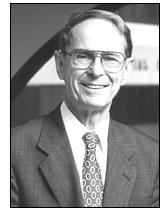
Our good friend and founding member, Neal Potter passed away on May 27th at the age of 93. Neal was at the original meeting of CGS’s ancestoral organization, United World Federalist, held in Ashville NC in 1947. He was one of many who struggled through an intense snow storm to be there because they believed, after the violence of WWII, that the world needed a better means of governing itself. For a short time he served as the World Federalist Association’s (WFA) executive director. He has played a leadership role in WFA, the Campaign for UN Reform, and every other iteration of our organization since its beginning. The Washington Post published an editorial and an obituary honoring him. The obituary below was written by his family. There will be a memorial service in his honor on June 10th at the Chevy Chase United Methodist Church, at 1:00pm on Tuesday, 10 June 2008. The family suggests memorial contributions be made to GlobalSolutions.org of Washington, DC, or the Chevy Chase United Methodist Church. If you have personal stories about Neal that you would like to share, please send them to me. He will be missed.
Neal Potter, age 93, died May 27 with his family at his side. He dedicated his life to public service, both at the Montgomery County level serving from 1970 to 1994 as Council member and County Executive and on the international level, helping to found and implement work by the United World Federalists, an organization to support world peace, now called GlobalSolutions.org. Neal also belonged to, and supported, dozens of other organizations, all dedicated to serving mankind.
Neal had an extraordinary record of service, unprecedented in Montgomery County. He was proclaimed Councilmember Emeritus by the Montgomery County Council in 1998, being called A man of his times, a man for all times. He provided outstanding leadership on taxation policy, land use planning and transportation, fiscal conservatism, tax legislation, and assessment inequities.
A long-time advocate for peace and human rights, he led student strikes against war and fascism at the Johns Hopkins University and the University of Minnesota in 1935-37. He was a life member of NAACP, and founding member of the United World Federalist Association, the United Nations Association, the Anti-Defamation League of Bnai Brith, and the Americans for Democratic Action, in addition to other, shorter-term memberships in civic, human rights, and environmental organizations.
Born on March 22, 1915, in Arlington, VA, he was raised on a dairy farm near Cabin John, MD. A graduate of the Bethesda-Chevy Chase High School, Potter later attended the Johns Hopkins University and the University of Minnesota, with masters and doctoral majors in public finance and international economics.
He was an economist with the Office of Price Administration in 1941-46, then went on to teach economics at Carnegie Tech from 1946-47, and after that at Washington State College 1947-51. He then served as the Western Field Director for the United World Federalists, working toward world peace. Having to move back East so that his second daughter, who had contracted leukemia, could have the best care at the NIH, he was then employed by Resources for the Future, co-producing a book about the feasibility of gleaning resources from the Antartic.
Potter loved to deal with tough issues, on many fronts, and therefore was active in a wide variety of civic associations. In 1960, he was the principal organizer of the Citizens Committee for Fair Taxation; President of the Montgomery County Citizens Planning Association 1965-67, and then editor 1968-69; co-chairman of the Metropolitan Washington Coalition for Clean Air; a board member of the Capital Area United Nations Association; president of the Metropolitan Washington Council of Governments and on several committees for both the National Association of Counties and the Maryland Association of Counties; board member of the Streit Council for a Union of Democracies. His various group memberships include the Americans for Democratic Action, the Audubon Society, the Chevy Chase United Methodist Church, Common Cause, NAACP, SANE/FREEZE, and The United Nations Association.
Honors presented to Potter since he has been in public office include the Governor’s Citation, the Council of Government’s Metropolitan Public Service Award, and the Sentinel Newspaper’s Citizen of the Year. He was also recipient of the National Association of Counties’ Distinguished Service Award, the Audubon Naturalist Society’s Legislator of the Year Award, the Montgomery County Civic Federation’s Citation for Distinguished Public Service, the James K. Mathews Distinguished Service Award, the Harold Seidman Award for Public Service, and many others.
He is survived by his wife of 68 years, Marion; one daughter, JoAnn, and one grandson; his brother and his family, Lloyd Potter of Potomac, MD.
Memorial services will be held at the Chevy Chase United Methodist Church, at 1:00pm on Tuesday, 10 June 2008.
The family suggests memorial contributions be made to GlobalSolutions.org of Washington, DC, or the Chevy Chase United Methodist Church.