by Roger Peace | Oct 4, 2022 | Peace & Disarmament
There is no doubt that the Russian invasion of Ukraine constitutes a criminal act of aggression. What lay behind this, however, is a complicated set of competing geopolitical ambitions and threat perceptions, and beyond these, a fundamental weakness in the United Nations mediation and collective security systems.
Russian leaders from Boris Yeltsin to Vladimir Putin have viewed NATO’s gradual expansion to the east as a grave national security threat. In 2008, President George W. Bush opened the door to Ukraine and Georgia for future NATO membership, thus bringing this Western military alliance to the doorstep of Russia. While there has been much debate over whether NATO expansion constitutes a broken promise to the Soviet Union (and Russia), there is no doubt that Russian leaders have regarded it as an existential threat to their nation.
The Russian response has been to support separatist movements in Georgia and Ukraine, annex the Crimea Peninsula, and, most recently, invade Ukraine. U.S. leaders have deemed these actions gross overreactions, or perhaps indications of a desire on Putin’s part to remake Russia into an empire along the lines of the old Soviet Union. Whatever the case, the invasion of Ukraine has been counterproductive for Russia, as NATO has been strengthened and expanded further.
U.S. leaders have taken the position that NATO is of no threat to any nation, and thus they have been unwilling to compromise on Ukraine’s eventual membership. Then, too, U.S. leaders generally regard U.S. global power as protective and benevolent, notwithstanding a long record of military interventions and covert operations in other nations. No doubt, they would respond with alarm if Russia or China invited Mexico to join in a military alliance.
Might the war in Ukraine have been avoided if the U.S. had relied on the UN rather than NATO to ensure security in the region?
The UN Charter requires that parties in any dispute “shall, first of all, seek a solution by negotiation, enquiry, mediation, conciliation, arbitration, judicial settlement, resort to regional agencies or arrangements, or other peaceful means of their own choice” (Article 33). Should the latter fail, the charter provides for collective security measures in which member nations can collectively deter or repel would-be aggressors through joint diplomatic, economic, and military actions “for the purpose of maintaining international peace and security” (Article 43).
The UN has often failed to live up to its mandate to “end the scourge of war,” which has led many to dismiss the institution as irrelevant. Yet, like all great changes and paradigm shifts, progress in establishing a global security system is incremental and may be centuries in the making. Think of the establishment of democratic governments, human rights policies, and religious tolerance.
In the late 1980s, Soviet leader Mikhail Gorbachev attempted to revive this inclusive concept of security set forth in the UN Charter. Speaking before the UN General Assembly on December 8, 1988, he declared, “The world community must learn to shape and direct the process in such a way as to preserve civilization, to make it safe for all and more pleasant for normal life. It is a question of cooperation that could be more accurately called ‘co-creation’ and ‘co-development.’ The formula of development “at another’s expense” is becoming outdated.”
Turning to the U.S., Gorbachev proposed that the U.S. and Soviet Union begin a “joint effort to put an end to an era of wars, confrontation and regional conflicts, to aggression against nature, to the terror of hunger and poverty as well as to political terrorism. This is our common goal and we can only reach it together.” Giving substance to these aspirations, he announced Soviet decisions to withdraw significant numbers of troops and tanks from Eastern European countries and to seek a UN-brokered ceasefire in Afghanistan.
It was a remarkable speech, especially as Americans had been conditioned to view the Soviet Union as the graveyard of idealism. The editors of the New York Times had difficulty describing it: “Breathtaking. Risky. Bold. Naive. Diversionary. Heroic. All fit. So sweeping is his agenda that it will require weeks to sort out. But whatever Mr. Gorbachev’s motives, his ideas merit – indeed, compel – the most serious response from President-elect Bush and other leaders.”
The incoming George H. W. Bush administration was hesitant to endorse Gorbachev’s idealistic reforms. Indeed, the U.S. foreign policy establishment viewed Moscow’s retreat from great power domination as an opportunity to advance U.S. interests and establish the U.S. as the sole superpower in the world.
Gorbachev remained undaunted. Having taken up the challenge to reinvent the Soviet socialist system, he was equally determined to instigate humanistic reforms in the international arena. To diffuse the Cold War in Europe, he proposed an end to both NATO and the Warsaw Pact. Speaking in France in July 1989, he called for a cooperative “commonwealth of sovereign democratic states with a high level of equitable interdependence and easily accessible borders open to the exchange of products, technologies and ideas, and wide-ranging contacts among people.”
Eastern European nations, in other words, would join Western European nations in creating a common European identity and culture, buttressed by open trade and travel. Western European nations had already modeled this in forming the European Economic Community (1957) followed by the European Union (1993), enabling age-old national animosities to dissolve.
In essence, Gorbachev was proposing a way out of great power competition, in line with the UN Charter, presuming that a friendly international neighborhood is the best security. This is the vision that is needed today – a reimagining of the world order. Beyond immediate crises, we need to work toward an inclusive and sustainable global security system.
Moreover, continuation of the current system of big power competition and rival blocs bodes ill for the future. The Bulletin of Atomic Scientists has set its “doomsday clock” at 100 seconds to midnight, closer than it has ever been, based on nuclear and global warming threats, an indication of how close humanity is to “destroying our world with dangerous technologies of our own making.” Moving toward mutual security and cooperation will set the clock back and allow humanity to move forward.
“Breaking the Cycle of Insecurity” was originally published in History News Network, September 18, 2022
Photo: Reagan White House Photographs, 1/20/1981 – 1/20/1989
by Rene Wadlow | Feb 26, 2018 | Human Rights, Peace & Disarmament
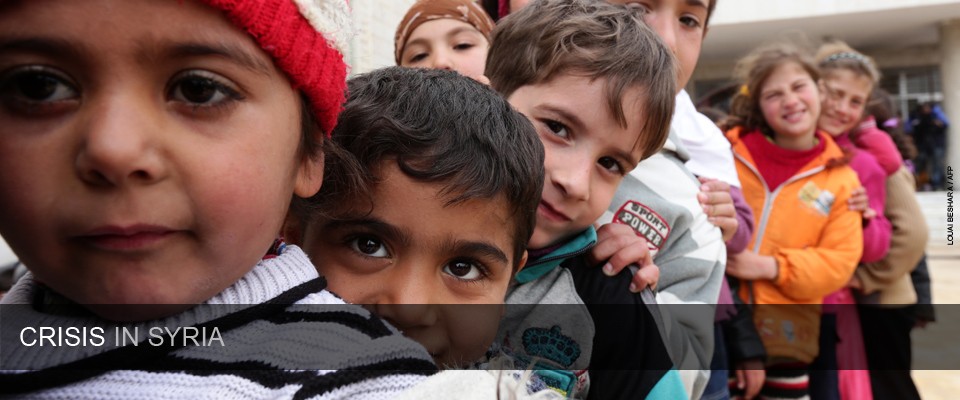
A recent wave of fighting in Syria, especially in the Eastern Ghouta zone near Damascus and in Afrin, a largely Kurdish area near the frontier with Turkey has highlighted the violations of humanitarian international law. After multiple delays to reach agreement with the Russian ambassador, the U.N. Security Council on Saturday 24 February adopted a resolution for a 30-day ceeasefire “without delay” in Syria. The truce would allow for the dellivery of emergency aid and the evacuation of the wounded, including from the besiaged Eastern Ghouta, home to some 350,000 people. We now need to work so that the ceasefire is honored.
However, the scale of the violations are such that they can be considered as a deliberate policy and not as events of “collateral damage” in the fog of war. These violations of long-established humanitarian international law are evidence that the laws of war are increasingly being undermined with few governmental reactions.
The Association of World Citizens again calls for respect of humanitarian international law and for a world-wide effort for the re-affirmation of humanitarian international law.(1)
Eastern Ghouta is near Damascus and has been a contested zone since early in the 2011 uprising. Ghouta is close enough to Damascus so that opposition mortars can be fired on districts in Damascus – close enough also so that rockets and barrel bombs from government helicopters can increasingly fall on the zone. Hospitals have been hit, probably deliberately. Eastern Ghouta is one of the de-escalation zones agreed to by Russia, Iran and Turkey. However not all the opposition groups are party to the de-escalation agreement which opens the door to ever-escalating violence.
Afrin is in the Aleppo Governorate and in an area with a large Kurdish population. The Turkish government suspects all organized Kurdish groups to be “terrorists” or potential terrorists. Moreover the demands for independence of the Kurdish Autonomous Administration in Iraq linking to a possible similar Kurdish zone in Syria is considered by the Turkish government as an active threat to be countered by force. Thus for the past month, Turkish troops in the mis-named “Operation Olive Branch” have been attacking Afrin and its surrounding area. As an element in complicated Kurdish politics and alliances, a pro-Syrian government Kurdish militia has joined the battle to defend Afrin. The dangers of escalation and greater loss of civilian life are very real. For the moment, negotiations on a resolution of the armed conflict within all of Syria seems to be at a dead point, at least in terms of public negotiations.
With the current impossibility to reach an overall resolution to the conflict, the best we can hope for is an honest application of humanitarian international law and a broader, world-wide re-affirmation of humanitarian international law.
Current armed conflicts in Afghanistan, Yemen, Syria-Iraq-ISIS-Turkey, Libya, Somalia and elsewhere have led to repeated and conscious violations of humanitarian international law such as attacks on medical facilities and personnel, killing of prisoners-of-war, the taking and killing of hostages, the use of civilians as “human shields” and the use of weapons which have been banned by treaties.
Thus, there is a pressing need for actions to be taken to implement humanitarian international law in response to increased challenges. Citizens of the World stress the need for a United Nations-led conference on the re-affirmation of humanitarian international law including its application by non-State parties. Non-State actors such as ISIS or the Afghan Taliban, are increasingly involved in armed conflicts but were largely not envisaged when humanitarian international law was being drawn up by governments Thus, the conference would highlight the need to apply humanitarian international law both to States and to non-State actors. (2)
Such a conference would bring together into a coherent synthesis the four avenues of humanitarian international law: (3)
1) The Geneva Conventions – Red Cross-mandated treaties;
2) The Hague Convention traditions dealing with prohibited weapons, highlighting recent treaties such as those on land mines and cluster munitions;
3) Human rights conventions and standards, valid at all times but especially violated in times of armed conflicts;
4) The protection of sites and monuments which have been designated by UNESCO as part of the cultural heritage of humanity, highlighting the August 2016 decision of the International Criminal Court on the destruction of Sufi shrines in northern Mali. (4)
Such a re-affirmation of humanitarian international law should be followed by efforts to influence public consciousness of the provisions and spirit of humanitarian international law. This can be done, in part, by the creation of teaching manuals for different audiences and action guides. (5)
Notes
1) Hilaire McCoubrey and Nigel D. White. International Law and Armed Conflict (Aldershot: Dartmouth, 1992)
2) see Andrew Clapham. Human Rights Obligations of Non-State Actors (Oxford: Oxford University Press, 2006)
3) see Sydney D. Bailey. Prohibitions and Restraints in War (Oxford: Oxford University Press, 1972)
4) see Rene Wadlow “Guilty Plea in Cultural Destruction Case” Peace Magazine (Canada) Oct-Dec 2016
5) see as a good example of an action guide Paul Bonard. Les Modes d’Action des Acteurs Humanitaires. Critères d’une Complémentarité Operationelle (Geneva, CICR, no date given)
*******************************
Rene Wadlow, President, Association of World Citizens
by CGS Blog Archive | Feb 11, 2018 | Global Cooperation, Peace & Disarmament
Recently, the Trump Administration announced increased sanctions on travel to Cuba. However, Cuba is not the only country to have sanctions leveled against it by the United States. Other countries in the same situation include: Syria, Iran, Russia and North Korea to name just a few.[1] Sanctions offer the US and other like-minded countries and economic unions, such as the EU, a way to alter another country or group’s way of operating that stops short of war while maintaining some bite. The United States, particularly after 9/11, has been the biggest proponent and user of sanctions in the world. The practice has become so ubiquitous in fact that even local governments have leveled sanctions.
Are all these sanctions actually doing anything though? Some experts would say yes and point to specific examples including preventing banks from hiding money for the North Korean regime or to the downfall of Charles Taylor in Liberia.[2] (Some people would even argue that all sanctions are effective compared to complete inaction, although that seems like an especially weak argument.) Despite these sentiments however, in many if not most other instances, sanctions seem to have had little impact.
Sanctions can also have unintended consequences. These can include driving away potential allies and creating anti-sanctioner sentiment through repeated threats against violators.[3] More importantly it can also mean harming innocent bystanders. This certainly appears to be the case in Cuba and North Korea where regular citizens live in abject poverty while the countries’ leaders continue to enjoy a wealthy lifestyle. Sanctions can also affect people from the sanctioning country as their goods and services now have fewer outlets.
This assumes sanctions have actually been passed. As the US has seen in its attempts to routinely punish nations such as Iran and North Korea, too many sanctions can lead to fatigue. In addition, countries are also hesitant to pass sanctions at times because they are hard to lift even in the rare instance where they are perceived as successful.
Experts explain this failure of sanctions results from being too broad or for expecting too much from them. These same experts generally suggest creating sanctions with clear goals, having multilateral support and being flexible when some of the goals have been met.
Sanctions having a multilateral coalition is especially important. Unilateral sanctions where the United States is imposing the sanctions alone, such as those against Cuba and Libya, have been largely ineffective due to their limited scope.[4] Conversely multilateral sanctions, such as against North Korea and Iran, while certainly not perfect have at least eliminated many of the unilateral sanctions’ weaknesses. Regardless of the type though, sanctions have ultimately proved futile and should not be used any longer. After all, Cuba is still run by the same regime and North Korea has still developed nuclear weapons.
Instead a policy of engagement should be adopted. Specifically the policy known as conditional engagement. Through this approach the would-be sanctioner would only engage the would-be sanctionee if they adhered to certain conditions.
While this policy reduces the power of the threat, history has shown in several instances that the threat of sanctions is still not enough to prevent an unwanted action anyway. Conversely, for evidence of engagement’s success one has to look no further than Iran. Iran, which has been sanctioned essentially since the 1979 Iranian Revolution, finally engaged and ultimately agreed to abandon the pursuit of nuclear weapons when it was met with dialogue instead of just threats. Another example of this process was when the US increased its relations with Myanmar by lifting certain sanctions once the country followed through on democratic reforms.[5]
This is a policy that can work in North Korea too. In the case of North Korea, relinquishing nuclear weapons would seemingly be the price of engagement. However, North Korea would be very unlikely and frankly unwise to give up its nuclear weapons program when they are ensuring that country’s leader’s survival. Instead the US could set a more realistic goal, such as no more weapons tests in exchange for food or energy supplies. This would not let North Korea off the hook entirely, but it would provide an avenue for building some trust, and be easy to adhere to. While it would be a long road from there to full nuclear disarmament, it would provide some direction versus the current stalemate.
Conditional engagement is not a panacea and works best through unilateral means and the threat of something worse such as sanctions. The best evidence of this is the Iran Nuclear Deal. Still though, conditional engagement is the best path forward. Unlike sanctions and direct military action, engagement encourages the two parties to work together in a soft power approach that also reduces the risk of creating an atmosphere of resentment going forward.
[1] U.S. Department of Treasury: Sanctions Programs and Country Information. https://www.treasury.gov/resource-center/sanctions/Programs/Pages/Programs.aspx
[2] Council on Foreign Relations: What Are Economic Sanctions? https://www.cfr.org/backgrounder/what-are-economic-sanctions
[3] Brookings: Economic Sanctions: Too Much of a Bad Thing. https://www.brookings.edu/research/economic-sanctions-too-much-of-a-bad-thing/
[4] Brookings: Use and Effect of Unilateral Trade Sanctions. https://www.brookings.edu/testimonies/use-and-effect-of-unilateral-trade-sanctions/
[5] The Interpreter: Suu Kyi and Obama open new chapter in US engagement with Myanmar. https://www.lowyinstitute.org/the-interpreter/suu-kyi-and-obama-open-new-chapter-us-engagement-myanmar
by Rene Wadlow | Dec 7, 2017 | Global Justice, Peace & Disarmament
The flight on 23 November 2017 of Igor Plotinitsky, President of the separatist Ukrainian area of the Lugansk People’s Republic is a sign of the continuing difficulties of developing appropriate forms of constitutional government in the Ukraine. Plotinitsky was in open conflict with his “Minister of the Interior” Igor Konet whom he had fired but who refused to give up his position. It is reported that military troops are moving from Donetsk, the other People’s Republic of the Donbass, and perhaps other troops from Russia but without signs of identification.
Much of the fate of the two Donbass People’s Republics is in the hands of President Putin, but he is unwilling to take public responsibility. Some have argued that two people’s republics in Donbass is one too many and that the two republics will be unified under the leadership of President Alexandre Zakhartchenko of Donetsk. Meanwhile the Ukrainian government has reinforced its troops on the frontier with the separatist zone.
Officially the Donbass is under an agreement signed in Minsk on 12 February 2015 among Russia, Germany, France, and Ukraine acting under a mandate of the Organization for Security and Cooperation in Europe (OSCE). The agreement called for a ceasefire, local elections, a reintegration into the State of Ukraine but with constitutional reforms giving greater local autonomy. In practice, the Minsk accords have never been carried out.
The new crisis may return to the status quo of continuing tensions, occasional artillery exchanges, a lack of any effective cooperation, and a continuing economic decline. It is estimated that some 10,000 persons have been killed in the conflict since April 2014. However, there is a danger that the conflict slips out of control, and violence increases. The secretariat of the OSCE must be on high alert.
A crisis can at times be a moment to reconsider the possibilities and to seek a more long-lasting agreement. At the start of the Ukraine conflict in April 2014, the Association of World Citizens had proposed the creation of a Ukrainian confederation with decentralization, respect for cultural autonomy, economic cooperation among the Russian Federation, Ukraine, and the European Union. Some of the ideas are reflected in the Minsk agreement, but distrust is so high that no practical steps have been taken.
The current crisis may serve as a reminder of how dangerous a disintegrating Donbas can be. An alternative would be to study seriously the possibilities of a con-federal Ukraine.
The Association of World Citizens has a long-standing interest in developing appropriate constitutional structures for States facing the possibilities of prolonged or intensified armed conflicts. In the recent past, we have proposed con-federal structures to deal with conflict situations in Mali, Ukraine, Myanmar, Libya and Cyprus as well as Kurdistan which involves both the structure of Iraq as well as positive cooperation among Kurds living in Iraq, Syria, Turkey and Iran.
Con-federation and autonomy are broad concepts, capable of covering a multitude of visions extending from very limited local initiatives to complete control over everything other than foreign policy. Autonomy can therefore incorporate all situations between nearly total subordination to the center to nearly total independence. The ways in which the elements and patterns of autonomy are put together requires political imagination, far-sighted political leadership, a willingness to compromise, and constant dialogue.
In none of the six situations on which we have made proposals have we found much of a climate for meaningful negotiations although there have been formal negotiation processes carried out in the Ukraine case by the Organization for Security and Cooperation in Europe (OSDE) and on Cyprus by the United Nations.
Negotiations means a joint undertaking by disputants with the aim of settling their disputes on the basis of mutual compromise. Negotiation is a basic political decision-making process, a way of finding common interests, to facilitate compromise without loss of what each considers to be essential objectives. For the parties in a conflict to seek a compromise requires a certain climate – an informed public opinion that will accept the compromise and build better future relations on the agreement.
The challenges posed by the conflicts in Mali, Ukraine, Myanmar, Libya, Cyprus and Kurdistan need to be measured against the broad concept of security. Barry Buzan of the University of Copenhagen sets out four types of security. “Political security concerns the organizational stability of states, systems of government, and the ideologies that give them legitimacy. Economic security concerns access to the resources, finances and markets necessary to sustain acceptable levels of welfare. Societal security concerns the sustainability within acceptable conditions of the evolution of traditional patterns of language, culture, religions and customs. Environmental security concerns the maintenance of the local and the planetary biosphere as the essential support system on which all other human enterprises depend.”
One of the difficulties in each situation is what I would call “the frozen image of the other”. In each case, the group or groups demanding new State structures are seen in the minds of the current government authorities as being the same people with the same aspirations as when the demands were first made: the Karen of Myanmar today are the same as the Karen of the Union of Burma in 1947; the Tuareg of north Mali today are the same as those calling for the creation of an independent State in 1940 when the withdrawal of French troops to Dakar had left a political vacuum.
However, there have been evolutions in policy proposals and in the level of education and experience of new leadership of those demanding autonomy. Yet “frozen images” exist and need to be overcome within all decision-makers involved. The modification of “frozen images” is one of the tasks of non-governmental organizations and Track II diplomatic efforts.
Rene Wadlow, President, Association of World Citizens
by Jennifer Keck | Dec 3, 2017 | Human Rights, Peace & Disarmament
Picture this: Gorgeous women dressed in sequin gowns line up on stage. One by one, they step up to the microphone and introduce themselves.
“My name is Camila Canicoba, and I represent the department of Lima. My measurements are: 2,202 cases of femicide reported in the last nine years in my country,” says the first.
“My name is Karen Cueto, and I represent Lima and my measurements are 82 femicides and 156 attempted femicides so far this year,” says the second.
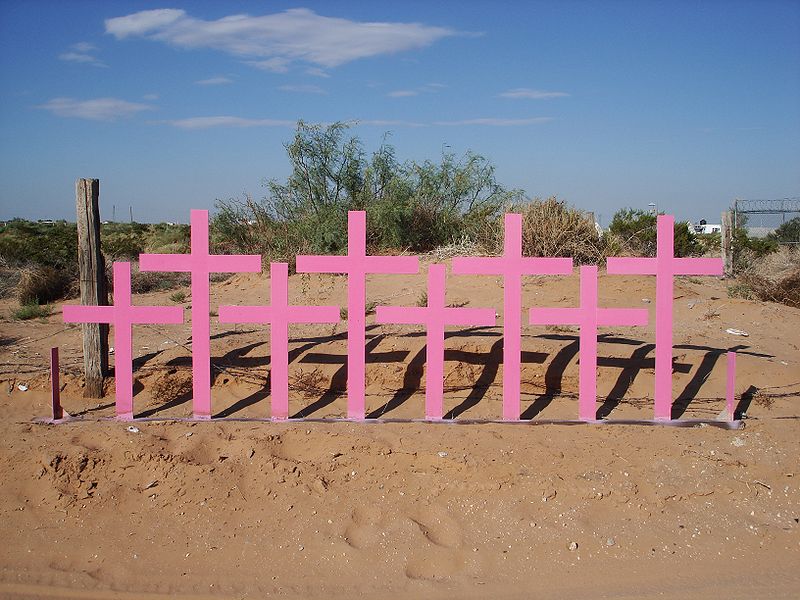
No, this isn’t a UN Women gala. It’s the 2017 Miss Peru pageant. In a surprising twist, the 23 contestants broke the tradition of revealing their measurements (bust, waist, and hip) to announce far more important numbers: the statistics on violence against women in their homeland.
The numbers are easy to gloss over. (How many more women die in car crashes each year, you might ask.) True, statistics can come across as meaningless without the stories behind them, which is why the faces of battered women flashed behind the contestants as they spoke. But they didn’t end there. Each woman finished by answering the following: which law would they change to end violence against women?
Latin America’s ‘Woman’ Problem
Pageant organizer Jessica Newton’s brilliant idea put women’s rights center stage and turned an old fashioned competition into a moment of solidarity. But why in Peru? And why now?
Violence against women occurs everywhere in world, but it’s especially prevelant in Latin America. Up to 40% of women in the region have been victims of violence, and in Peru, that number rises to 47 percent, according to a 2009 Economic Commission of Latin America (ECLAC) report. And these acts of violence sometimes end in murder. Of the 25 countries with the highest rates of femicide, 14 are in Latin American and the Caribbean.
While the Peruvian contestants are right to challenge the law, sometimes law enforcement itself is the problem. In Guatemala, for example, 2,920 femicides were reports over a five year period, but only 184 arrests were made, leaving 94 percent of the cases unsolved. Until violence against women is taken seriously –and is successfully prosecuted, new legislation will do little to protect women. Police, judges, and social services must learn to recognize the impact of violence on women, and how it can (and often does) escalate to femicide.
This isn’t to say Latin American legislatures have ignored the problem. Countries throughout the region have passed harsher sentences for those convicted of domestic violence and femicide, but it will require societies as a whole to make it unacceptable.
Uruguay’s Innovative Answer
Uruguay launched a successful program that allows judges to order the abuser to wear an electronic band connected to an electronic device that the woman at risk carries. If the abuser comes closer, it automatically alerts the police. Both the victim and the abuser receive counseling. As of February 2017, not a single woman in the program has been killed. If this program continues to succeed, and can be replicated, it can drastically improve the lives of women escaping abuse, and help reform men who’ve been charged with abuse. But it would still be only one small step toward solving a long-standing problem.
Ending Femicide
There’s no quick and easy way to end violence against women in Latin America (or worldwide). It will take a combination of criminal legislation, the expansion of women’s rights, and societies’ views on the role of women. However, the Miss Peru contestants did the seemingly impossible: they turned participating in a beauty pageant into a feminist act, and spoke up about what needs to change. And it’s indicatives like these that can help keep women’s issue in the spotlight.
by Charles Marsh | Nov 12, 2017 | Peace & Disarmament
In 2017, the Nobel Committee chose to award their prestigious Peace Prize to the International Campaign to Abolish Nuclear Weapons, continuing a legacy of such awards. This is the 9th time the award has been granted to a group working on this topic. It once again raises the discussion on the role and influence of nuclear weapons on our global society.
Nuclear weapons are, undoubtedly, a contentious topic. While some view them as an unjustifiable threat to the very existence of humanity, others would argue that their presence prevented the Cold War from ever developing into an outright conventional war, potentially saving millions of lives. This outlook changed somewhat following the end of the Cold War, and a great deal of nuclear disarmament occurred. In the doing so it allowed for a shift in the discussion surrounding them. In the minds of many nuclear weapons went from an indispensable threat against the perceived enemy to a redundant legacy of a bygone era.
However, in our current political climate of rising international tensions we are seeing a regression in the discourse surrounding nuclear weapons. Both American and Russian leaders have in recent years expressed an interest in modernizing and upgrading their nuclear arsenal, and North Korea looks set to gain the dubious distinction of becoming the newest nuclear armed state. It is this context that makes the Nobel Committee’s decision so very important. Even in the face of a great many international threats, we cannot forget the dangers nuclear weapons pose to us all. The normalization of nuclear proliferation almost destroyed us once; we cannot allow it to happen again.
It is therefore important to remember the efforts of mid-century “nuclear pacifists,” thinkers and academics who, perceiving the existential danger of nuclear weapons, proposed to use them as a rhetorical and ideological catalyst for renewed efforts at the elimination of war as a tool of statecraft. Their argument then, which is just as true today, was that the risks of any confrontation between nuclear states are unbearable. They therefore advocated for increased international integration, to ensure that war should never come. They realized that states will never give up their nuclear weapons for the purpose of some higher moral principle. They will only give them up when they feel it is safe to do so. Thus the only way to eliminate nuclear weapons is to vastly expand the role of international institutions, to make states feel secure enough that they do not need nuclear weapons.
The validity of this viewpoint has been supported by two contemporary examples. The first is Iran. Offered a deal in which they attained international integration, promises of security, and mutual respect from other nations, they willingly froze their nuclear programs. The second case is North Korea. Threatened and insulted, yet offered no amnesty or meaningful chance for reform, they accelerated their nuclear program dramatically. In their eyes regimes such as those of Saddam Hussein or Muammar Gaddafi fell because they could no longer protect themselves with nuclear weapons. For the North Korean regime nuclear weapons provide the only certain security from their perceived enemies. The role of nuclear weapons in international politics should be treated as a catalyst for escalation, not a trigger for increasingly volatile rhetoric.
To return to where we began, we should acknowledge the significance of the Nobel Committee’s decision. They have reminded us that the danger of nuclear weapons has not passed. It still presents an overwhelming threat to everyone on Earth. The only way to meaningfully rectify the situation is through discussion, compromise, and ultimately the fostering of mutual respect and trust between nations. History has shown time and time again that attempts at coercion or violence only encourage states to resort to what they perceive as the ultimate form of protection. As with the nuclear pacifists before us, we must realize that the protection offered by nuclear weapons is fragile. Should they fail to dissuade aggression, they will quickly change from being our protector to our executioner.
I would say that for us to ensure that we all survive the threat posed by nuclear weapons, we must learn to approach and negotiate with our perceived enemies. We must learn to accept that though it may be tempting to try to cow all opposition with the threat of overwhelming force, the risk of trying to carry out such a threat is simply too high a cost. We must therefore redouble our efforts to build international institutions and provide better facilitation of bilateral discussions. In so doing, we may make diplomacy a more feasible path than military confrontation. It may not end in a satisfactory conclusion for all sides, however, as it would necessitate the increased security of competing regimes. The promise of this security is the only way to ensure that states will give up their nuclear weapons. Nevertheless, it is far better to live together with your rivals than to die alone in nuclear hellfire.
To conclude, I applaud the decision of the Nobel Committee for highlighting the fact that the threat of nuclear weapons is still an overwhelming risk. At the same time I also hope to emphasize the fact that nuclear disarmament can only occur in a world where states feel safe enough to not need nuclear weapons for protection. Such a world would be dependent on strong international institutions being able to implement fair compromises in cases of inter-state disputes. With such a structure in place, nuclear disarmament could begin in earnest. Nuclear pacifism has never earned the legacy it deserves. Perhaps now it can offer the future we need.