by Jerry Tetalman | Mar 7, 2025 | Peace & Disarmament
The true challenge of our time is to bring rules, law, and democracy to the chaos of international relations. If we want to overcome the existential threats of nuclear weapons and abolish war, we will need a world governing body that is more democratic and empowered to act than the current United Nations.
The organized murder of one group of humans by another group of humans is called war. We live in a world where the vilest of crimes, which are punished with severe consequences within most societies, are somehow acceptable when committed as part of war. War has been an integral part of human history and, in the nuclear age, is the most imminent threat to our continued existence. As modern, civilized people, most of us find war abhorrent, but few of us call for the abolition of war or understand why war still exists in the contemporary world.
War exists because human society has been organized around the concept of the in-group and the out-group. The in-group could be a tribe, city, nation, or group of nations. The out-group may be tolerated, but in many instances, it is considered the enemy. The question of our time is, can we create a new story where humanity is the in-group? Can we civilize a lawless world by creating a basic system of enforceable global law?
Wars between countries continue because countries exist in relative anarchy at the international level. We have international law based on treaties that help maintain order, but this system is not an actual law, as it is voluntary. Valid law has consequences and enforcement mechanisms if one breaks the law. At the international level, we still live and die by the law of the jungle, which is “might makes right.”
The countries of the European Union have found peace after thousands of years of warfare and two world wars by trading away a piece of sovereignty to form a collective. They now resolve disputes in the European Union’s parliament and courts. The world’s countries can find peace by building an international union of nations and creating a similar system of courts and a global parliament.
The United Nations has a membership of almost all the countries on earth, and this in itself is an impressive accomplishment in that it creates an inclusive forum for discussion of international problems. Unfortunately, the UN lacks democratic standards and is flawed by its outdated design, and thus ineffective in addressing the major global security issues of our day. International security issues are dealt with in the UN by the Security Council and, in particular, the five permanent members who were the victors of World War II: the United States, the United Kingdom, France, the Russian Federation, and the People’s Republic of China. They each have a veto, allowing a single country to block the action called for by the majority. The General Assembly can pass resolutions, but they constitute no more than recommendations. The United Nations also suffers from a democratic deficit, as each member country has one vote regardless of population.
We are at a critical moment in human history. International laws exist, but they are often not enforceable. Force and military might still rule the world in terms of global affairs.
Fortunately, a US organization, Citizens for Global Solutions – like the World Federalist Movement, which brings together organizations with a similar orientation around the globe — works to create a world ruled by law rather than force to build the legal institutions necessary for peace and to abolish war. Citizens for Global Solutions is working to enhance the jurisdiction and use of the International Court of Justice to resolve disputes without violence in a campaign called Law, not War.
The challenge of our time is to abolish war and create the global institutions of law necessary to resolve disputes through legal, rather than lethal means.
by Lawrence Wittner | Feb 12, 2025 | Peace & Disarmament
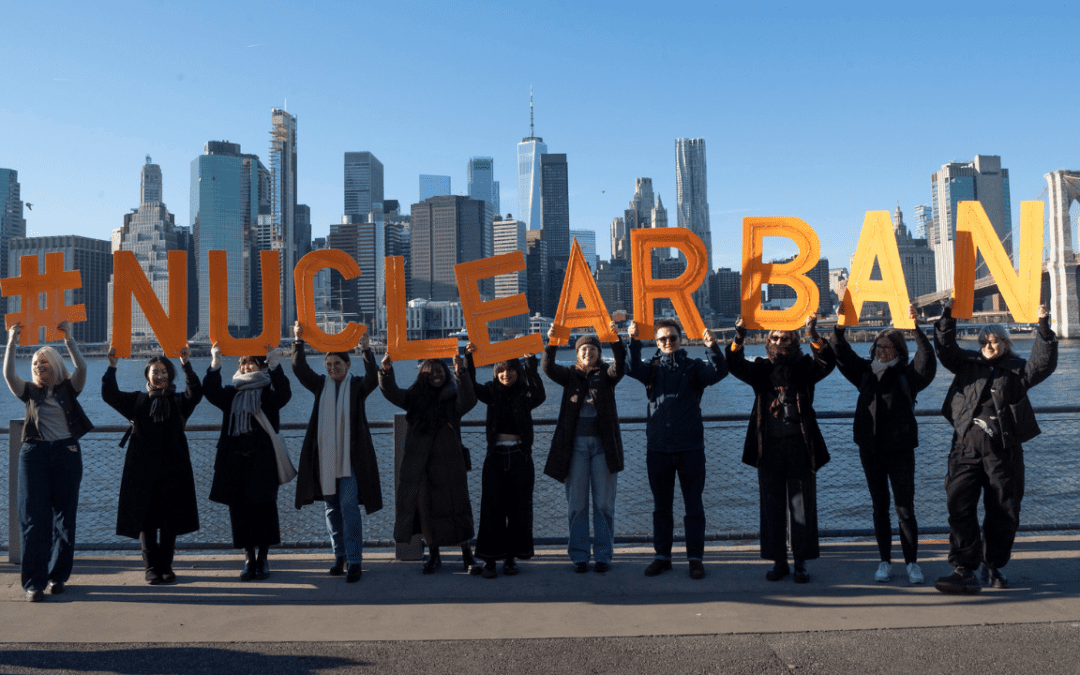
Late January of this year will mark the first anniversary of the entry into force of the UN Treaty on the Prohibition of Nuclear Weapons. This momentous international agreement, the result of a lengthy struggle by the International Campaign to Abolish Nuclear Weapons (ICAN) and by many non-nuclear nations, bans developing, testing, producing, acquiring, possessing, stockpiling, and threatening to use nuclear weapons. Adopted by an overwhelming vote of the official representatives of the world’s nations at a UN conference in July 2017, the treaty was subsequently signed by 86 nations. It received the required 50 national ratifications by late October 2020, and, on January 22, 2021, became international law.
Right from the start, the world’s nine nuclear powers—the United States, Russia, China, Britain, France, Israel, India, Pakistan, and North Korea—expressed their opposition to such a treaty. They pressed other nations to boycott the crucial 2017 UN conference and refused to attend it when it occurred. Indeed, three of them (the United States, Britain, and France) issued a statement declaring that they would never ratify the treaty. Not surprisingly, then, none of the nuclear powers has signed the agreement or indicated any sympathy for it.
Treaty Momentum During 2021
Even so, the Treaty on the Prohibition of Nuclear Weapons has acquired considerable momentum over the past year. During that time, an additional nine nations ratified it, thus becoming parties to the treaty. And dozens more, having signed it, are expected to ratify it in the near future. Furthermore, the governments of two NATO nations, Norway and Germany, have broken free from the U.S. government’s oppositional stance to the treaty and agreed to attend the first meeting of the countries that are parties to it.
In nations where public opinion on the treaty has been examined, the international agreement enjoys considerable support. YouGov opinion polls in five NATO countries in Europe show overwhelming backing and very little opposition, with the same true in Iceland, another NATO participant. Polling has also revealed large majorities in favor of the treaty in Japan, Canada, and Australia.
In the United States, where most of the mainstream communications media have not deigned to mention the treaty, it remains a well-kept secret. Even so, although a 2019 YouGov poll about it drew a large “Don’t Know” response, treaty support still outweighed opposition by 49 to 32 percent. Moreover, when the U.S. Conference of Mayors, representing 1,400 U.S. cities, met in August 2021, the gathering unanimously approved a resolution praising the Treaty on the Prohibition of Nuclear Weapons.
Meanwhile, a variety of institutions, recognizing that nuclear weapons are now illegal under international law, have begun to change their investment policies. In September 2021, Lansforsakringar, a Swedish insurance company with assets of over $46 billion, cited the treaty as a major reason to avoid investing in companies producing nuclear weapons. In December, the New York City Council adopted a resolution telling the city comptroller to remove investments from the city’s $250 billion pension fund from companies producing or maintaining these weapons of mass destruction. According to ICAN, 127 financial institutions stopped investing in nuclear weapons companies during 2021.
The Nuclear Powers Accelerate Their Arms Race
Despite this impressive display of respect for the landmark agreement, the nine nuclear powers have not only continued to oppose it, but have accelerated their nuclear arms race. Having cast off the constraints of most nuclear arms control and disarmament agreements of the past, they are all busy either developing or deploying new nuclear weapons systems or have announced their intention to do so.
In this process of nuclear “modernization,” as it is politely termed, they are building newly-designed nuclear weapons of increasing accuracy and efficiency. These include hypersonic missiles, which travel at five times the speed of sound and are better able than their predecessors to evade missile defenses. Reportedly, hypersonic missiles have already been developed by Russia and China. The United States is currently scrambling to build them, as well, with the usual corporate weapons contractors eager to oblige.
When it comes to “modernization” of its entire nuclear weapons complex, the U.S. government probably has the lead. During the Obama administration, it embarked on a massive project designed to refurbish U.S. nuclear production facilities, enhance existing nuclear weapons, and build new ones. This enormous nuclear venture accelerated during the Trump administration and continues today, with a total cost estimated to ultimately top $1.5 trillion.
Although there remain some gestures toward nuclear arms control—such as the agreement between U.S. president Joe Biden and Russian president Vladimir Putin to extend the New Start Treaty—the nuclear powers are now giving a much higher priority to the nuclear arms race.
The current build-up of their nuclear arsenals is particularly dangerous at this time of rising conflict among them. The U.S. and Russian governments almost certainly don’t want a nuclear war over Ukraine, but they could easily slip into one. The same is true in the case of the heightening confrontation between the Chinese and U.S. governments over Taiwan and the islands in the South China Sea. And what will happen when nuclear-armed India and nuclear-armed Pakistan fight yet another war, or when nuclear-armed national leaders like Kim Jong-un and a possibly re-elected Donald Trump start trading insults again about their countries’ nuclear might?
What Will the Future Bring?
At present, this standoff between the nuclear nations, enamored with winning their global power struggles, and the non-nuclear nations, aghast at the terrible danger of nuclear war, seems likely to persist, resulting in the continuation of the world’s long nuclear nightmare.
In this context, the most promising course of action for people interested in human survival might well lie in a popular mobilization to compel the nuclear nations to accept the Treaty on the Prohibition of Nuclear Weapons and, more broadly, to accept a restrained role in a cooperatively-governed world.
Photo Credit: ICAN | Darren Ornitz
by Citizens for Global Solutions | Oct 21, 2024 | Peace & Disarmament
Have human institutions evolved sufficiently to cope with the modern world? When it comes to national security, the answer appears to be: No.
Ever since the emergence of individual nations, their governments have sought to secure what they consider their “interests” on an ungoverned planet of competing nations. Amid this international free-for-all, nations tended to pursue national security or national advantage through military might.
Of course, the downside of this arrangement was that it produced military confrontations and wars. Moreover, with advances in modern science and technology, nations began to press ever more devastating weapons into military service. Not surprisingly, vast slaughter ensued.
Over the years, as national leaders and members of the public recognized the drawbacks of an anarchic world, they turned toward developing institutions of global governance, including international law, a League of Nations, and eventually the United Nations. International security, they believed, would help to maintain national security.
Unfortunately, though, since the creation of the United Nations in 1945, the governments of many nations have failed to honor their professed commitments to international security.
Currently, the governments of Israel and Russia provide striking examples of this throwback to the nation-centered, might-makes-right approach to world affairs.
Despite the fact that the nation of Israel owed its creation to a 1947 UN agreement for the partition of Palestine into separate Jewish and Arab states, the Israeli government has forced the removal (and barred the return) of most of the Palestinian population, annexed additional Palestinian land, militarily occupied the remainder of Palestinian territory, and consistently blocked Palestinian statehood.
This June, amid the vast carnage caused by an indiscriminate Israeli government response to a Hamas terror attack, Benjamin Netanyahu ignored a UN Security Council resolution, drafted by the United States, calling for an immediate ceasefire in Gaza, where 37,000 Palestinians, mostly civilians, had already been killed. In July, the Israeli government denounced as “absurd” the ruling of the International Court of Justice that Israel’s 57-year occupation of Palestinian territory, demolition of Palestinian housing, and establishment of Israeli settlements on Palestinian land were illegal. This October, the Israeli government took the unprecedented step of barring the UN Secretary-General from entering Israel.
The Russian government of Vladimir Putin also has no compunctions about violating international law. In 2014, it defied the UN Charter (which prohibits the “use of force against the territorial integrity or political independence of any state”) by using its military might to seize and annex Crimea, arm separatist groups in eastern Ukraine, and dispatch its armed forces to bolster the separatists. Although condemned by the UN General Assembly, Russian military aggression continued and, in February 2022, the Putin regime, in the most massive military operation in Europe since World War II, launched a full-scale invasion of Ukraine. In early March, with UN Security Council action blocked by a Russian veto, the UN General Assembly―by a vote of 141 countries to 5 (with 35 abstentions)―demanded the immediate and complete withdrawal of Russian military forces from Ukrainian territory. Later that month, the International Court of Justice ruled that Russia should “immediately suspend” its invasion.
Nevertheless, the Putin regime continued its massive military assault, as well as its defiance of international law. On September 30, 2022, Putin announced Russian annexation of four Ukrainian regions and plans to defend them “with all our strength.” In response, the UN General Assembly, by a vote of 143 countries to 5 (with 35 abstentions), called on all nations to refuse recognition of Russia’s annexation of Ukrainian land. Yet, despite these and other condemnations by key international institutions, Russian imperialist aggression has persisted, leaving roughly a million people dead or injured, millions more as refugees, about a fifth of Ukraine under Russian military occupation, and much of Ukraine’s civilian infrastructure in ruins.
These and other blatant violations of international law have convinced some observers that international security is a fiction, and that nations are better served by returning to the traditional national security model based on national military might.
But a more sensible conclusion is that international institutions, if they are to succeed, need strengthening. Instead of reverting to a system of national power politics―which has repeatedly led to war, destruction, and massive suffering over the centuries―why not institute stronger global governance?
Recognizing that the veto has often sabotaged the mission of the UN Security Council, UN members increasingly support carving out exemptions from its use.
There are also serious efforts underway to give the UN General Assembly greater power to handle international security issues, to increase the number of nations accepting the compulsory jurisdiction of the International Court of Justice, and to secure wider ratification of the founding statute of the International Criminal Court.
Moreover, in late September, 130 heads of state, meeting at the United Nations in a Summit of the Future and pressed by more than 10,000 civil society representatives, adopted a Pact for the Future―the culmination of a years-long process to update the world organization. According to a UN press release, the Pact represented “a strong statement of countries’ commitment to the United Nations, the international system and international law,” and included “the most progressive and concrete commitment to Security Council reform since the 1960s.” Predictably, at the last moment, the Russian government introduced amendments to water down the Pact. But the delegates rejected this effort by an overwhelming vote.
Influential forces, from civil society organizations (which drafted a People’s Pact for the Future) to prominent national leaders, called for even more substantial measures to strengthen global governance. At a General Assembly meeting one day after the Summit, Brazilian President Luiz Inacio Lula da Silva called for “reforming the Security Council,” particularly its “veto power,” and “revitalizing the General Assembly, including in matters of international peace and security.”
These actions exemplify a growing recognition that there will be no national security without international security.
by Matt McDonough | Oct 17, 2024 | Peace & Disarmament
This summer, Citizens for Global Solutions lost a valuable member of our National Advisory Council, Randy Kehler, who, at age 80, passed in July.
Randy was a peace activist, dedicated to the eradication of war and to the expansion of justice at both the local and global level. In 1969 Randy refused to go to war. He returned his draft card, thereby committing a felony and blocked entrance to an induction center. For these actions Randy served nearly two years in federal prison.
I first met Randy when my ex-wife became his administrative assistant. Over the ensuing years I got to see his passion and commitment up close. I don’t know if I have ever met a harder worker.
Randy was known as the father of the Freeze Campaign, a national effort to get the two superpowers to agree to freeze their nuclear arsenals at the then current levels. Observers claim that these efforts influenced the Reagan administration to push for arms reduction talks with the Soviet Union.
Randy is perhaps best known as the person who influenced Daniel Ellsberg to release the Pentagon Papers. The release of that document led directly to a substantial increase in resistance to the Vietnam war. On a number of occasions Mr. Ellsberg said, “No Randy Kehler, no Pentagon Papers.”
Randy was a lifelong tax resistor. He felt that he could not support the U.S. military. He calculated the tax that he owed and contributed that amount to charity. In 1989, this resulted in the Internal Revenue Service seizing his house in Colrain, MA. When he refused a judge’s order to vacate, he once again found himself in jail. He eventually lost his home and he and his wife, Betsy Corner, moved into a house owned by her parents.
Over a cup of coffee, I once mentioned how unjust I thought it was that he was jailed for resisting the draft. He immediately corrected me. His conscience told him that he had to resist the draft, but he broke the law, and the government did what it had to do. He felt no resentment. This was a typical example of Randy’s integrity.
Randy will be greatly missed.
Image Source: Daniel Ellsberg and Randy Kehler seated at a bench, ca. 1971. Daniel Ellsberg Papers (MS 1093). Special Collections and University Archives, University of Massachusetts Amherst Libraries.
by Sovaida Maani Ewing | Aug 30, 2024 | Peace & Disarmament
The intensifying cascade of global crises including intractable wars, massive human rights atrocities, nuclear proliferation, climate change and environmental degradation, the growing inequality between the rich and the poor, recurring bouts of global financial instability, and the increasing risks of pandemics to name but a few, call to mind the warning sounded by Arnold Toynbee, one of the most highly-regarded authorities and foremost experts on international affairs and world history in the 20th century, that humanity would be faced with an existential crisis followed by his recommendation as to what we, the family of nations, should do in response.
Toynbee contended that in the atomic age, humanity would have to choose between political unification and mass suicide. He believed the chief obstacle to political unification was a long-standing destructive habit of the West which he referred to as the habit of “divisive feeling” to which we tended to easily succumb as opposed to reaching for our more recently-adopted habit of “world-mindedness.” The good news he said was that just as new habits could be adopted, old ones could also be modified or abandoned. He stressed that as a general rule, we humans would opt to abandon even our most deeply-rooted habits once it became clear that clinging to them would spell disaster.
He recommended that we replace our outworn habit of divisive feeling with a new habit of common action on a worldwide scale through the creation of some form of limited world-state that would be empowered to act in humanity’s collective interest in certain narrow fields of endeavor. Already, as far back as the 1970’s he believed that the global community needed to engage in common action on a world-wide scale in at least two areas: to control atomic energy through a World Authority and to administer the production and distribution of food through another World Authority. Now, just over fifty years hence, we can confidently add climate change to this list.
Toynbee predicted that global circumstances we unwittingly created through our technological advancements would eventually force us to submit to a limited world government once we realized it was our only hope for salvation in the face of an existential threat. He believed we would wait until the eleventh hour before making a radical shift to establish such a government even though we would do this kicking and screaming all the way.
He was very clear in recognizing our visceral fears about and knee-jerk reaction in opposition to a world government that might become a draconian centralized bureaucracy imposing its will on local governments around the world. He made the following compelling arguments to dispel these fears.
Firstly, a world government should be minimal and should be limited in its sphere of action. World leaders should therefore confine the authority of a world government they established only to that which was strictly necessary for their self-preservation right now.
Secondly, he stressed that in the atomic age, world government should come about voluntarily through the mutual consent and cooperation of world powers rather than through the use of force. He warned that any attempt to impose political unity by force would be ineffective as it would only lead to stiff resistance and a resurgent nationalism as soon as an opportunity to revolt presented itself.
Thirdly, the prerequisite for such an endeavor to succeed lies in the universal adoption of an ideology of world-mindedness that we had never achieved before.
Toynbee believed that the structure of a limited world state would likely be a federal one in which previously independent units would voluntarily come together in a global union. He argued that this was the most likely scenario given that states generally prefer to preserve their identity and retain their autonomy to act locally; they would likely be willing to cede power to a world government only in limited areas in which it served their collective interests to do so.
Lastly, he believed that humanity needed to forge some unity of thought as to what constituted right and wrong. In other words, it was necessary to adopt a shared set of moral values that would serve to harmonize the disparate social and cultural heritages that had evolved independently of each other over the course of human history. Without fundamental agreement on moral issues he argued, it would be difficult to achieve political unification.
Given the rapid disintegration of countries and societies around the world and the accelerating fragmentation and polarization that are rending apart the fabric of our global society, is it not time for us to step up and make the choice to collaborate, cooperate and deepen our integration as a global society? To this end is it not time we take a step in the direction of collective maturity by voluntarily consenting to political unification by forming a limited democratic federal world government? Imagine what we could achieve if we engaged in collective and consultative decision-making in order to meet the pressing needs and the greatest global challenges of our time as opposed to opting for what Toynbee coined the “Great Refusal” that would inevitably result in carnage and devastation on a scale never before seen.
Image source: rawpixel.com
by Lawrence Wittner | Aug 8, 2024 | Peace & Disarmament
Although the current U.S. presidential campaign has focused almost entirely on domestic issues, Americans live on a planet engulfed in horrific wars, an escalating arms race, and repeated threats of nuclear annihilation. Amid this dangerous reality, shouldn’t we give some thought to how to build a more peaceful future?
Back in 1945, toward the end of the most devastating war in history, the world’s badly battered nations, many of them in smoldering ruins, agreed to create the United Nations, with a mandate to “maintain international peace and security.”
It was not only a relevant idea, but one that seemed to have a lot of potential. The new UN General Assembly would provide membership and a voice for the world’s far-flung nations, while the new UN Security Council would assume the responsibility for enforcing peace. Furthermore, the venerable International Court of Justice (better known as the World Court) would issue judgments on disputes among nations. And the International Criminal Court―envisioned at the time but created nearly four decades later―would try individuals for crimes of genocide, crimes against humanity, war crimes, and crimes of aggression. It almost seemed as if a chaotic, ungovernable, and bloodthirsty pack of feuding nations had finally evolved into the long-standing dream of “One World.”
But, as things turned out, the celebration was premature.
The good news is that, in some ways, the new arrangement for global governance actually worked. UN action did, at times, prevent or end wars, reduce international conflict, and provide a forum for discussion and action by the world community. Thanks to UN decolonization policies, nearly all colonized peoples emerged from imperial subjugation to form new nations, assisted by international aid for economic and social development. A Universal Declaration of Human Rights, adopted in 1948, set vastly-improved human rights standards for people around the world. UN entities swung into action to address new global challenges in connection with public health, poverty, and climate change.
Even so, despite the benefits produced by the United Nations, this pioneering international organization sometimes fell short of expectations, particularly when it came to securing peace. Tragically, much international conflict persisted, bringing with it costly arms races, devastating wars, and massive destruction. To some degree, this persistent conflict reflected ancient hatreds that people proved unable to overcome and that unscrupulous demagogues worked successfully to inflame.
But there were also structural reasons for ongoing international conflict. In a world without effective enforcement of international law, large, powerful nations could continue to lord it over smaller, weaker nations. Thus, the rulers of these large, powerful nations (plus a portion of their citizenry) were often reluctant to surrender this privileged status.
Symptomatically, the five victorious great powers of 1945 (the United States, the Soviet Union, Britain, France, and China) insisted that their participation in the United Nations hinged upon their receiving permanent seats in the new UN Security Council, including a veto enabling them to block Security Council actions not to their liking. Over the ensuing decades, they used the veto hundreds of times to stymie UN efforts to maintain international peace and security.
Similarly, the nine nuclear nations (including these five great powers) refused to sign the 2017 Treaty on the Prohibition of Nuclear Weapons, which has been endorsed by the overwhelming majority of the world’s nations. Behind their resistance to creating a nuclear weapons-free world lies a belief that there is much to lose by giving up the status and power that nuclear weapons afford them.
Of course, from the standpoint of building a peaceful world, this is a very short-sighted position, and the reckless behavior and nuclear arrogance of the powerful have led, at times, to massive opposition by peace and nuclear disarmament movements, as well as by many smaller, more peacefully-inclined nations.
Thanks to this resistance and to a widespread desire for peace, possibilities do exist for overcoming UN paralysis on numerous matters of international security. Unfortunately, it would be very difficult to abolish the Security Council veto outright, given the fact that, under the UN Charter, the five permanent members have the power to veto that action, as well. But Article 27(3) of the Charter does provide that nations party to a dispute before the Council must abstain from voting on that issue―a provision that provides a means to circumvent the veto. In addition, 124 UN nations have endorsed a proposal to scrap the veto in connection with genocide, crimes against humanity, and mass atrocities, while the UN General Assembly has previously used “Uniting for Peace” resolutions to act on peace and security issues when the Security Council has evaded its responsibility to do so.
Global governance could also be improved through other measures. They include increasing the number of nations accepting the compulsory jurisdiction of the International Court of Justice and securing wider ratification of the founding statute of the International Criminal Court (which has yet to be ratified by Russia, the United States, China, India, and other self-appointed guardians of the world’s future).
It won’t be easy, of course, to replace the law of force with the force of law. Only this May, the prosecutor of the International Criminal Court took a bold step toward strengthening international norms by announcing that he was seeking arrest warrants for top Israeli officials and Hamas commanders for crimes in and around Gaza. In response, the Republican-controlled U.S. House of Representatives passed the “Illegitimate Court Counteraction Act,” legislation requiring the U.S. executive to impose sanctions on individuals connected with the ICC.
Despite the nationalist backlash, however, the time has arrived to consider bolstering international institutions that can build a more peaceful world. And the current U.S. presidential campaign provides an appropriate place for raising this issue. After all, Americans, like the people of other lands, have a personal stake in ensuring human survival.