by Melissa Kaplan | May 14, 2012 | Global Justice, News, Peace & Disarmament

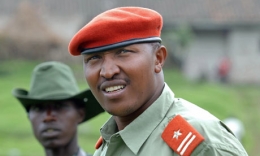
Today, ICC Prosecutor Luis Moreno-Ocampo announced he would seek new charges against Bosco Ntaganda of the Democratic Republic of Congo (DRC).
Ntaganda was already charged by the ICC in 2006 for the use of child soldiers in battle. Prosecutor Ocampo is now seeking to add charges of crimes against humanity for murder, ethnic persecution, rape and sexual slavery, as well as war crimes charges for “intentional attacks” against civilians leading to murder, rape, sexual slavery and pillaging. These alleged crimes were committed in the DRC between 2002-2003.
Lubanga also asked for an arrest warrant against the DRC’s Sylvestre Mudacumura, who he said has “launched a campaign of attacks against the civilian populations in the Kivus.” He is charged with charged with five counts of crimes against humanity: murder, inhumane acts, rape, torture and persecution, and nine counts of war crimes: attack against a civilian population, murder or willful killing, mutilation, cruel treatment, rape, torture, destruction of property, pillaging and outrage upon personal dignity.
Speaking about Ntaganda, who is known as “The Terminator” and currently on the run, Lubanga states that,
“Impunity has a high price. When impunity prevails, populations on the ground are the victims. When impunity prevails, persons like Bosco Ntaganda are encouraged to continue committing crimes. They increase their power through violence. Bosco Ntaganda has used the time offered to him since the ICC arrest warrant was issued to move from Ituri to North Kivu, to expand his power on new territories, and to maintain a power base thanks to his crimes, and the violence of persons under his control. Now more than ever is the time to arrest him.”
by Arielle Weaver | May 3, 2012 | Human Rights, News, Peace & Disarmament
Early this morning, Sudan has endorsed the African Union’s “peace road map” to avoid an all-out war with South Sudan. This came after South Sudan had endorsed the AU’s plan themselves. The AU’s plan includes seven specific steps, including a deadline of this Tuesday to restart negotiations and a three-month grace period after that to agree upon a more concrete solution.
Just yesterday, the United Nations Security Council unanimously approved a resolution that would take “appropriate measures,” including nonmilitary sanctions, if Sudan and South Sudan did not resolve all outstanding issues, namely border disputes, uneven divisions of oil revenues, and the citizenship of Sudanese and South Sudan peoples. As previously mentioned, tensions have flared between the two nations just a few months after South Sudan’s July 2011 independence, which followed a peace treaty signed in 2005.
Calling the situation “a serious threat to international peace and security,” the U.N. Security Council decided that Sudan and South Sudan must cease all hostility immediately, withdraw all armed forces to their respectable sides of the border, and activate all necessary border security measures within one week, and to immediately cease “hostile propaganda,” like the comments from President Omar al-Bashir, when he called the government of South Sudan “insects.”
Hopefully this will push both Sudan and South Sudan to start cooperating and to resume the much needed diplomatic negotiations. The issues still remain in this tense situation, with the added complication of the long history of animosity between the two regions. The hope and promise of the July 2011 Comprehensive Peace Agreement has been over shadowed by the recent flare-up of conflict and hateful rhetoric. Sending a united message from the international community that violence and war will not be acceptable is progress, but let us hope that both sides hold up their side of the process.
by Arielle Weaver | Apr 27, 2012 | Global Justice, News, Peace & Disarmament
Sudanese President Omar al-Bashir addressed a party rally in Khartoum last week, vowing to never compromise with the “poisonous insects” of South Sudan, using frightening rhetoric reminiscent of the Rwanda genocide.
Although neither Sudan, nor South Sudan, have declared war on the other, Sudan littered its neighbor with eight bombs following these hateful words. This violence has all been attributed to the disputed borders between the long-rivaling neighbors and unresolved issues over nearby oil reserves. Since April 10, when South Sudan took control of the oil-rich town of Heglig, the two nations have been, as many describe, on the brink of war.
Prompted by the recent violence that erupted, the House of Representatives Committee on Foreign Affairs held a hearing yesterday to examine the current conflict and discuss possible policy options the United States and other nations should explore in order to avoid an all-out war in the region.
Chairman Chris Smith (D-NJ) opened the hearing by noting the July 2011 Comprehensive Peace Agreement (CPA) between Sudan and South Sudan was never fully implemented, with no set border or equal division of the oil revenues laid out. Ambassador Princeton Lyman testified at the hearing, declaring that “this conflict will not be solved militarily—this is a long and deep rooted political issue.” He further noted that what should happen immediately is a cease-fire and that the border should be demilitarized and carefully monitored: two conditions that were outlined in the peace accord in July 2011 but were never implemented.
Ambassador Lyman’s overview of the growing tensions explained that South Sudan’s invasion of Heglig was pivotal because it is “a region of Sudan responsible for roughly 12% of that country’s oil production and 50% of its oil processing.” Although South Sudan’s actions drew an immediate backlash from the international community, Chairman Smith noted that “both sides have taken actions that have made the situation we now face more difficult to resolve, but a false equivalency will not help us achieve a lasting peace.” He further noted that Sudan has been committing “vicious” attacks for months, displacing and killing thousands of civilians. To equate this with South Sudan’s “short-term occupation of a strategic town will neither placate the North into ending its cruelty against its own citizens nor shame the South into withdrawing from the staging ground for assaults against it.”
Assistant Administrator from the Bureau for Democracy, Conflict, and Humanitarian Assistance, Nancy Lindborg also testified before the committee, emphasizing the urgent and growing humanitarian crisis. The fighting that has erupted in Sudan’s southern Kordofan and Blue Nile states “has now escalated into cross-border conflict and displaced, killed and severely affected over half a million people.” A tremendous humanitarian crisis has arisen, as the conflict has disrupted harvests, trade, and social services.
What makes this humanitarian issue so appalling, Lindborg adds, is “the Government of Sudan continues to block the international community from reaching those in need, and all local coping mechanisms will soon be exhausted,” causing what USAID experts estimate almost 250,000 civilians to face a food emergency. Already, there have been roughly 28,000 refugees that have fled to South Sudan and 300,000 more displaced in the Blue Nile region. The committee discussed possible options to help the displaced and starving civilians, one option being food drops into the region, since NGOs are no longer allowed. Ambassador Lyman regrettably responded that the Sudanese government would most likely consider the food drops to be an act of hostility, emphasizing that the United States and partners should work to convince President al-Bashir of the pressing humanitarian crisis at hand.
Several representatives on the committee expressed concern for the already-marginalized group within society: women and girls. As this group faces factors of gender-based violence and discrimination on a regular basis, when women and girls are thrust into a volatile situation such as this, the added risk of rapes and violence increases exponentially. Lindborg echoed these concerns and noted the importance of faith-based humanitarian groups that are working to ensure the safety of women and girls in the refugee camps. Ambassador Lyman added that women and girls in war are the ones who suffer most, and he pledged to keep their safety and rights protected in the ongoing negotiations he is involved in.
It was evident that to everyone at the committee and those testifying that the number one priority was to avoid this conflict to escalate into a war. Ambassador Lyman stated that neither Sudan, nor South Sudan want war. Neither country has the means or resources to wage war, let alone win one. Yet after 20 years of war between the two sides, the emotional and political elements ingrained in this conflict could almost certainly lead to a war. The committee resolved to make this a pressing issue, as the Obama administration has already made numerous appeals to Sudan and South Sudan to cease fire. To avoid war, there needs to be more accessible and frequent communication between the leaders of Sudan and South Sudan. This is key to opening diplomatic talks and avoiding what would be a devastating war. The committee also stressed that the international community needs to have one clear, united message to both nations, that both of their aggressive rhetoric and violent acts are completely unacceptable.
Ambassador Lyman ended by saying in the next week, he and Secretary Hillary Clinton will be traveling to China to speak with President Hu Jintao about the crisis on hand, knowing that Chinese interest in the region is essential, as China gets about 5% of its oil supply from Sudan. He also added that talks with the Arab Spring will be aimed at sending this united message of condemnation to both Sudan and South Sudan.
In the mean time, as the United States government, the international community, and peacekeepers strive to reconcile the conflict between Sudan and South Sudan, focusing on the humanitarian crisis at hand and helping the displaced civilians in the region is essential.
by Amanda Bowen | Apr 26, 2012 | Global Justice, News, United Nations
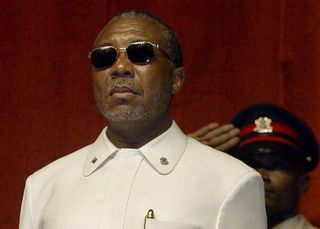
Former Liberian President Charles Taylor was found guilty of war crimes and crimes against humanity in the last trial of a major figure for the Special Court for Sierra Leone. Taylor was convicted of aiding rebels in the Revolutionary United Front in neighboring Sierra Leone in exchange for blood diamonds, but was found innocent of having direct control over forces.
It is a landmark victory, as it is the first conviction of a former national leader for grave crimes since Karl Doenitz, who briefly ruled Nazi Germany after Hitler, was convicted at Nuremberg. This verdict lays the groundwork for holding fair trials of other heads of state accused of atrocities, such as Sudan’s Omar Al-Bashir and Syria’s Bashar Al-Assad.
As international law has developed over time, there has been a dramatic increase in the world community’s acceptance of the prosecution of tyrannical leaders. From the U.N.’s request for an investigation into the Libyan conflict to Syrian protesters calling for Assad to stand trial at the International Criminal Court, it is encouraging that international courts are now regarded as a major tool to end the impunity of war criminals and to provide justice for their victims.
Taylor will be sentenced on May 30th to prison in Great Britain.
by Citizens for Global Solutions | Apr 23, 2012 | Global Justice, News, Peace & Disarmament
Today, GlobalSolutions.org issued a press release, congratulating the Obama administration for rolling out the Atrocity Prevention Board today at the U.S. Holocaust Memorial Museum. CEO Don Kraus noted, “This address was the most substantive speech I have ever heard a President give on genocide prevention.”
Click here to read the release in full.
by Melissa Kaplan | Apr 19, 2012 | Global Justice, News
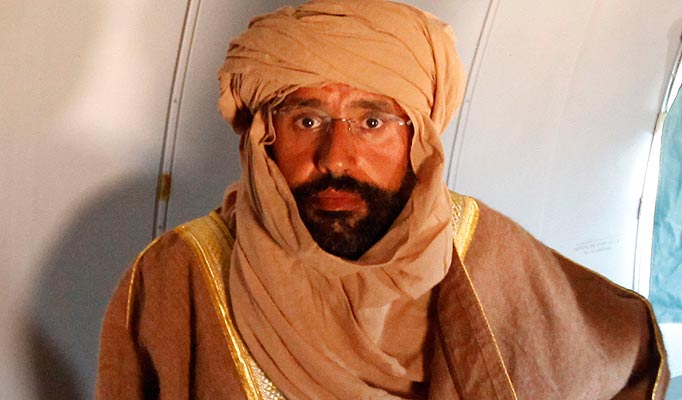
Luis Moreno-Ocampo, chief prosecutor of the International Court (ICC), met yesterday with Libyan officials who reiterated their refusal to hand over Saif Gaddafi to the ICC.
Saif, along with his late father Muammar Gaddafi and Gaddafi’s former intelligence chief Abdullah al-Senoussi, have been charged by the Court with crimes against humanity following an investigation last spring after the U.N. Security Council referred the situation in Libya to the ICC. The new Libyan government had previously pledged to work with the ICC and hand over the indictees so they could face trial in The Hague. Since then, however, Libya had pushed to keep Saif in Libya and try him there, while the ICC had insisted he be turned over to the Court.
But Prosecutor Ocampo sounded a different note yesterday after meeting with Libyan leaders, stating “”They believe they can do it, it’s not my call. The decision here is for the judges, not for me.” Despite the fact that the ICC should have jurisdiction in the Saif Gaddafi case due to the Security Council referral, Ocampo added that “The legal system here is okay… The fact that we are discussing how to do justice – if the Libyans do it or the ICC does it – shows that the case is moving. One year ago it was a mess, today we are discussing legal issues, we are organizing, everything is different.”
We’ll continue to keep you updated on the Saif Gaddafi situation as events unfold.