Originally published on the CGS blog on April 27, 2012.
Sudanese President Omar al-Bashir addressed a party rally in Khartoum last week, vowing to never compromise with the “poisonous insects” of South Sudan, using frightening rhetoric reminiscent of the Rwanda genocide.
Although neither Sudan, nor South Sudan, have declared war on the other, Sudan littered its neighbor with eight bombs following these hateful words. This violence has all been attributed to the disputed borders between the long-rivaling neighbors and unresolved issues over nearby oil reserves. Since April 10, when South Sudan took control of the oil-rich town of Heglig, the two nations have been, as many describe, on the brink of war.
Prompted by the recent violence that erupted, the House of Representatives Committee on Foreign Affairs held a hearing yesterday to examine the current conflict and discuss possible policy options the United States and other nations should explore in order to avoid an all-out war in the region.
Chairman Chris Smith (D-NJ) opened the hearing by noting the July 2011 Comprehensive Peace Agreement (CPA) between Sudan and South Sudan was never fully implemented, with no set border or equal division of the oil revenues laid out. Ambassador Princeton Lyman testified at the hearing, declaring that “this conflict will not be solved militarily—this is a long and deep rooted political issue.” He further noted that what should happen immediately is a cease-fire and that the border should be demilitarized and carefully monitored: two conditions that were outlined in the peace accord in July 2011 but were never implemented.
Ambassador Lyman’s overview of the growing tensions explained that South Sudan’s invasion of Heglig was pivotal because it is “a region of Sudan responsible for roughly 12% of that country’s oil production and 50% of its oil processing.” Although South Sudan’s actions drew an immediate backlash from the international community, Chairman Smith noted that “both sides have taken actions that have made the situation we now face more difficult to resolve, but a false equivalency will not help us achieve a lasting peace.” He further noted that Sudan has been committing “vicious” attacks for months, displacing and killing thousands of civilians. To equate this with South Sudan’s “short-term occupation of a strategic town will neither placate the North into ending its cruelty against its own citizens nor shame the South into withdrawing from the staging ground for assaults against it.”
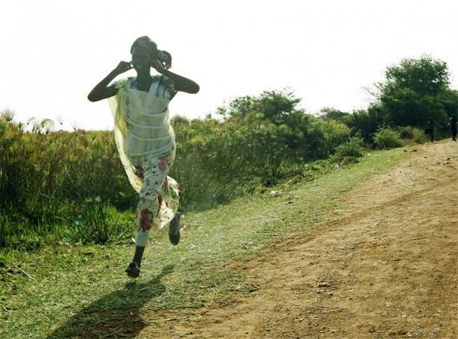
Assistant Administrator from the Bureau for Democracy, Conflict, and Humanitarian Assistance, Nancy Lindborg also testified before the committee, emphasizing the urgent and growing humanitarian crisis. The fighting that has erupted in Sudan’s southern Kordofan and Blue Nile states “has now escalated into cross-border conflict and displaced, killed and severely affected over half a million people.” A tremendous humanitarian crisis has arisen, as the conflict has disrupted harvests, trade, and social services.
What makes this humanitarian issue so appalling, Lindborg adds, is “the Government of Sudan continues to block the international community from reaching those in need, and all local coping mechanisms will soon be exhausted,” causing what USAID experts estimate almost 250,000 civilians to face a food emergency. Already, there have been roughly 28,000 refugees that have fled to South Sudan and 300,000 more displaced in the Blue Nile region. The committee discussed possible options to help the displaced and starving civilians, one option being food drops into the region, since NGOs are no longer allowed. Ambassador Lyman regrettably responded that the Sudanese government would most likely consider the food drops to be an act of hostility, emphasizing that the United States and partners should work to convince President al-Bashir of the pressing humanitarian crisis at hand.
Several representatives on the committee expressed concern for the already-marginalized group within society: women and girls. As this group faces factors of gender-based violence and discrimination on a regular basis, when women and girls are thrust into a volatile situation such as this, the added risk of rapes and violence increases exponentially. Lindborg echoed these concerns and noted the importance of faith-based humanitarian groups that are working to ensure the safety of women and girls in the refugee camps. Ambassador Lyman added that women and girls in war are the ones who suffer most, and he pledged to keep their safety and rights protected in the ongoing negotiations he is involved in.
It was evident that to everyone at the committee and those testifying that the number one priority was to avoid this conflict to escalate into a war. Ambassador Lyman stated that neither Sudan, nor South Sudan want war. Neither country has the means or resources to wage war, let alone win one. Yet after 20 years of war between the two sides, the emotional and political elements ingrained in this conflict could almost certainly lead to a war. The committee resolved to make this a pressing issue, as the Obama administration has already made numerous appeals to Sudan and South Sudan to cease fire. To avoid war, there needs to be more accessible and frequent communication between the leaders of Sudan and South Sudan. This is key to opening diplomatic talks and avoiding what would be a devastating war. The committee also stressed that the international community needs to have one clear, united message to both nations, that both of their aggressive rhetoric and violent acts are completely unacceptable.
Ambassador Lyman ended by saying in the next week, he and Secretary Hillary Clinton will be traveling to China to speak with President Hu Jintao about the crisis on hand, knowing that Chinese interest in the region is essential, as China gets about 5% of its oil supply from Sudan. He also added that talks with the Arab Spring will be aimed at sending this united message of condemnation to both Sudan and South Sudan.
In the mean time, as the United States government, the international community, and peacekeepers strive to reconcile the conflict between Sudan and South Sudan, focusing on the humanitarian crisis at hand and helping the displaced civilians in the region is essential.