by Citizens for Global Solutions | Apr 15, 2023 | Global Justice
The little known story of how American public outrage capitulated German lawmakers to compensate Polish survivors of Ravensbrück
With the passing of Benjamin Ferencz on April 7, humanity lost a tireless advocate for justice, world law, and human rights. Ben was a long-time CGS supporter, served as a National Council Advisor, and a world federalist.
On November 11, 2018, Citizens for Global Solutions honoured Ben with the Norman Cousins Global Governance Award which recognized his substantial contributions to world federation and improving global governance.
The following excerpt is Ben speaking at the awards ceremony about his friendship with Norman Cousins as well as their work ensuring compensation for the Ravensbrück survivors.
Ben’s Reflections on Receiving the Norman Cousins Global Governance Award:
A number of the Polish Catholic girls who were interned in the Ravensbrück Concentration Camp, and there they were subjected to a series of medical experiments by the Nazi troops in order to test out whether various glass in the wounds and sand in the wounds and other horrible experiments–how long will it take to cure them and what it took not to cure them.
And this is the subject of one of the subsequent Nuremberg trials, known as the Medical Case, which was one of the first cases after the trial by the International Military Tribunal against Göring.
Caroline Ferriday who is lady of some means and she had arranged to visit a number of the Polish Catholic girls who were interned in the Ravensbrück Concentration camp and there they were subjected to a series of medical experiments by the Nazi troops in order to test out whether the various glass in the wounds and sand in the wounds and- other other horrible experiments – how long will it take to cure them on what it took to not cure them and this is the subject of one of the subsequent Nuremberg trials, known as the Medical Case, was one of the first cases after the trial by the International Military Tribunal against Göring.
So, she was aware of this and she went to Norman Cousins and said, “Well, you are taking care of this Hiroshima Maidens, can’t you do the same for these Ravensbrück lapins?” Because lapins is French for “rabbits” or “guinea pigs” and were being used as human guinea pigs. And he agreed to try and help her and he set up a small committee. I was the pro bono counsel to that Committee because I negotiated with the German government about compensation for all of the Nazi persecution. And so, she visited me and I said I would try to get the German governments to agree, but it would be difficult because we had a complicated indemnification law. And it had no provision or made for compensate anybody in Poland and the Germans took a very harsh position.
Saying, look, we were at war with this country, they were killing our soldiers there we’re not going to compensate anybody our country with which we were at war. And the Committee took a dim view of that.
I met with the German Ambassador in Washington, and I said, “Look this is an exceptional case.” He said, “I’m sorry this is built with the legislature which we’ve done as much we tend to do.”
Whereupon the Committee arranged with Pan Am to fill up a plane with the ladies that we call the ‘Ladies from Ravensbrück’ and bring them to New York. And there we arranged for a ceremony to take place on the steps of St. Patrick’s Cathedral where they were greeted by the bishop or whoever it was saying, “you know, women of Ravensbrück, look what terrible things the Nazis did to you, and they refuse to compensate you for the lapins!” And so, we got a lot of publicity and the German Ambassador, whom I had pretty good relations, he sent me a copy of the cable that he had sent to Bonn [Germany].
Saying this is not a financial problem, this is a political problem so get them out of here. They’re going to go, we had arranged this visit, all the Senators who had a Polish constituency in the Senate to welcome the girls from Poland saying, oh look how terribly they were treated by the Nazis, and they won’t compensate them for anything, any come with you excuses and so on.
So, we’re going to put high pressure on and the Germans had to capitulate. And I was present in Bonn when the Cabinet called a Special Meeting on this question, whether they could expand their laws. And they all said, “make sure that that Ferencz guy doesn’t get involved in this thing. Anyway, he’s just making it hard until we don’t want anything to do with him.” I said that’s fine! But would you deal with the Red Cross, the International Committee of the Red Cross? And they agreed.
So, I flew to Geneva and set up arrangements whereby the German Government agreed to pay a fixed sum agreement. Norman Cousins was really the leader of the team meetings that took place in his office usually and he was fully involved, and he was writing about it all the time. So, it was largely as a result of his efforts that many people would not have been compensated.
We created whole system and Norman was really the leader of this and our meetings took place in his office, and he was fully involved, and he was writing about it all the time. So, it was largely as a result of his efforts that many people would not have been compensated, did receive compensation for some terrible wounds taken on deliberately by the Nazi regime. So, Norman and I were good friends, and I followed his career. When he was finally ill, and I recognized that he extended his own life expectancy by adopting of philosophy of making jokes and trying to keep up with your humor and everything he did certainly extended his life and he was a great man. I’m very honored to receive any award which bears his name.
Benjamin Ferencz is remembered for being a lead investigator in the Nuremberg Trials where all of the 22 defendants were convicted and a tireless advocate for the International Criminal Court (ICC). Additionally, Ben was also a staunch world federalist and served on CGS’s National Advisory Council for decades and is the author of Planethood, which makes the case for a democratic world government. May his legacy be an inspiration for justice and peace.
Norman Cousins was the editor of the Saturday Review for more than thirty years and had a powerful platform from which to help shape American public debate during the height of the Cold War. Under Cousins’ leadership, the magazine was considered one of the most influential in the literary world. Cousins’ progressive, nonpartisan editorials in the Review earned him the respect of the public and US government officials. Norman was also a world federalist and peace activist and served as CGS’s President twice from 1952-1954 and again from 1976-1990.
by David Oughton | Apr 12, 2023 | Global Justice
Benjamin Ferencz died on April 7, 2023 at the age of 103. He lived a very rewarding and meaningful life. I had the privilege of meeting him several times, most recently when he received a lifetime achievement award from the Law School at Washington University in St. Louis. He also received a lifetime achievement award from Citizens for Global Solutions. He had served as a member of its National Advisory Board. For many years at their events, the St. Louis chapter of CGS handed out many free copies of Ben’s popular book Planethood. This primer for how to outlaw war outlines eight steps for lasting peace and prosperity.
I had the privilege of introducing the documentary film “Prosecuting Evil” at a recent Jewish Film Festival in St. Louis. This film begins with a quote from Aristotle: “At his best, man is the noblest of all animals; separated from law and justice he is the worst.” During his long life, Ben Ferencz saw the best and the worst of humanity. Because of his experiences in the Second World War, Ben explained how “war can make murderers out of otherwise decent people.” His lifelong passion was to free the world of the war system through legal systems. Ben’s mantra was “Law, not war.”
Ben was born in Eastern Europe of Jewish parents. When he was a baby, his family came to the United States and lived in New York City. After learning English as a replacement of his native Yiddish, Ben eventually graduated from City College and then went to Harvard Law School where he studied war crimes. He then joined the U.S. Army during the Second World War. As a war crimes investigator, he visited many concentration camps after they were liberated by the Allies.
At age 27, Ben became the chief prosecutor of one of the subsequent trials at Nuremberg. He prosecuted Nazi leaders like Otto Ohlendorf who were involved in the Einsatzgruppen, the mobile killing squads who rounded up about one million Jews and shot them. The Nazis then sought a cheaper and quicker way to murder millions of innocent people. They created death camps where many Jews were asphyxiated by poison gas. Ben referred to the Nuremberg Trials as the “biggest murder trial in history.”
After prosecuting Nazi leaders, Ben was able to force the German government to take care of Jewish cemeteries in perpetuity. He then came back to the United States and worked as a human rights lawyer. As a professor of international law at Pace University, Ben wrote many books and articles on international criminal law.
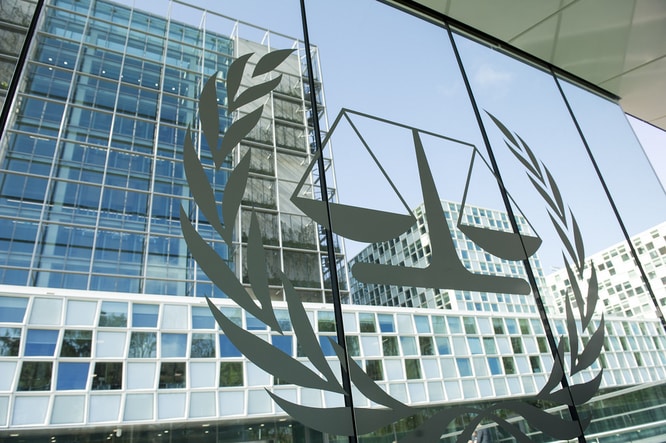
Because of his experience as a prosecutor at Nuremberg, Ben was convinced that the world needed a permanent International Criminal Court. He was a champion for the creation of the ICC which came into existence with the Treaty of Rome in 1998 and the ratification by enough national governments in 2002. The ICC can prosecute individuals involved in war crimes, crimes against humanity, genocide, and aggression when national courts are unable or unwilling to prosecute them. Ben saw this as an important deterrent; it sends the message that people, especially national leaders, cannot get away with mass murder. The problem is that only about two-thirds of the national governments are parties to the workings of the ICC. The United States, Russia, and China are not parties because their vetoes in the UN Security Council do not apply in the ICC. It was an op-ed in the New York Times which Ben wrote with Robert McNamara that convinced President Clinton to sign the Treaty of Rome in 2000. But President George W. Bush notified the United Nations in 2002 that the United States would not pursue ratification of this treaty.
Ben believed that universal support for the ICC would be an important step in creating “a more humane and peaceful world order.” For this man who prosecuted Nazi leaders and became one of the world’s foremost experts in international criminal law, law is better than war.
by Lawrence Wittner | Jan 31, 2023 | Global Justice, Human Rights
The Ukraine War has provided a challenging time for the nations of the world and, particularly, for international law.
Since antiquity, far-sighted thinkers have worked on developing rules of behavior among nations in connection with war, diplomacy, economic relations, human rights, international crime, global communications, and the environment. Defined as international law, this “law of nations” is based on treaties or, in some cases, international custom. Some of the best-known of these international legal norms are outlined in the United Nations Charter, the Universal Declaration of Human Rights, and the Geneva Conventions.
International Law and Ukraine
The UN Charter is particularly relevant to the Russian invasion of Ukraine. Article 2, Section 4, perhaps the most important and widely-recognized item in the Charter, prohibits the “use of force against the territorial integrity or political independence of any state.” In Article 51, the Charter declares that “nothing in the present Charter shall impair the inherent right of individual or collective self-defense if an armed attack occurs against a member of the United Nations.”
Ukraine, of course, although partially or totally controlled by Russia or the Soviet Union during portions of its past, has been an independent, sovereign nation since 1991. That year, the Soviet Union, in the process of disintegration, authorized Ukraine to hold a referendum on whether to become part of the Russian Federation or to become independent. In a turnout by 84 percent of the Ukrainian public, some 90 percent of participants voted for independence. Accordingly, Ukraine was recognized as an independent nation. Three years later, in the Budapest Memorandum, Ukraine’s government officially agreed to turn over its large nuclear arsenal to Russia, while the Russian government officially pledged not only to “respect the independence and sovereignty and the existing borders of Ukraine,” but to “refrain from the threat or use of force” against that country. In 1997, Ukraine and Russia signed the Treaty on Friendship, Cooperation, and Partnership, in which they pledged to respect one another’s territorial integrity.
The Russian Military Assaults of 2014 and 2022
Despite these actions, which have the status of international law, the Russian government, in 2014, used its military might to seize and annex Crimea in southern Ukraine and to arm pro-Russian separatist groups in the nation’s eastern region, the Donbas. Although a Russian veto blocked a UN Security Council rebuke, the UN General Assembly, on March 27, 2014, passed a resolution (“Territorial Integrity of Ukraine”) by a vote of 100 nations to 11, with 58 nations abstaining, condemning the Russian military seizure and annexation of Crimea. Ignoring this condemnation of its behavior by the world organization, the Russian government incorporated Crimea into the Russian Federation and, in August, dispatched its military forces into the Donbas to bolster the beleaguered separatists. Over the following years, Russia’s armed forces played the major role in battling the Ukrainian government’s troops defending eastern Ukraine.
Then, on February 24, 2022, the Russian government, in the most massive military operation in Europe since World War II, launched a full-scale invasion of Ukraine. Although UN Security Council action was again blocked by a Russian veto, the UN General Assembly took up the issue. On March 2, by a vote of 141 countries to 5 (with 35 abstentions), it demanded the immediate and complete withdrawal of Russian military forces from Ukrainian territory. Asked for its opinion on the legality of the Russian invasion, the International Court of Justice, the world’s highest judicial authority, ruled on March 16, by a vote of 13 to 2 (with Russia’s judge casting one of the two negative votes) that Russia should “immediately suspend” its invasion of Ukraine.
The Illegality of Russia’s Annexation of Ukrainian Territory
In late September 2022, when the Kremlin announced that a ceremony would take place launching a process of Russia’s annexation of the Ukrainian regions of Donetsk, Luhansk, Kherson, and Zaporizhzhia, UN Secretary-General Antonio Guterres warned that “any annexation of a state’s territory by another state resulting from the threat or use of force is a violation of the principles of the UN Charter and international law.” Denouncing the proposed annexation, Guterres declared:
- It cannot be reconciled with the international legal framework.
- It stands against everything the international community is meant to stand for.
- It flouts the purposes and principles of the United Nations.
- It is a dangerous escalation.
- It has no place in the modern world.
Nevertheless, the following day, Russian President Vladimir Putin signed an accord to annex the regions, declaring that Russia would never give them up and would defend them by any means available.
In turn, the nations of the world weighed in on the Russian action. On October 12, 2022, the UN General Assembly, by a vote of 143 countries to 5 (with 35 abstentions), called on all nations to refuse to recognize Russia’s “attempted illegal annexation” of Ukrainian land.
Law Without Enforcement
What, then, after surveying this sorry record, are we to think about the value of international law? It is certainly useful for defining the rules of international behavior―rules that are essential to a civilized world. Addressing the UN Security Council recently, the UN Secretary General declared that “the rule of law is all that stands between peace and stability” and “a brutal struggle for power and resources.” Even so, although it is better to have agreed-upon rules rather than none at all, it would be better yet―indeed, much better―to have them enforced.
And therein lies the fundamental problem: Despite agreement among nations on the principles of international law, the major entities providing global governance―the United Nations and the International Court of Justice―lack the power to enforce them. Given this weakness at the global level, nations remain free to launch wars of aggression, including wars of territorial conquest.
Surely the Russian invasion of Ukraine should convince us of the need to strengthen global governance, thereby providing a firmer foundation for the enforcement of international law.
by Rene Wadlow | Dec 7, 2017 | Global Justice, Peace & Disarmament
The flight on 23 November 2017 of Igor Plotinitsky, President of the separatist Ukrainian area of the Lugansk People’s Republic is a sign of the continuing difficulties of developing appropriate forms of constitutional government in the Ukraine. Plotinitsky was in open conflict with his “Minister of the Interior” Igor Konet whom he had fired but who refused to give up his position. It is reported that military troops are moving from Donetsk, the other People’s Republic of the Donbass, and perhaps other troops from Russia but without signs of identification.
Much of the fate of the two Donbass People’s Republics is in the hands of President Putin, but he is unwilling to take public responsibility. Some have argued that two people’s republics in Donbass is one too many and that the two republics will be unified under the leadership of President Alexandre Zakhartchenko of Donetsk. Meanwhile the Ukrainian government has reinforced its troops on the frontier with the separatist zone.
Officially the Donbass is under an agreement signed in Minsk on 12 February 2015 among Russia, Germany, France, and Ukraine acting under a mandate of the Organization for Security and Cooperation in Europe (OSCE). The agreement called for a ceasefire, local elections, a reintegration into the State of Ukraine but with constitutional reforms giving greater local autonomy. In practice, the Minsk accords have never been carried out.
The new crisis may return to the status quo of continuing tensions, occasional artillery exchanges, a lack of any effective cooperation, and a continuing economic decline. It is estimated that some 10,000 persons have been killed in the conflict since April 2014. However, there is a danger that the conflict slips out of control, and violence increases. The secretariat of the OSCE must be on high alert.
A crisis can at times be a moment to reconsider the possibilities and to seek a more long-lasting agreement. At the start of the Ukraine conflict in April 2014, the Association of World Citizens had proposed the creation of a Ukrainian confederation with decentralization, respect for cultural autonomy, economic cooperation among the Russian Federation, Ukraine, and the European Union. Some of the ideas are reflected in the Minsk agreement, but distrust is so high that no practical steps have been taken.
The current crisis may serve as a reminder of how dangerous a disintegrating Donbas can be. An alternative would be to study seriously the possibilities of a con-federal Ukraine.
The Association of World Citizens has a long-standing interest in developing appropriate constitutional structures for States facing the possibilities of prolonged or intensified armed conflicts. In the recent past, we have proposed con-federal structures to deal with conflict situations in Mali, Ukraine, Myanmar, Libya and Cyprus as well as Kurdistan which involves both the structure of Iraq as well as positive cooperation among Kurds living in Iraq, Syria, Turkey and Iran.
Con-federation and autonomy are broad concepts, capable of covering a multitude of visions extending from very limited local initiatives to complete control over everything other than foreign policy. Autonomy can therefore incorporate all situations between nearly total subordination to the center to nearly total independence. The ways in which the elements and patterns of autonomy are put together requires political imagination, far-sighted political leadership, a willingness to compromise, and constant dialogue.
In none of the six situations on which we have made proposals have we found much of a climate for meaningful negotiations although there have been formal negotiation processes carried out in the Ukraine case by the Organization for Security and Cooperation in Europe (OSDE) and on Cyprus by the United Nations.
Negotiations means a joint undertaking by disputants with the aim of settling their disputes on the basis of mutual compromise. Negotiation is a basic political decision-making process, a way of finding common interests, to facilitate compromise without loss of what each considers to be essential objectives. For the parties in a conflict to seek a compromise requires a certain climate – an informed public opinion that will accept the compromise and build better future relations on the agreement.
The challenges posed by the conflicts in Mali, Ukraine, Myanmar, Libya, Cyprus and Kurdistan need to be measured against the broad concept of security. Barry Buzan of the University of Copenhagen sets out four types of security. “Political security concerns the organizational stability of states, systems of government, and the ideologies that give them legitimacy. Economic security concerns access to the resources, finances and markets necessary to sustain acceptable levels of welfare. Societal security concerns the sustainability within acceptable conditions of the evolution of traditional patterns of language, culture, religions and customs. Environmental security concerns the maintenance of the local and the planetary biosphere as the essential support system on which all other human enterprises depend.”
One of the difficulties in each situation is what I would call “the frozen image of the other”. In each case, the group or groups demanding new State structures are seen in the minds of the current government authorities as being the same people with the same aspirations as when the demands were first made: the Karen of Myanmar today are the same as the Karen of the Union of Burma in 1947; the Tuareg of north Mali today are the same as those calling for the creation of an independent State in 1940 when the withdrawal of French troops to Dakar had left a political vacuum.
However, there have been evolutions in policy proposals and in the level of education and experience of new leadership of those demanding autonomy. Yet “frozen images” exist and need to be overcome within all decision-makers involved. The modification of “frozen images” is one of the tasks of non-governmental organizations and Track II diplomatic efforts.
Rene Wadlow, President, Association of World Citizens
by Rene Wadlow | Oct 18, 2017 | Global Justice, Human Rights
The United Nations together with the governments of Sweden and Switzerland which have often led humanitarian issues in the U.N. system held a high-level pledging conference in Geneva on 25 April 2017 to again draw attention to the deepening humanitarian crisis in war-torn Yemen, currently the largest food security emergency in the world. Some 60% of the population is in a food-insecure situation.
More than 3.5 million people have been displaced in the cycle of escalating violence. “We are witnessing the starving and the crippling of an entire generation. We must act now, to save lives” said Secretary-General Antonio Guterres who presided over the conference. Realistically, he stressed that funding and humanitarian aid alone will not reverse the fortunes of the millions of people impacted. Diplomatically, he called for a cessation of hostilities and a political settlement with talks facilitated by the Special Envoy of the Secretary General, the Mauritanian diplomat Ismail Ould Chekh Ahmed.
UN officials and most diplomats are reluctant to call the armed conflict by its real name: “a war of aggression”. The aggression of the Saudi Arabia-led coalition (Bahrain, Egypt, Jordan, Kuwait, Morocco, Qatar, Sudan, and the United Arab Emirates) against Yemen began on 24 March 2015. The Saudi-led coalition is helped with arms and “intelligence” by the USA and the UK which appreciate Saudi money for arms and do not want to antagonize a large segment of the Arab world when the conflicts of Syria-Iraq-Kurds-Turkey is still “on the table.”
However the aggression of the Saudi coalition is what has turned an internal Yemen struggle for power between the current and the former President of Yemen into a war with regional implications, now drawing Iran into the picture.
Intellectually, the “political solution” is clear. There needs to be an end to the Saudi bombing and a withdrawal of its coalition troops. Then, the different factions in Yemen can try to develop some sort of inclusive government. The Swiss Foreign Minister, a co-host of the conference, hinted to the issue in suggesting very briefly that, if asked, Switzerland could provide expertise on forms of decentralization and con-federal government.
The effort to create a centralized Yemen government has failed. The future lies in a very decentralized government with great autonomy for the regions, taking into consideration the diverse tribal configuration of the country. With intelligence and patience – always in short supply – a single, highly decentralized State might be developed.
The most difficult first-step is ending Saudi-led aggression, after which an effective humanitarian aid and development program can be put into effect. Now, “better late than never”, a resolution on the war in Yemen has been introduced into the US House of Representatives (H. Con. Res 81) by Representatives Rio Khanna (D.CA), Thomas Massie (R. KY), Mark Pocan (D. WI), Walter Jones (R.NC). Call your representative in the US House (202-224-3121) and ask them to support this bipartisan resolution.
by Lawrence Wittner | Sep 19, 2017 | Global Justice, World Federation
Has nationalism captured the hearts and minds of the world’s people?
It certainly seems to have emerged as a powerful force in recent years. Trumpeting their alleged national superiority and hatred of foreigners, political parties on the far right have made their biggest political advances since the 1930s. After the far right’s startling success, in June 2016, in getting a majority of British voters to endorse Brexit―British withdrawal from the European Union (EU)―even mainstream conservative parties began to adopt a chauvinist approach. Using her Conservative Party conference to rally support for leaving the EU, British Prime Minister Theresa May declared contemptuously: “If you believe you are a citizen of the world, you are a citizen of nowhere.”
The tilt toward an aggressive nationalism was particularly evident in the United States, where Donald Trump―amid chants of “USA, USA” from his fervent supporters―promised to “make America great again” by building a wall to block Mexicans, barring the entry of Muslims to the United States, and expanding U.S. military might. Following his surprise election victory, Trump told a rally in December 2016: “There is no global anthem. No global currency. No certificate of global citizenship. We pledge allegiance to one flag and that flag is the American flag.” After wild cheering from the crowd, he added: “From now on it is going to be: America First. Okay? America first. We’re going to put ourselves first.”
But the nationalists suffered some major setbacks in 2017. In elections that March in the Netherlands, the xenophobic Party for Freedom, though given a chance at victory by political pundits, was soundly defeated. Much the same happened in France, where, that May, a political newcomer, Emmanuel Macron, trounced Marine Le Pen, the candidate of the far right National Front, in an election for the presidency by a 2-to-1 vote. A month later, in parliamentary elections, Macron’s new party and its allies won 350 seats in the 577-member National Assembly, while the National Front won only 9. In Britain, Theresa May, confident that her new, hard line on Brexit and divisions in the opposition Labour Party would produce huge gains for her Conservative Party, called for a snap election in June. But, to the shock of observers, the Tories lost seats, as well as their parliamentary majority. Meanwhile, in the United States, Trump’s policies produced a vast wave of public resistance, his approval ratings in opinion polls sank to levels unprecedented for a new President, and he was forced to purge Steve Bannon―the top nationalist ideologue in his election campaign and in his administration―from the White House.
Although a variety of factors contributed to the nationalist defeats, widespread internationalist views certainly played a role. During Macron’s presidential campaign, he repeatedly assailed the narrow-minded nationalism of the National Front, projecting instead an internationalist vision of a united Europe with open borders. In Britain, May’s fervent support for Brexit backfired among the public, especially internationally-minded youth.
Indeed, over the centuries cosmopolitan values have become a strong current in public opinion. They are usually traced to Diogenes, a philosopher of Classical Greece, who, asked where he came from, replied: “I am a citizen of the world.” The idea gained increased currency with the spread of Enlightenment thinking. Tom Paine, considered one of America’s Founding Fathers, took up the theme of a loyalty to all humanity in his Rights of Man (1791), proclaiming: “My country is the world.” Similar sentiments were expressed in later years by William Lloyd Garrison (“My country is the world; my countrymen are all mankind”), Albert Einstein, and a host of other globalist thinkers. After the Second World War brought the nation-state system to the brink of collapse, a massive social movement developed around the idea of “One World,” with world citizenship campaigns and world federalist organizations attaining substantial popularity around the globe. Although the movement declined with the onset of the Cold War, its core assumption of the primacy of the world community persisted in the form of the United Nations and of worldwide campaigns for peace, human rights, and environmental protection.
As a result, even as a nationalist frenzy has erupted in recent years, opinion surveys have reported a very strong level of support for its antithesis: world citizenship. A poll of more than 20,000 people in 18 countries, conducted by GlobeScan for the BBC World Service from December 2015 through April 2016, found that 51 percent of respondents saw themselves more as global citizens than as citizens of their own countries. This was the first time since tracking began in 2001 that a majority felt this way.
Even in the United States, where slightly fewer than half of the respondents identified themselves as global citizens, Trump’s hyper-nationalist campaign attracted only 46 percent of the votes cast for President, thus providing him with almost three million fewer votes than secured by his Democratic opponent. Furthermore, opinion polls before and since the election revealed that most Americans opposed Trump’s best-known and most vehemently-supported “America First” program―building a border wall between the United States and Mexico. When it came to immigration issues, a Quinnipiac University survey taken in early February 2017 found that 51 percent of American voters opposed Trump’s executive order suspending travel to the United States from seven predominantly Muslim countries, 60 percent opposed suspending all refugee programs, and 70 percent opposed indefinitely barring Syrian refugees from emigrating to the United States.
Overall, then, most people around the world―including most people in the United States―are not zealous nationalists. In fact, they display a remarkable level of support for moving beyond the nation-state to world citizenship.
By Lawrence Wittner [Dr. Lawrence Wittner (http://www.lawrenceswittner.com) is Professor of History emeritus at SUNY/Albany and the author of Confronting the Bomb (Stanford University Press).]