by Kevin Burke | May 13, 2014 | Global Justice, Peace & Disarmament
Last week, the World Health Organization (WHO) issued a global health emergency stating that polio is rapidly re-emerging as a threat – its expansion in Pakistan, Afghanistan, Syria, Iraq, Nigeria, and Cameroon is truly concerning despite the disease being nearly eradicated in the last few years. The emergency status used includes requirements that people cannot travel from affected countries without evidence of vaccination, and each country is taking additional steps where possible to step up its anti-polio programs.
It didn’t have to be this way. While polio is a devastating illness that paralyzes and sometimes kills its victims, vaccination usually prevents the disease from taking hold. The problem isn’t just that these states have remote or tribal areas that are difficult to reach with vaccines – many states have remote regions and have been able to reach them with state-, UN-, or donor-operated vaccination programs.
Instead, the problem is that each of these outbreak areas has a violent organization opposed in some way to modern medicine. In Syria the government itself uses hunger and aid as a weapon of war, allowing polio to spread in lawless areas where aid is withheld (the disease follows refugees into Iraq). In Nigeria, the Islamist rebel group Boko Haram opposes modern life (including modern medicine) and kills health workers, destabilizing the state and threatening lives in isolated areas (the disease has spread from Nigeria into Cameroon). And the Taliban in Pakistan and Afghanistan has fought against vaccination programs, killing vaccination workers, in tribal areas and wherever else they can find a foothold. This has allowed polio to work its way back to prominence in an area where it could easily have been eliminated with just a few years’ more work.
The obvious common thread among these outbreaks is conflict. Each of these regions has seen conflict over the past several years, and each has difficulty resolving this emergency going forward so long as those conflicts persist.
There’s also a common thread between Nigeria and Afghanistan/Pakistan: a pronounced mistrust of modern medicine. We have our own strain of this in the West, but the version that runs through these communities is both violent and extremely dangerous in a globalized world: dangerous diseases were never limited to the communities in which outbreaks originally occurred, but now they are more likely than ever to leave the shores from which they originated.
The answer isn’t isolation. In fact, it’s the opposite: cooperation. As much as the violent reaction to health workers in some areas comes from paranoia and distrust, we can build trust and familiarity by making health programs permanent rather than ad hoc and by giving medical care a worldwide mandate that ensures the well-being of everyone, everywhere.
The World Health Organization has been greatly beneficial in the provision of healthcare. It doesn’t merely announce emergencies, which is actually a relatively new arrow in its quiver. It also builds health programs; provides research on global health threats; and helps create the day-to-day relationships among governments, between governments and international institutions, and between healthcare workers and patients that make a global health system run smoothly. And with the assistance of healthcare-focused organizations like Doctors Without Borders, the Red Cross, and many more, healthcare is reaching more people in more locations than ever before.
We need to build awareness about how medicines and systems work, and particularly how they are getting even better at meeting needs. Beating polio and quashing anti-science attitudes isn’t an insurmountable goal. Patients have become accustomed to effective, science-based medical treatment all over the world, but we still have some work left to do.
by Don Kraus | May 11, 2014 | Global Justice
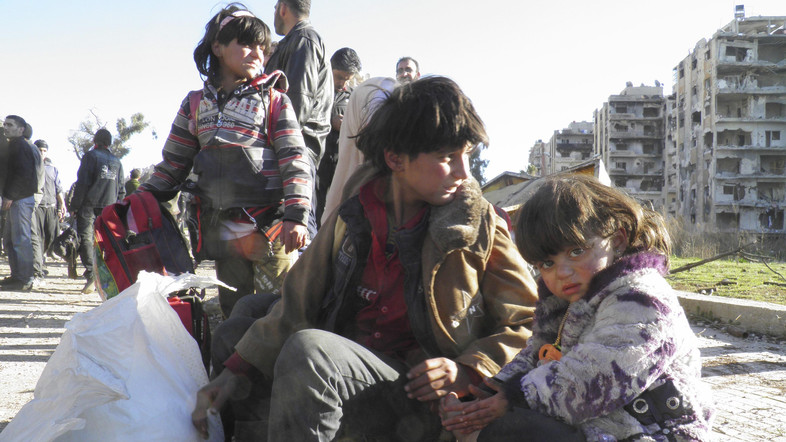
“The children were all asleep in bed and I was just going off to sleep…when I heard people outside saying chemical bombs were being dropped around us,” said Samer, a Syrian refugee. His children survived the chemical weapons attack in Ghouta on the outskirts of Damascus in 2013.
Thankfully, by mid-April of this year, 93% of the Syrian chemical weapon stockpiles have been removed by the Organization for the Prohibition of Chemical Weapons, the watchdog arm of the Chemical Weapons Convention. The United States and other parties to this treaty had worked through the UN Security Council and pressured Syria to accede to the Convention. They are now pushing for the remaining chemicals to be destroyed.
But despite the successful use of international law to take these horrendous weapons out of play in the Syrian civil war, another kind of war is being fought within the United States. The frontlines of the War on International Law stretch from the Senate floor to the living rooms of home-schoolers.
A coordinated and well-funded opposition is doing everything it can to stop the US from ratifying any multilateral treaties. And, to the detriment of our nation and the world, they’re winning. The Senate’s failure to adopt a single global agreement dealing with human rights, arms control, or the environment since 1997–when it agreed to the Chemical Weapons Convention–has damaged the United States’ security, economy, and global leadership.
One of our most cherished values as Americans is the idea that everyone is equal under the law; when nations around the world share that view and agree on what the law is, we are all better off. When we lose sight of that vision, we lose the support of others—often just when we need it most.
Treaties are common sense tools that get things done. The international treaties the United States has helped to shape make international air travel safe and ensure global mail and phone networks work. They outlaw deadly weapons and ozone-destroying chemicals. Treaties fight illegal drugs, and promote basic values such as ending child labor or the use of child soldiers.
The US has played a key role in crafting the Women’s Equality Treaty (CEDAW), the Law of the Sea Treaty, the Disability Treaty, the Arms Trade Treaty, the Comprehensive Test Ban Treaty, and many other important agreements that reflect core US ideals.
Unfortunately, the Senate’s inability to ratify these accords has put our nation in an uncomfortable and often embarrassing situation. For example, the US is the only nation in the world with a functioning government that has not ratified the Rights of the Child Treaty. It is one of seven nations, including Iran, Sudan, and Somalia that has not adopted the Women’s Equality Treaty. By refusing to ratify treaties, the US has less influence on global problem solving.
Treaty opponents include think tanks like the Heritage Foundation; membership organizations such as the National Rifle Association, Tea Party groups, and the Home School Legal Defense Association; and communications outlets like Fox News and The Washington Times. They have formed an integrated echo chamber that shares strategy, messaging, and talking points.
As portrayed in the 2012 Republican platform, they think these agreements create rules that allow “foreigners” to make law that binds the United States. Together they have cajoled enough conservative Republican senators to believe that multilateral treaties represent a grave threat to American sovereignty and democracy (and to their re-election) – making passage close to impossible.
During the last two decades, I have worked on many ratification efforts, co-chaired taskforces, and recently brought together the leaders of six major coalitions seeking Senate adoption of specific agreements. We have learned much:
- Treaty opponents do not discriminate between human rights, women’s rights, arms control, or the environment. They oppose all multilateral agreements. Those who work for stronger international laws must work together more effectively.
- The War on International Law is not about policy – it is political. There is a cost to supporting multilateral agreements, and the partisan environment prevents some moderates from supporting ratification for fear of being “Tea Partied” in a primary.
- Treaty opponents have a battle-tested tactic of using deliberate misinformation about treaties. Their intentional gross distortions inflames their base in order to make the most benign international agreements controversial.
The US and Russia continue to pressure Syria to turn over the remaining nerve agent, Sarin. This is one of the few remaining areas where Moscow and Washington are collaborating. It is one more example of why international cooperation is essential for a safer and more secure world. Whether you care about stopping climate change, getting rid of nuclear weapons, ending genocide or support human rights for all, it is past time to acknowledge and stop our self-destructive war on international law.
by Jake Keyel | Apr 29, 2014 | Global Justice, Human Rights
April 24th marked the one-year anniversary of the Rana Plaza building collapse in Dhaka, Bangladesh.
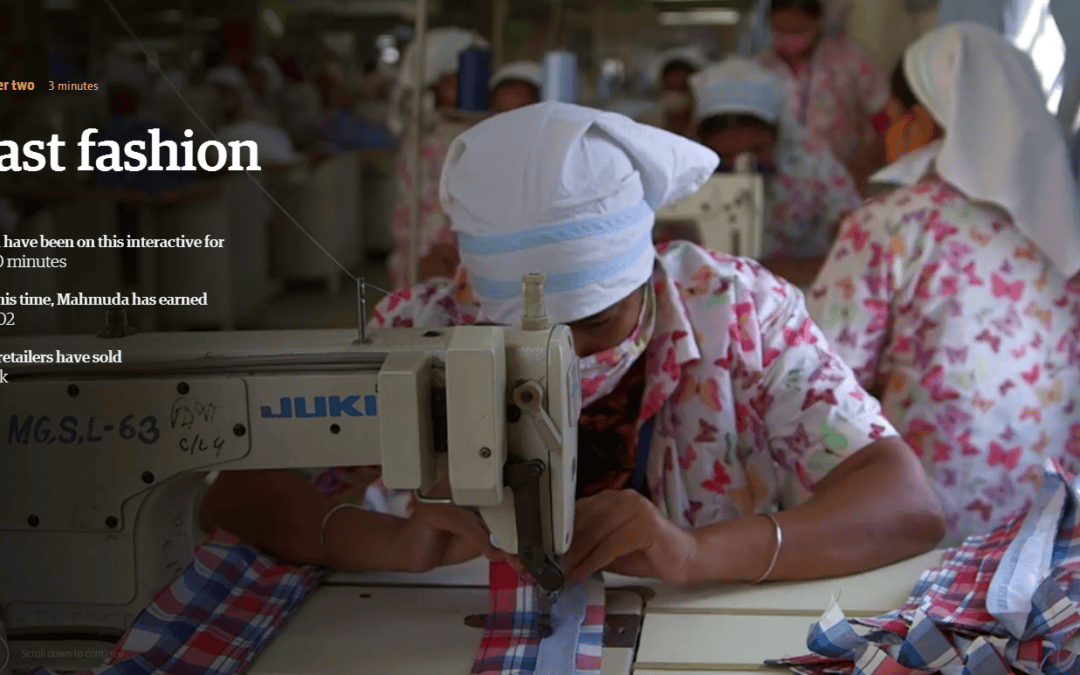
This devastating collapse killed more than 1,100 people and injured 2,500 more. By no means the first industrial accident in Bangladesh’s history, though certainly the most devastating, the collapse was the result of turning a blind eye to the factory’s structural problems by the local owner and the failure of international corporations like Walmart to properly ensure that their supply chains meets minimum safety standards for workers in countries such as Bangladesh.
The garment industry plays an enormous role in Bangladesh’s economy. It is now the world’s second largest apparel producer, behind China, and Bangladesh’s 5,600 garment factories employ 4 million people, 90 percent of whom are women, and produce $20 billion in exports every year. Because this industry dominates the economy, workers often have no choice but to take jobs in unsafe factories for what little income they can earn. The Rana Plaza factory produced clothing for as many as 28 foreign brands,including Walmart and Benetton.
In the aftermath of the Rana Plaza disaster, a victims’ compensation fund was set up with the help of the International Labour Organization (a United Nations organization). $40 million in funding was meant to come from companies linked to the disaster; however, disappointingly,only half of the international brand name clothing manufacturers linked to Rana Plaza have paid into the fund. According to Human Rights Watch, Irish clothing firm Primark has donated $8 million of the $15 million in the fund while 15 other brands whose clothes were manufactured in the factory have contributed nothing. To date, many victims have only received around $645 from the fund.
Additionally, as a result of largely voluntary moves by international corporations to self-regulate, there are signs that some factories in Bangladesh are being upgraded and that safety conditions have begun to improve in the past year. However, the rights of workers, no matter what country or industry they work in, cannot be left to the good will and altruism of individuals or companies. As we have seen, only an event like the Rana Plaza collapse and the outcry that it caused will move international corporations to ensure that their employees, including those in subcontracted factories in countries like Bangladesh, have the safe working conditions that they deserve.
Certainly, tighter domestic controls are necessary as well. The government of Bangladesh has been derelict in adequately ensuring that its citizens have safe working conditions and this tragedy pushed the government to enact new labor protections, including loosening restrictions on union organizing. Unfortunately, it remains to be seen whether conditions will actually improve for workers.
You may come across arguments (like this one) that Bangladesh simply cannot afford to raise safety standards. Regulations, this author argues, will “destroy the jobs that are helping millions of others escape extreme poverty.” But this is an unacceptable argument in light of the fact that the international corporations whose goods are produced in factories like Rana Plaza reap enormous profits while factory workers (even after wage increases in the wake of Rana Plaza) earn barely more than $2 per day and risk their lives simply by going to work. The right to work in a safe environment is a fundamental human right; one which is no less applicable in Bangladesh that it is in the United Kingdom or the United States.
by Kevin Burke | Apr 22, 2014 | Global Justice, Human Rights
On Friday reports surfaced that U.N. documents obtained by Foreign Policy show that the regime of Bashar al-Assad in Syria has been consistently cutting off food supplies to opposition-held areas in order to starve rebels and their supporters into submission. This is a clear-cut war crime under the Geneva Conventions and the UN Security Council needs to provide what evidence it has for this and other crimes against humanity in a referral to the International Criminal Court.
The basic evidence is this: as the World Food Programme has been implementing increased food aid under UN Security Council Resolution 2139, they have taken note of large population movements from opposition-controlled areas to government controlled areas. For months now, experts have been warning that the Assad regime is using hunger as a weapon of war: it cuts off food access to opposition-controlled areas, forcing rebels, supporters, and non-combatants to surrender or die an agonizing death from starvation. This is clearly a war crime: the fourth Geneva Convention explicitly protects the welfare of civilians in conflict.
War crimes demand response from the international community. Many war crimes, such as the use of chemical weapons, civilian targeting, or the use of powerful weapons of mass destruction, are blatant abuses of power and humanity that can often invite immediate reprobation from the international community, often escalating quickly into discussions of the extent to which response is required and how soon.
Intentional starvation of civilians, however, is not an easy issue for which to push for international action, whether diplomatic or military. There won’t be images of innocents suddenly dying for mysterious reasons as with last year’s viral photos and videos of civilians dying from nerve agents. No bombs will destroy historic cities like Aleppo in a hunger campaign, though the results will be even more brutal as tens of thousands of men, women, and children could fall ill and die as a result of starvation and malnutrition. And perhaps most importantly, it takes an extensive amount of evidence independently verified by international observers, journalists, and witnesses, perhaps over a period of months or years; there is no smoking missile trail.
And while food aid provided through NGOs and the World Food Programme is helping, if the actors with military control over regions are refusing to allow access, humanitarian action simply isn’t enough.
Rather than steeling resolve for violent action, or relying simply on humanitarian aid, these sorts of war crimes must resolve us to justice. Yes, the International Criminal Court as a tool for peace is a complicated proposition in Syria as it is in any ongoing conflict. But with the evidence now piling up over many months that hunger is being used as a weapon not only against soldiers, but against civilians, this crime against humanity is too large to ignore and also too important to allow to become a norm of future wars, whether the conflicts are within borders or between states. International criminal justice is the best route to ensure those responsible, both in the Assad regime and among any rebel groups blocking aid to their areas of control, are held to account and properly punished so that normal every day civilians on a massive scale do not become the targets of war.
The UN Security Council must refer the Syrian case to the International Criminal Court. The issues are becoming larger than that conflict and will soon be about whether the international community is willing to tolerate the starvation of civilians as an instrument of war.
by Jeanne Lynch | Apr 21, 2014 | Global Justice
What would you do if major figures in your government were suspected of or charged with war crimes? In Baltic States like Serbia, Bosnia, and Kosovo, this is not very uncommon; however, the difference between these countries comes from which of these figures are actually tried for their crimes. The ICTY (International Criminal Tribunal for the Former Yugoslavia) has put Serbian war criminals on trial since 1993. In Kosovo the rule-of-law is still too new to function perfectly, but many are calling for a more efficient court system to put the accused on trial safely and successfully.
After NATO-led airstrikes in 1999 led to the end of the war between Kosovo and Serbia, and since Kosovo’s declaration of independence in 2008, relations between the two nations have been far from perfect. Serbia to this day refuses to recognize Kosovo as an independent country (along with other major powers like Russia and Spain).
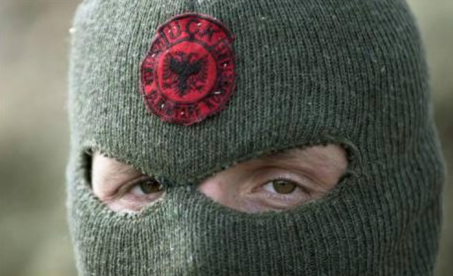
It is no secret that the Kosovo Liberation Army (KLA), which was the opposition to Milosevic’s troops, took part in violent acts against the Serbian military in order to end the Serbian oppression. More recently, however, it has been speculated that prominent Kosovo leaders, like Prime Minister Hashim Thaçi, were involved in much more serious war crimes like organ trafficking.
The EU-led rule-of-law mission in Kosovo (EULEX) has been in charge of most of the proceedings for the crimes that have taken place thus far. The proceedings led by EULEX do not take place in Kosovo, and they have no seat there either. They have, however, helped to establish a rule-of-law in Kosovo where it was severely lacking. The EULEX mission is set to expire on June 14, and that is leaving many people to question what will happen next.
It has been proposed that there should be a special court set up in Kosovo that would be run partly by EULEX, but that would also include Kosovo judges and have a seat in Kosovo (although more serious court proceedings would be held in Brussels). EU officials cite a need for this court in order to continue with investigations of speculated war crimes. The court would continue to have an EULEX influence, while also containing Kosovo judges.
U.S. officials like Tracey Ann Jacobson, the U.S. Ambassador to Kosovo, say that failure of Kosovo to adopt this court “would be potentially very damaging for Kosovo’s credibility and it would give a tool to those who want to question the legitimacy of Kosovo’s independence.” Kosovo is still hesitant because, as Kosovo President Atifete Jahjaga says, Kosovo needs “an independent judicial process to close this difficult chapter in Kosovo’s history”.
So what does this mean for relations with Serbia? Tensions have eased since the signing of the Brussels Agreement in April 2013, which called for talks and larger cooperation between the two nations. Cooperation is a precondition for Serbia’s further progress toward entrance into the EU, which they have been after for some time. With Kosovo wanting to turn their small security force into an army, Serbia wants to pass a resolution that will enforce protection for Kosovar-Serbs in North Kosovo, which could mean a step back. But will the adoption of this court continue to ease tensions? Will Serbia find that prosecuting Kosovar-Albanians is a form of retribution and a step in the right direction?
It is clear that Serbia will not recognize Kosovo as an independent country any time soon, but perhaps the adoption of a special court will help Kosovo’s credibility as well as its future.
Kosovo’s parliament is to review the court proposal in May 2014.
by Kevin Burke | Apr 15, 2014 | Global Justice, United Nations
In recent years, we’ve come to recognize that the world is interconnected, perhaps in ways and on a scale that it never has been before. We live together and affect each other on the same small planet and we are all fundamentally equal regardless of where we are born. Global justice is about deciding how the institutions those interactions create, formal and informal, social, political, and economic, should be managed in a just, equitable way, where everyone is treated fairly and no one is abused.
New international institutions were born in the last century to cope with the consequences of depression and devastating wars in a globalizing world. The United Nations was designed to pursue diplomacy on a variety of issues, and its Security Council in particular was designed to prevent great power war. The International Monetary Fund and the World Bank were designed to rebuild the global economy and keep it stable, so that every state can participate and so that no single state could make a mistake with its economy so terrible that it dooms us all. Institutions keep being birthed, too: a World Trade Organization has formed to help states better manage the flow of goods and services, an International Criminal Court started work just a decade ago to hold violators of human rights to account for their crimes, and more institutions have been created, including regional courts, issue-focused IGOs, and others.
These international institutions do much good, bringing food and shelter to refugees, helping us understand human rights violations, and helping keep the world stable in ways it may not be otherwise.
But if global justice is an institutional concern, then our hopes were for better institutions than these. From the standpoint of justice, institutions that favor certain classes, become corrupt, or fail to treat people fairly must be reformed. Global problems require global solutions, and while these institutions are nearly global in their scope, they are not global in their constituencies: they are international. States have different interests than people do and, in particular, the most powerful states have much of the influence over these institutions. Because Russia has a veto over the UN Security Council’s decisions, Syria remains in flames; because the U.S. refuses to hold a ratification vote, the IMF has its funds restricted and cannot have its vote structure reformed; North Korea is allowed to continue committing atrocities against its citizens because China is an ally. The list goes on. And issues like the 2008 financial crisis, where billions were affected by policies in just a few countries, are not managed in a way that is meaningfully accountable on a global scale.
And yet all the people affected by these issues, whose rights may be deprived by power politics or the simple failure of institutions, have little opportunity to demand reform. The great powers designed the institutions and get to decide when and if they reform; they often decide what actions they take and when they take them. We must reform these institutions in the name of justice.
International institutions changed the world in the 20th century. From setting up the international human rights regime to providing relief supplies and peacekeepers in crises to funding governments and their citizens when in desperate need, these institutions have become a necessary part of daily life. But international institutions are severely flawed: they are not truly global and fail to meet their missions because they are too deeply entrenched in the politics of states. We need a 21st century solution to global problems; let’s reform international institutions to make them more fundamentally global.