by Jake Keyel | Jun 10, 2014 | Global Justice, Human Rights
Only 27 percent of the world’s population had access to a comprehensive social security system in 2012. This is according to the International Labor Organization’s (ILO) newly released “World Social Protection Report 2014-15: Building economic recovery, inclusive development and social justice.”
To put in perspective, that means that 5.2 billion people, nearly three quarters of the world, lack adequate access to social protections such as health care coverage, injury and disability pay, sick time, and pensions in old age. In the report, the ILO outlines the ongoing need for such protections, particularly in the wake of the 2008 financial crisis.
In the immediate aftermath of the crisis, many governments instituted fiscal stimulus plans in order to counteract what was quickly becoming a depression. Unfortunately, in 2010 a new mood of austerity began to sweep the globe (ILO, p. 119-120). Far from alleviating the problem, these policies actually impeded recovery.
Consider, for example, that the number of individuals at risk of poverty in the European Union increased from 116 million in 2008 to 123 million in 2012; this includes an additional 800,000 at-risk children (ILO, p. 136). Moreover, the fact that 116 million people in the European Union—more than 20 percent of its population—were facing poverty even before the financial crisis speaks profoundly to the intense and persistent need to protect and enhance social security systems.
In the United States, programs that provide support to the unemployed, the elderly, and those unable to work sometimes are dismissively referred to as “entitlements.” But much of the world has agreed that individuals are, in fact, “entitled” to such protections. Article 25 of the Universal Declaration of Human Rights (UDHR) unequivocally outlines the right to “maintain benefits, whether in cash or in kind, from (a) lack of work-related income caused by sickness, disability, maternity, employment injury, unemployment, old age, or death of a family member; (b) unaffordable access to health care; (c) insufficient family support, particularly children and adult dependents.”
The ILO report builds upon the UDHR as well as the International Covenant on Economic, Social and Cultural Rights, and clearly and strongly explains that “[t]he case for social protection is compelling in our times. Social protection is both a human right and sound economic policy. Social protection powerfully contributes to reducing poverty, exclusion, and inequality – while enhancing political stability and social cohesion” (ILO, p.120).
Sandra Polaski, the ILO’s Deputy Director-General recently remarked that “[i]t is now a matter of political will to make it [social protection] a reality. Modern society can afford to provide social protection.” 122 countries have reduced their spending (as a percentage of GDP) on social security as a result of the financial crisis (ILO, p.119). This is a trend that must be reversed.
The real question before us is, what kind of society do we want to live in?
Do we want to live in a world where the most vulnerable among us are left to survive (or not) on their own? Currently nearly 40 percent of the world’s population lacks a right to health coverage (ILO, p. 99). And it bears considering that nearly 25 percent of residents of a wealthy region like the European Union are at risk for poverty.
Or would we rather live in a society whose basic fabric is built on the idea that all of its members are entitled to economic and social security? I don’t think there can be any question morally, legally, or economically that we should strive for the latter.
by Jeanne Lynch | Jun 9, 2014 | Global Justice, Peace & Disarmament
The United Nations is now warning of a potential famine in South Sudan. Though South Sudan had agreed to ceasefires in January and again in early May, they did not last. The UN had to act quickly because with the surges of violence, there has been an increase in secondary deaths due to starvation and disease. The conflict has heavily interrupted the crop-growing season by displacing farmers, and the UN estimates that if the violence does not stop, famine will ensue.
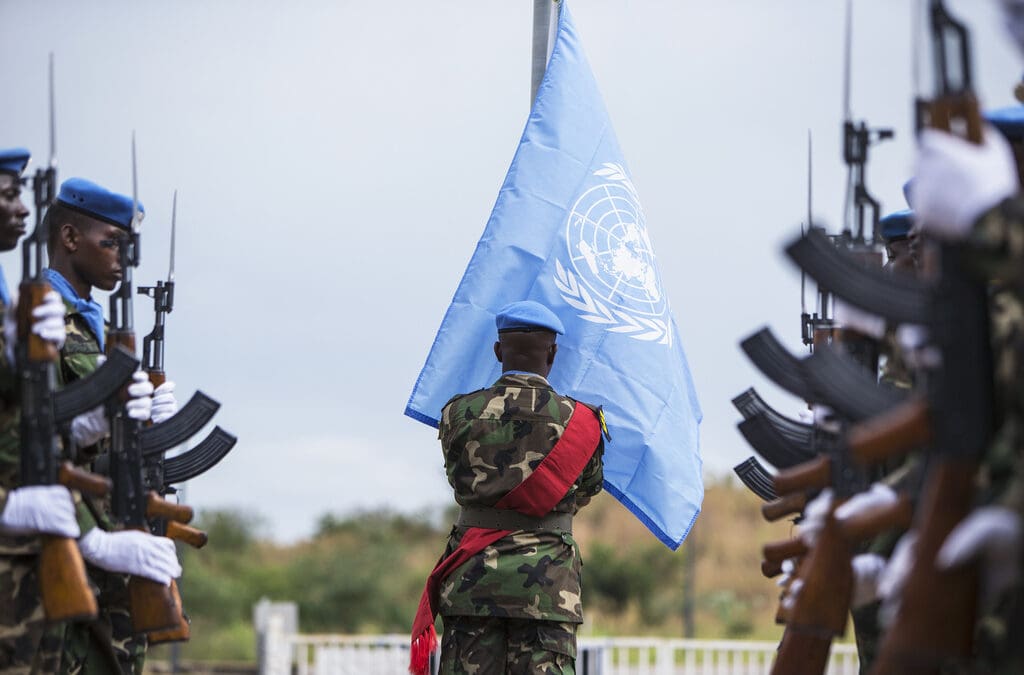
On May 27th the UN Security Council passed Resolution 2155, which renews the UN Mission in South Sudan (UNMISS), but makes some important amendments. From this resolution, a civilian protection mandate was added to address the growing humanitarian and security needs. This stems from un-subsiding violence that broke out in December when President Salva Kiir fired his rival Riek Machar from the deputy president position. This event fueled underlying ethnic tensions between the Dinka who support Kiir and the Nuer who support Machar.
This action of civilian protection from the UN is a huge step in the right direction with regards to UN involvement in conflicts. The UN has a record of not taking appropriate action quickly enough, most notably in Rwanda in 1994; hopefully this is a sign of changes to come.
This civilian protection mandate will encompass many things as the country tries to stabilize itself. It will allow for UN troops to disarm civilians, monitor and investigate human rights violations, create conditions for humanitarian assistance delivery, and support the implementation of the cessation of hostilities agreement.
This mandate change does not come without implications, however. By switching the main goal to civilian protection, the UN is taking focus off of capacity and nation building. In a country as new as South Sudan, one of the most important issues that needs to be addressed is the rule of law and the strength of its institutions. In order for a country to succeed, there needs to be an effective force behind new laws, and a quick and efficient way to deal with crime and corruption.
While ending the violence absolutely is the most important immediate goal, capacity building cannot be forgotten. Even the government of South Sudan is worried about what might happen without efforts to build an efficient government. South Sudan’s Ambassador Francis Mading Deng said recently that he was disappointed in the UN’s actions and its “failure to help build a functioning state,” which he claims could lead to serious problems that the United Nations and the international community might be required to address in the future.
If South Sudan’s own government is worried that they won’t be able to function properly if the UNMISS expires in November, then the international community should definitely keep it on the radar. We have learned from other new countries such as Kosovo that without the rule of law, corruption runs rampant. Kosovo still does not have full autonomy in its police force because of lasting corruption in the sector that is supposed to maintain order and fairness.
This does not diminish the importance of Resolution 2155. The UN has made the correct call to promote security and human rights in a new and unstable country. But let’s hope that the foundation for long-term stability in South Sudan is not forgotten in the mayhem of short-term relief.
by Citizens for Global Solutions | May 30, 2014 | Global Justice
In the Czech Republic lives a 17-year-old civic-minded student named Vojtěch. His teacher Doug describes him as a prodigy and “by far the most gifted and extraordinary natural student leader that I have ever had the pleasure to meet,” claiming he has the makings of a transformative leader.
However, Vojtěch, like most humanitarians at one point or another, questions whether or not he actually has the ability to make a difference in the world.
Doug recently asked Vojtěch, “If you could save the world, would you?” He immediately replied, “Yes, absolutely, but where should I start?”
For Vojtěch’s birthday this year, Doug sought to help him answer this question by collecting letters from 18 different leading social and humanitarian advocates around the world. He contacted organizations such as the World Policy Institute, the National Coalition for the Homeless, the Nonviolent Peace Force, and GlobalSolutions.org, asking participants to complete the following statement: “If I were you and wanted to invest my life in saving humanity, I would…”
As you may expect, he received a wide range of responses with many different suggestions on what sorts of problems to tackle. All of the messages to Vojtěch are available for you to read, but here are a few excerpts:
GlobalSolutions.org’s President and CEO Don Kraus says,
…the checks and balances that effective democratic governance has promised to provide has not kept up with the challenges we face. Simply put, the system of international laws, norms and institutions we have fashioned are not up to the urgency of problems we have created. The UN and other international organizations are hampered by a democratic deficit limits their accountability, credibility and effectiveness. This must be addressed… Such an enterprise would need to go beyond the kinds of reforms already being considered, but would take into account the nature of the world you find yourself in…
Other letters encouraged Vojtěch to pursue issues such as climate change, education, free speech, peacekeeping and nuclear disarmament, hunger and poverty, and labor rights.
There were, however, a few common pieces of advice that these leaders seemed to agree on:
1. Figure out what humanity needs and find a topic you’re passionate about
Richard D. Kahlenberg of the Century Foundation references his father’s book Pursuing Your Purpose, which recommends thinking about a) what critical skills and talents you have to offer, b) what excites and motivates you, and c) what the needs of the time are.
As Nikki Silvestri of Green for All says, “Find what moves you—what could someone hurt or destroy that would break your heart? Then spend your life protecting and helping that thing to thrive. It will bring you joy, and that will touch everyone around you.”
2. Develop and broaden your mind
In order to do this, Kathleen Rest of the Union of Concerned Scientists recommends the following:
- Study hard and get a well-rounded education
- Become proficient in several languages (especially English and German).
- Read voraciously – both inside and outside your field of study. Follow the news and read fiction.
- Travel as much as you can to increase your appreciation and understanding of different cultures and ways of doing things.
- Be bold. Ask questions, and don’t be satisfied with “that won’t work” or “but this is how we always do it.”
- Experiment and try new things.
- Dare to dream and think big.
3. Collaborate
Julia Chambers of the National Coalition for the Homeless claims that through collaboration, you can achieve anything you set your mind to. “It is so important to learn from the work that others are doing and have done in your field,” she says. “Build a network of like-minded advocates to see real change.”
Yvette Alberdingk Thijm of the WITNESS team suggests:
Talk to the people around you. Seek out organizations and individuals who you feel are doing important work internationally, and offer your services as a volunteer, an intern, an employee. You may not be able to go to Syria right now and capture the stories of injustice that occur, but you can support others to do so through your efforts. Always think critically about these organizations. Learn from what they are doing, the approaches they are taking, and the things that seem to be effective.
And finally:
4. Never give up
Charlie Kernaghan of the Institute for Global Labour and Human rights claims, “Almost no one finds their passion the first time, or even the 20th time. But if you have patience to grow, explore, love, study, work, and be truthful to yourself—you will find your mission.”
Heather McGhee of Demos adds that, “A life lived with purpose is an immeasurably satisfying one, and when you discover that your personal sense of purpose aligns with creating a better world, there is no limit to the amount of joy you can experience.”
To wrap up with something useful for all the Vojtěchs out there:
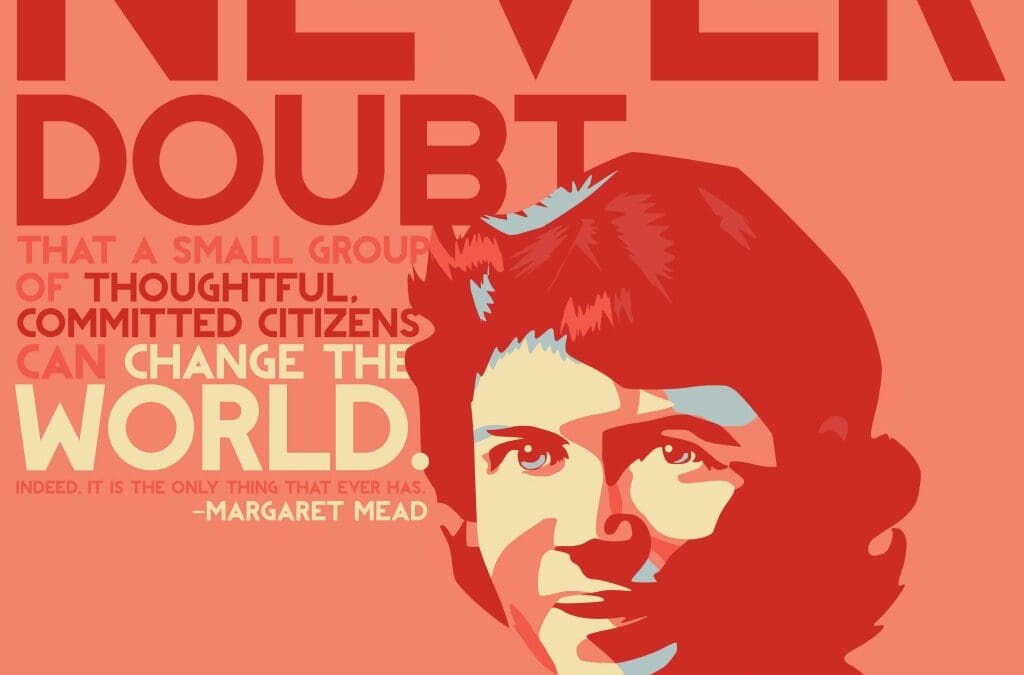
“Never doubt that a small group of thoughtful, committed, citizens can change the world. Indeed, it is the only thing that ever has.”
—Margaret Mead
Do you have any advice for Vojtěch? Please share your thoughts with him in the comment section below.
by Jeanne Lynch | May 23, 2014 | Global Justice, Human Rights
At the White House Correspondents’ Dinner this year, President Obama really showed what he was made of. With jokes on everything from his healthcare.gov rollout to the Chris Christie bridge closure debacle, he showed that he can take criticism and laugh about it. Obama also took a stab at the gender pay gap and the prospect of Hilary Clinton becoming president, saying that, “as the first female president, we could pay her 30 percent less. That’s a savings this country could use.” While a funny remark that elicits laughs, what people need to realize is that it is actually not far from the truth.
In a recent study it was found that women earn on average 77 cents to every dollar that men earn in the same profession. In a supposed democratic and equal-opportunity country, this is absurd. To try and fight this President Obama recently issued two executive orders that allow employees to discuss their pay and require employers to report pay data based on gender and race, hoping to increase transparency in the workplace and close the ridiculous pay gaps that exists.
Even more recently, the gender pay gap issue has been raised with the firing of Jill Abramson as executive editor of The New York Times. While it has been clarified that she was let go for reasons regarding management and not a salary issue as speculated, it still brings this important topic to the table. It raised another issue connected with the pay gap, which is that fewer women are willing to negotiate their salary, according to a study done in Boston. The study found that if women try to negotiate an offer, that deters people from wanting to work with them, and the offer disappears. This is a stigma that must be stopped; not only from employers, but also from women.
From that study, Jena Abernathy suggests that the best advice for women is to find the “right moment” to sit down in a “non-threatening” way to discuss how to close the gap. But is that really an effective solution? There is a double-standard that should be changed, not played into.
But what else can be done? Well, there’s a treaty for that. The Women’s Equality Treaty (officially called CEDAW) aims to promote the economic and political equality of women along with protection from violence and equal access to education. But the US hasn’t ratified this treaty. Why not? Doesn’t it seem obvious that the US should promote women’s rights?
Unfortunately, there are many treaty opposition groups that block ratification of any and all treaties, claiming violations of US sovereignty. This is an unreasonable statement and ultimately very misleading. While the Women’s Equality Treaty and others lay out guidelines, by no means do they become law once ratified. Each country may decide how to enforce them. If we want to move forward on equal rights in every sector, not just in the workplace, then ratifying the Women’s Equality Treaty is a critical place to start.
by Colleen Chiochetti | May 21, 2014 | Global Justice, Peace & Disarmament
Over the past two weeks, the international community has seen the situation in Ukraine move from bad to worse as it devolves into violence and chaos. Russian-supported separatists are pitted against the European backed interim government in what seems to be rapidly escalating into a civil war that threatens to tear the country apart.
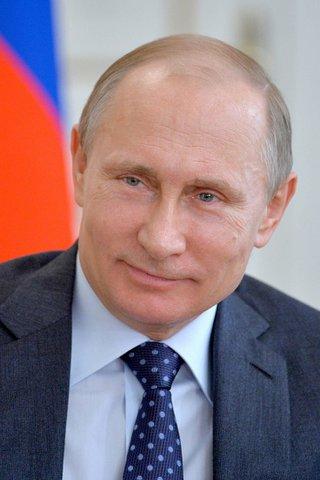
This violence easily overshadowed two crucial political moves Putin made that clearly signaled his intent to solidify Crimea as a Russian entity and reassert Russia’s power over Ukraine. The first was his trip to Crimea on Friday, May 9th, which is Victory Day in Russia. Victory Day pays tribute to the Soviet defeat of the Nazis during WWII and is the single biggest holiday in Russia – the whole country celebrates and glorifies Russian power and strength. Putin purposefully chose to observe this holiday in Crimea to show that it is undoubtedly an integral part of Russia and that the referendum of March 16th was valid.
His second move was minting a new commemorative coin as part of a series naming himself “The Gatherer of Russian Lands.” This coin showed his face on the front and Crimea on the back, labeled as the Russian Federation’s Republic of Crimea. This coin will forever serve as a commemoration of the Russian adoption of the republic and as a symbol of their ownership of Crimea.
Both of these moves are just part of a long game that Putin has the patience to craft and play. While he may have no grand plan, Putin’s end goal is to see Russia regain its status as an international power. An integral part of this is recapturing influence over the territories it lost with the fall of the Soviet Union. To execute this plan, it is not necessary that Russia invades Ukraine even to “protect its citizens.” Instead, Putin is working behind the scenes, weakening the Ukrainian economy to undermine the new leadership and supporting separatists in the East. Through these select, covert moves, Putin is keeping his options open so he can play out his game and achieve the best outcome for Russian power on the world stage.
by Colleen Chiochetti | May 14, 2014 | Global Justice, Peace & Disarmament
The Washington Post recently published an article entitled “In the long run, wars make us safer and richer” by Ian Morris. In the article, Morris argues that through “10,000 years of conflict, humanity has created larger, more organized societies,” greatly increasing human safety and promoting economic growth.
In the Stone Age, 10-20% of all humans died at the hands of other people. By contrast, in the past 100 years, only 1-2% of the world’s population died violently. Similarly, prosperity has increased, with life expectancy more than doubling (from 30 to 67) and average income rising from $2 to $25 per day. According to Morris, all of this happened because “war made states, and states made peace.” While he admits that war “may well be the worst way imaginable to create larger, more peaceful societies,” Morris asserts that it is the only way.
This argument, however, assumes that pacification and suppression of dissent equals peace. It does not. Violent conflict merely creates the illusion of peace, which is broken as soon as those who have been suppressed garner the strength to rise up against those who beat them down. If violent conflict had really created peace through pacification, it would have ended after the first war. Instead, the cycle of conflict continues.
A very obvious example is World War II. Hitler was able to rise to power on the wave of support he gathered by speaking out against the allies and reparations that bankrupted Germany after the first World War. If peace rather than revenge had been sought in the wake of WWII, Hitler would have had no platform from which to acquire power.
We see the same cycle of conflict in post-colonial states, particularly in Africa. During the colonial era, European powers ruled through oppression and violence, beating down native peoples while elevating other groups and importing their own people and culture. As a result, when they pulled back from the territories they claimed, conflict emerged as those who had been oppressed fought back against those who had been in league with the oppressors. Genocide in Rwanda and apartheid in South Africa are particularly pertinent examples of this phenomenon.
Conflict has created a safer, richer world for the victors, but in its wake has left the losers to fend for themselves in a poor, fractured society where the cycle of conflict is perpetuated. To break this cycle, we must encourage the waging of peace, not war.
In his article Morris made a compelling argument for conflict as a force that created peace. But Morris is writing from the side of the victors. Today there are still 2.4 billion people living on less than $2 a day, and 9.2 million children alone are dying every year from preventable causes. These numbers could be reduced drastically if conflict ended. Conflict is a billion-dollar industry, costing millions of dollars in aid and assistance beyond the cost of waging war.
In light of these facts, we must allow for the possibility that cooperation and peace rather than conflict could have created the same, if not greater, benefits for everyone involved–not just those that triumph over others.
For additional perspective, check out this response to Morris’ piece.