by Andrew Hanauer | Jun 23, 2014 | Global Justice
At the Supreme Court in Washington, however, Argentina suffered a catastrophic defeat that no soccer metaphor can accurately capture.
On Monday, the Supreme Court announced it would not hear Argentina’s appeal of a lower court ruling in favor of a group of hedge funds suing the country for more than $1 billion.
The dispute is rooted in Argentina’s 2001 debt default. When the country defaulted, amidst economic and political turmoil, nearly 93% of its creditors accepted a deal and took less money than they were owed. But a small group held out. The holdouts included hedge funds that have been nicknamed “vulture funds.” The nickname derives from the funds’ strategy of buying up the debt of economically distressed countries for pennies on the dollar and then suing, targeting debt relief money for collection. That money, of course, is often earmarked for social services like AIDS prevention and school construction.
The court’s decision is a huge blow for Argentina, but it’s also a huge blow to the rest of the world. Here’s why.
Poor countries spend five times as much money paying off old debt than they receive in official aid. Debt is a huge problem, and debt relief is an essential tool in the fight against poverty. Debt relief funds have been used to build schools, cancel fees at rural health clinics and provide access to clean water.
These predatory actors attempt to seize that money by suing countries that are receiving relief through established international debt relief processes. One hedge fund sued the African country of Zambia for an amount equivalent to Zambia’s annual education budget. These hedge funds have sued war-torn Liberia. They sued the Democratic Republic of the Congo, at the time the world’s poorest country. The Supreme Court has handed these “vultures” a precedent they can use to litigate poor countries into submission all over the globe.
The court’s decision also threatens a rare and beautiful example of bipartisan cooperation for the common good. Democrats and Republicans don’t agree on much these days, but for fifteen years, they’ve agreed that heavily indebted countries should have their debt burdens reduced. All of that is in danger now. After all, why would anyone try to relieve the debts of a developing country if the windfall is just going to be taken by a hedge fund?
The problem is rooted in the lack of a system for resolving debt burdens. Here in America, individuals can file for bankruptcy. For a country struggling to pay for social services for desperately poor people, no such process exists. It’s the Wild West, and these hedge funds are exploiting the chaos for profit.
The global reach of this case is illustrated by the World Cup, where country after country has some connection to the case or to these predatory hedge funds. Those countries include France, Mexico, Brazil and the United States (filed briefs on behalf of Argentina); Germany (its courts ruled in favor of Argentina in related suits); Belgium and England (passed laws restricting “vulture funds”); Honduras and Cameroon (sued by “vulture funds”); and Ghana (where this happened). Meanwhile, in terms of institutions lacking in soccer ability but not in influence, the International Monetary Fund, World Bank and United Nations have all openly opposed the actions of these hedge funds.
The case is over, but the struggle to protect vulnerable communities from predatory behavior is not. The time has come to harness international consensus to build an economic system that discourages predation. The alternative is unacceptable.

by Benjamin Gross | Jun 20, 2014 | Global Justice, Peace & Disarmament
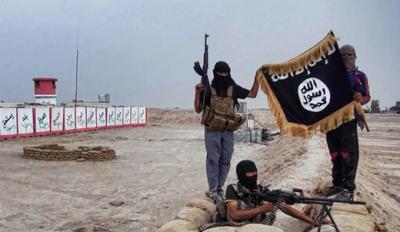
It is undeniable that Iraq is in major trouble. Dozens of cities once thought to be impenetrable to jihadists have suddenly been overrun by ISIS (Islamic State in Iraq and Syria), a militant group so violent that even Al Qaeda refuses to be associated with them. Gory videos have emerged on the Internet showing militants executing vast numbers of captured Iraqi soldiers in cold blood. Images of abandoned Iraqi troop posts have become commonplace on news networks, as many Iraqi soldiers have made the decision to escape with their lives rather than fight.
As a result, all eyes have turned to the White House and how the President of the most powerful nation in the world will respond. Indeed, many people have begun to wonder: what will Obama do?
Nobody truly knows the answer to this question, but we may have gotten some hints during the last few days. For instance, Obama recently declared that the option of “boots on the ground” is off the table, to the chagrin of many Republicans. Additionally, we have learned that Obama is considering authorizing US air strikes against ISIS, a measure that the head of the Iraqi government has requested.
In my opinion, however, Obama must respond in more ways than one if he wishes to end this recent reign of terror in Iraq. He must begin by addressing the roots of the problem, which lie in the two warring factions in Syria: the Sunnis and the Alawites. Obama must work with our allies to help end the conflict between these two ethnic groups, one that has allowed ISIS to seize control of unclaimed land and use it to further grow their terrorism base.
Obama must continue to encourage global cooperation to end human rights violations in Syria, as it is often victims of previous human rights abuses who end up joining the ISIS and other like-minded militant groups. Indeed, he must persuade other countries to finally agree to a UN Security Council resolution that would allow the International Criminal Court to investigate cases of human rights abuses in Syria.
President Obama definitely faces an uphill battle when it comes to the stopping the spill of violence and terror over the Syrian border and into Iraq. In fact, the future of Iraq seems bleak, with the crisis seemingly escalating every day as ISIS inches closer to its dream target: Baghdad. However, if the US is able to remain on the forefront of international cooperation, and continues to push for an investigation in human rights abuse by high-ranking Syrians, a glimmer of hope will remain–for a de-escalation of violence and terror in the future.
by Kevin Burke | Jun 19, 2014 | Global Justice, Human Rights
With the 2014 FIFA World Cup underway in Brazil, it’s easy to ignore the headlines about protests in favor of the dramatic, high-scoring football matches capturing the attention of fans worldwide. But before we get out of the group stages, let’s focus on a chief concern of those protestors: inequalities in Brazilian society, and a corollary – how dismayingly common those inequalities are around the world.
Let’s start with Brazil. Around 15.9% of Brazilians are below the national poverty line. Just 3% of Brazilians own two thirds of the arable land, and agriculture is big business in Brazil. The most important picture of Brazil is the contrast in, say, Rio de Janeiro, between the massive favela shanty towns and the picturesque high-rise hotels immediately adjacent – the exact scene that will be playing out for tourists at the World Cup. With families locked in poverty sometimes for generations while the wealthy seemingly stay on top, desperation can easily set in.
But Brazil is only one piece of the puzzle; inequality is getting worse around the world. One study saw the top 1 percent of earners in the world increase their incomes 60 percent from 1988 to 2005; the bottom 20 percent saw no change. Eight percent of people see 50 percent of income worldwide. Coupled with staggering extreme poverty figures – we still have 1.22 billion people living on less than $1.25 a day – we all have a reason to protest.
Galling to the protestors in Rio de Janeiro, Sao Paolo, and beyond is that even with substantial progress in Brazil, their government has taken on the challenge of hosting a World Cup, diverting vast resources from social programs. As we in the United States know, sports stadiums are dubious investments for the public, and while infrastructure investments can help lubricate commerce, these infrastructure investments are designed to get the wealthy into football stadiums for just one month, not to get the poor from favelas into new jobs.
Add on concerns about severe human rights abuses to prepare for the World Cup in Qatar, or long-standing concerns about bribery at the International Olympic Committee or with FIFA, and it becomes difficult to accept sports mega-events as an economic prospect; you’re not getting what you pay for, and you may be paying for more than you knew about.
While Brazil may be emerging as an economy and will likely soon achieve greater economic equality than the United States, we are talking about actual people who don’t have jobs, who are undernourished and have even been forced out of their homes for the World Cup.
So remember when watching the World Cup: Brazil made a choice to spend money, time, and effort on bringing the world to those stadiums. But maybe they needed to spend those resources on more effective projects. So should we all.
by Brandon Hooks | Jun 16, 2014 | Global Justice, Human Rights
The United States has led the way for democracy and equality around the world. Through its own work as well as through collaborating with international organizations, the US has strived to guarantee better lives for all citizens. Despite such progress, recent issues regarding equality between the sexes within the US have brought to light the domestic problems we still face and how such problems prevent us from helping others around the world.
News headlines in recent months have been filled with stories of inequality and injustice against US women. President Obama’s speech on equal pay for women has led many once again to bring up the need for women to be treated as equals in the workforce and to receive the same benefits as their male counterparts.
The recent shooting near UC Santa Barbra that took the lives of seven individuals has shed light on the violence continually committed against women in the United States. The assailant, a 22-year-old male that had attended the university, left a video explaining how his actions were targeted against women as consequence of their continually rejecting him. This misogynistic attack led to a social media campaign entitled #YesAllWomen, which sought to bring attention to the need for greater protection of women’s rights.
It is evident by these recent events within the US that equality for all citizens has not yet been obtained. There is some assurance, however, that equality will eventually be achieved due to the responsive nature of the government to the wants and desires of American citizens. But what about those nations around the world that do not have such a government? What can be done to help their fight for equality?
The Women’s Rights Treaty (CEDAW) is an international treaty that promotes equality between the sexes and binds all those that ratify it to further women’s rights.The United States stands as the only developed nation in the world not to have ratified the treaty. The two-thirds vote needed for ratification has yet to be achieved due to claims that agreeing to the treaty will diminish American sovereignty and actually restrict the rights of women within the United States. The dispersal of this kind of misinformation is what has prevented US ratification.
The truth is that ratifying the Women’s Rights Treaty would ensure that the equality that the US preaches becomes a global value, advancing the rights of women within the United States and around the world. US sovereignty would still stand, and women would gain rights, not lose them.
If the US were to ratify, the equal pay we strive to achieve within this country could be achieved around the world. The treaty could ensure that acts of violence against women similar to those within the US are stopped on a global level. As the supposed global leader of human rights, it is the responsibility of the United States to support all international efforts towards equality and to ratify the Women’s Rights Treaty.
by Christopher Davis | Jun 12, 2014 | Global Justice, Human Rights
Considered The Bill of Rights for women, the Women’s Rights Treaty (CEDAW) is the most comprehensive international agreement on the basic human rights of women. Adopted by the UN in 1979 and signed by President Carter in 1980, the Women’s Rights Treaty has yet to be ratified by the United States Senate, making the US one of only eight countries to not ratify the treaty to date.
Who are those other member countries? Iran, Somalia, Sudan, South Sudan, and the Pacific island states of Niue, Palau, and Tonga. We stand next to these countries, some of which have a history of gross human rights violations. Why has the United States failed even to entertain a vote on, let alone ratify, such a landmark treaty?
Various answers to this question have been offered, but at the center is the idea of the treaty attacking traditional family values. On the surface this argument might seem absurd. However, take into consideration the contention surrounding a woman’s right to an abortion and you start to see the hurdles this important piece of international legislation faces.
Let’s identify the core objectives within the Women’s Rights Treaty:
- Reduce sex trafficking and domestic violence
- Provide access to education and vocational training
- Ensure the right to vote
- End forced marriage and child marriage
- Help mothers and families by providing access to maternal health care
- Ensure the right to work and own a business without discrimination
In 2010, The US Ambassador-at-Large for Global Women’s Issues, Melanne Verveer, testified before the Senate Judiciary Committee, stating “Some governments use the fact that the US has not ratified the treaty as a pretext for not living up to their own obligations under it.”
After her testimony, the Subcommittee on Human Rights and the Law failed to bring the treaty to the Senate floor for a vote. This marked the fifth time (after 1988, 1990, 1994, 2000, and 2010). While some will point to the difficulty of passage as a barrier facing the treaty, it cannot explain why the United States can pass some human rights legislation and not others. In October 1994, the Senate easily passed the Convention on the Elimination of All Forms of Racial Discrimination.
Though the United States has long stood as a pillar and moral leader for human rights, it has failed to ratify additional cornerstone human rights treaties such as the Covenant on Economic, Social, and Cultural Rights; the Convention on the Rights of the Child, and the Disability Treaty.
Ratifying the Women’s Rights Treaty will send a powerful message about the United States’ commitment to human rights and the rights of women around the world. Ratification would continue our proud bipartisan tradition of protecting and advocating for human rights. 35 years is too long to wait.
by Kevin Burke | Jun 12, 2014 | Global Justice, Human Rights
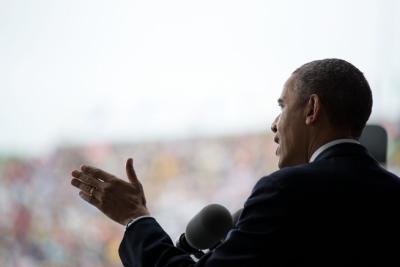
Watching President Barack Obama deliver his commencement address at the US Military Academy, it’s easy to be reminded that he has discussed themes of human rights, multilateral engagement, and global thinking since before his presidency even began. As a global citizen, I want to see a president who recognizes our common humanity – and sees the danger in ignoring global problems. But if we’re hoping for a cosmopolitan foreign policy, by what rubric do we grade this or any administration’s performance?
A quick reminder: cosmopolitanism is the idea that everyone, everywhere is morally equal, and that we all belong to one worldwide community. Cosmopolitanism doesn’t mean the end of local or national communities or the formation of a world state: it’s primarily about membership in that global community. The more strongly you hold that belief, the more likely you are to actively promote the well-being of people around the world.
A cosmopolitan foreign policy can do some of the heavy lifting for you. In a liberal democracy, governments are expected to enact the policy preferences of their constituents. As a cosmopolitan, you have the right and the duty to demand that your government act in a way that reflects the fundamental moral equality of all humans.
Some expectations might include:
First, that the government recognizes its duty to represent the interests of its citizens where foreign policy is concerned and that those citizens are members of a global community where everyone is morally equal.
This entails that, as our representative, the government respects certain moral obligations. Where we as individuals cannot violate the human rights of other persons, by torturing, killing, or depriving them of basic needs, for instance, neither can our governments. Additionally, where we strive to help others meet their basic needs, our governments have the obligation to represent our interests and find effective solutions to alleviate systemic poverty, end the subjugation of women, or prevent future rights deprivations that may occur due to climate change.
Because a cosmopolitan foreign policy respects individuals outside its borders, it most often uses diplomacy and negotiation to accomplish its goals, and considers the views of outsiders when attempting to solve problems of mutual or global interest. A cosmopolitan foreign policy prioritizes diplomacy over violence wherever possible.
Finally (for now), a cosmopolitan foreign policy seeks wherever possible to actively solve global problems through forums that permit the maximum possible representation of human interest, whether these be the institutions of non-state actors, regional networks, international institutions, or global institutions of varying size and scope.
This list is not exhaustive. It doesn’t go into detail on every subject, and avoids some (like democracy promotion) because the discussion required goes beyond the scope of this post. This has been a brief sketch of how we might start applying the individual-oriented morality of cosmopolitanism to the collective-centered actions of a State’s foreign policy, but is just a small part of a larger discussion of how your government can help you act as a global citizen.
Most importantly, take these ideas and expand on them yourself. Challenge President Obama and Congress to be more responsible stewards of your global citizenship. If you live in another country, think about how you can challenge local leaders to better support human rights and global institutions. While there are so many of us, with so many different ways of thinking about the world, we all share one tiny planet in a massive cosmos. We need to find every way we can to work together and solve global problems. I can even recommend an awesome organization that can help.