
Originally published on the CGS blog on May 13, 2014.
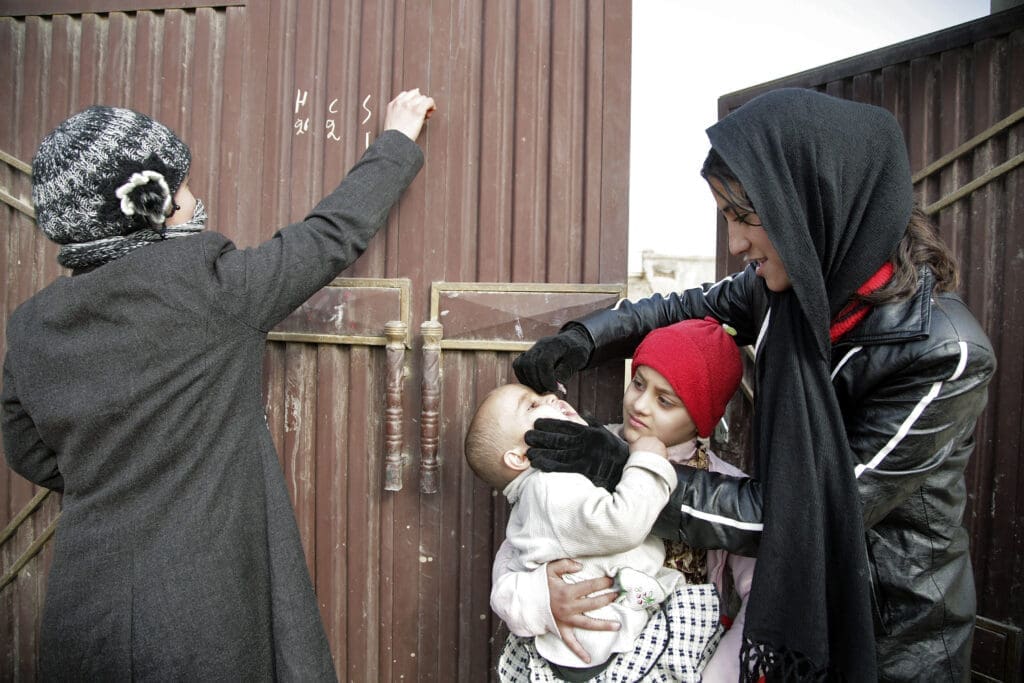
Last week, the World Health Organization (WHO) issued a global health emergency stating that polio is rapidly re-emerging as a threat – its expansion in Pakistan, Afghanistan, Syria, Iraq, Nigeria, and Cameroon is truly concerning despite the disease being nearly eradicated in the last few years. The emergency status used includes requirements that people cannot travel from affected countries without evidence of vaccination, and each country is taking additional steps where possible to step up its anti-polio programs.
It didn’t have to be this way. While polio is a devastating illness that paralyzes and sometimes kills its victims, vaccination usually prevents the disease from taking hold. The problem isn’t just that these states have remote or tribal areas that are difficult to reach with vaccines – many states have remote regions and have been able to reach them with state-, UN-, or donor-operated vaccination programs.
Instead, the problem is that each of these outbreak areas has a violent organization opposed in some way to modern medicine. In Syria the government itself uses hunger and aid as a weapon of war, allowing polio to spread in lawless areas where aid is withheld (the disease follows refugees into Iraq). In Nigeria, the Islamist rebel group Boko Haram opposes modern life (including modern medicine) and kills health workers, destabilizing the state and threatening lives in isolated areas (the disease has spread from Nigeria into Cameroon). And the Taliban in Pakistan and Afghanistan has fought against vaccination programs, killing vaccination workers, in tribal areas and wherever else they can find a foothold. This has allowed polio to work its way back to prominence in an area where it could easily have been eliminated with just a few years’ more work.
The obvious common thread among these outbreaks is conflict. Each of these regions has seen conflict over the past several years, and each has difficulty resolving this emergency going forward so long as those conflicts persist.
There’s also a common thread between Nigeria and Afghanistan/Pakistan: a pronounced mistrust of modern medicine. We have our own strain of this in the West, but the version that runs through these communities is both violent and extremely dangerous in a globalized world: dangerous diseases were never limited to the communities in which outbreaks originally occurred, but now they are more likely than ever to leave the shores from which they originated.
The answer isn’t isolation. In fact, it’s the opposite: cooperation. As much as the violent reaction to health workers in some areas comes from paranoia and distrust, we can build trust and familiarity by making health programs permanent rather than ad hoc and by giving medical care a worldwide mandate that ensures the well-being of everyone, everywhere.
The World Health Organization has been greatly beneficial in the provision of healthcare. It doesn’t merely announce emergencies, which is actually a relatively new arrow in its quiver. It also builds health programs; provides research on global health threats; and helps create the day-to-day relationships among governments, between governments and international institutions, and between healthcare workers and patients that make a global health system run smoothly. And with the assistance of healthcare-focused organizations like Doctors Without Borders, the Red Cross, and many more, healthcare is reaching more people in more locations than ever before.
We need to build awareness about how medicines and systems work, and particularly how they are getting even better at meeting needs. Beating polio and quashing anti-science attitudes isn’t an insurmountable goal. Patients have become accustomed to effective, science-based medical treatment all over the world, but we still have some work left to do.


