
Originally published on the CGS blog on July 19, 2013.
The past few weeks have been full of excitement for the GlobalSolutions.org team! We recently launched our #CoverClimate campaign. The campaign aims to draw attention to the lack of coverage of climate change related stories by ABC, CBS, and NBC, and call on these major networks to make climate change stories a priority.
As a part of the campaign, I’ve had the opportunity to interview a handful of top U.S. climate scientists about their take on this lack of coverage and about which stories in particular they think should be more widely broadcast.
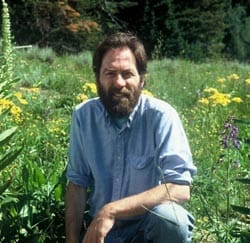
Dr. John Harte is one of the scientists I interviewed. He is a professor at the University of California, Berkeley’s College of Natural Resources. Dr. Harte has done extensive research over the past 24 years on the connections between the climate and ecosystems, including working on an ongoing study on the effects of warming on a subalpine meadow. Dr. Harte and his wife, Dr. Mary Ellen Harte, are the authors of a new book, Cool the Earth, Save the Economy: Solving the Climate Crisis is EASY that is available as a free download. The two also blog for the Huffington Post on climate change and global warming related issues.
Here are a few key excerpts from my interview with Dr. Harte:
GS.org: What do you think about the quality and the quantity of the coverage of climate change by the broadcast media?
Dr. Harte: There are huge problems both with quality and quantity. The quantity problem is that there are numerous opportunities when the climate issue could be raised in connection with current events, like forest fires, droughts, floods and storms and the media keeps dropping the ball.
It’s related to a quality issue. I see a couple of hang-ups. One is that there’s a failure to report on the successes and the co-benefits of various efforts around the country and around the world to actually deal with global warming. The myth persists that …solving the [climate] problem is going to bankrupt us. That is, to my mind, a more dangerous myth than some of the ridiculous myths that the climate deniers propagate. It hasn’t been challenged in the media; it’s accepted even by people who care about the climate problem. So that’s one aspect of the problem.
The other, more sort of technical issue that I find lowers the quality of reporting on this issue is the huge confusion about the word “cause.” The word “cause” has done a lot of damage because the way a typical reporter will interview a scientist or a politician will be by asking the question “Did global warming cause Katrina?” “Did global warming cause the Colorado Springs fire?” “Did global warming cause the drought in Texas?” And that’s the wrong question. The word “cause” is enormously complicated. Things don’t have single causes; there are multiple causes. There are influences and contingent events that help play a role and there are all kinds of subtleties to this notion of how events interconnect with one another.
GS.org: What are some specific climate related topics that you feel haven’t gotten adequate coverage recently?
Dr. Harte: [The area] where I see [the coverage is] most deficient is in… the solutions part of the problem. I think that slowly but surely the public is beginning to realize that freaky weather and unusual events are connected to climate. But the real battle over the next five years, the real controversy, the real debate is going to be over [questions such as:] “Can we do something about it?” rather than “Should we do something about it?” Or “What is the best way to solve it?” rather than “Is there a problem that something needs to be done about?” And I’ve come to the conclusion that solving the problem actually isn’t going to cost, it’s going to make us wealthier… The more I look into the benefits of solutions, the more I realize that [the clean energy] approach makes very, very good sense. But the many benefits of reducing dependence on fossil fuels is not getting any coverage, nobody is talking about it.
…And I think the next phase of coverage, other than about solutions, that really needs to be done is generating more anger towards the corporate role that puts profits above public interest. …When the public gets angry at business or… corporate greed, it’s a very powerful thing. From Upton Sinclair years ago to more recent examples of that in other areas, it’s a very powerful force and the media… should be doing more to expose the narrow self-interest and greed of the [leaders] of the fossil fuel industry.
GS.org: What aspects of climate change do you feel are the most pressing?
Dr. Harte: What is it about global warming that scares me the most? … [That would be] matters related to water. The exacerbation of conflicts over water, wars over water… All through the world we’re going to be seeing water scarcity is an issue. …Losing the winter snowpack is going to have enormous implications for irrigation water in the [American] West. [Other countries such as Turkey and China are also experiencing water-related challenges]. So I see probably the single-biggest issue is going to be the effects of climate change on the hydro cycle and the exacerbation of both droughts and floods. In other words, the extremes are going to get more extreme and devastating. The second… issue that I would probably turn to would be sea level rise and effects of storm surges in Bangladesh and Pacific Island nations [among others]. That’s a really big one. Those [aspects] are what scare me the most.
GS.org: What has surprised you in your own research on climate change?
Dr. Harte: I’m [currently] at the Rocky Mountain Biological Lab where I do research on ecosystems. 24 years ago we started an experimental warming of a meadow… It’s been running now for 23 years. We heated with electrical heaters a large area of a subalpine meadow and we’ve been following over 23 years the responses from the plants, the microbes, the soil, and the nitrogen cycle. [The] fascinating and scary thing from the experiment is that we really discovered empirically that when you heat ecosystems, they respond in ways that create further warming: positive feedback. Not positive in that it’s good for you but positive because it’s exacerbating the problem. It releases carbon from the system. Some plants, other shrubby plants do better. Some flowers do worse. And that leads to a darkening of the ground surface which means more warming from solar absorption.
…We wanted to see how ecosystems would change but we didn’t anticipate that we’d also learn about how changing ecosystems could feed back to change the climate. So for me that was the eye-opener of this research we’ve been doing.
—-
Learning more about climate change related issues from Dr. Harte was both informative and enjoyable. If you’re interested in reading about the rest of my interviews, stay tuned!


