Originally published on the CGS blog on June 17, 2014.
The United States must not unilaterally re-engage its military in the intensifying violence in Iraq.
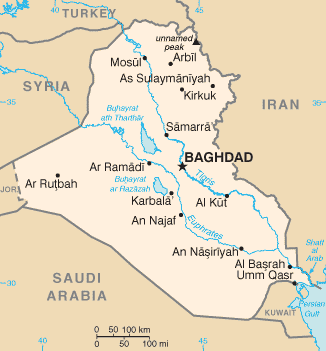
The US war in Iraq officially ended two-and-a-half years ago, yet violence has continued unabated since then. The Iraqi government of Nouri al-Maliki is now under serious attack by militants from the group Islamic State in Iraq and Syria (ISIS). The militants, who have controlled parts of Fallujah since December last year, overtook the city of Mosul last week and are on the march toward Baghdad.
To his credit, President Obama has ruled out sending combat troops back into Iraq. But he is still considering other military options such as air strikes and has dispatched up to 275 troops to reinforce the US embassy. With all due respect, it is not the President of the United States’ right or responsibility to decide on the international use of force in this way. Chapter VII of the UN Charter provides a framework for the use of force, and the US should not act alone. The only military action that can or should be considered must take place under the umbrella of the United Nations. Whether that is a UN peacekeeping force or other measures, it is critical that the US not engage unilaterally again.
We would also do well to remember that it was the US invasion that destabilized Iraq in the first place. Called illegal by then-UN Secretary General Kofi Annan, the invasion and occupation led to the deaths of up to one million people and precipitated the ongoing volatility in the country. Communities that had been living side by side in relative peace for decades were torn apart in the wake of “Shock and Awe.” And as eight years of occupation in Iraq have shown, even the presence of tens of thousands of American soldiers could not bring stability or stop the violence plaguing the country.
So what can the United States do now? The US has an ongoing responsibility to address the immense suffering visited upon the people of Iraq. The invasion created one of the worst refugee crises in recent history, and a new one is rapidly developing as a result of the renewed conflict. The IOM reports that 500,000 people have been displaced as of last week.
The US must honor its obligations to fund and support refugee organizations that are providing vital assistance to the displaced. The Obama administration is already sending the relatively small sum of $12 million, but much more will be needed. The US can and should also open its borders to Iraqis forced to flee their homes in the aftermath of its illegal invasion.
We all have deep sympathy for those civilians suffering in Iraq. But drone or missile attacks will succeed in nothing but killing a large number of these civilians and further enflaming tensions. Real and lasting peace cannot come through foreign military means, but through reconciliation and negotiation. The al-Maliki government has neglected cross- and inter-sectarian community building, instead pursuing heavy-handed and divisive policies. It is absolutely essential to change this if there is to be a stable and peaceful Iraq in the future. In the meantime, we must provide maximum humanitarian support.