Originally published on the CGS blog on August 31, 2009.
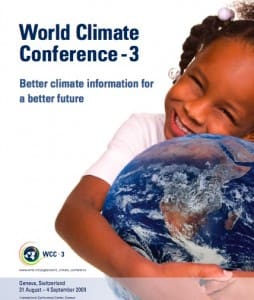
Today was the start of the Third World Climate Conference (WCC-3) in Geneva. The main theme of this conference is climate change and how to spread information on the effects of this global phenomenon. Not only is the WCC-3 focusing on the long-term effects of climate change, but also the day to day impacts (also known as climate variability).
While most climate conferences have focused on how to reduce greenhouse gas emissions, WCC-3 is focusing on how to deal with the already present effects of climate change. It hopes to provide a framework in which climate predictions can be made, for example rainfall predictions and drought monitoring. With this information individuals can have advance warning of heavy rainfall (which may cause Malaria outbreaks) or other potential cases for extreme weather which could escalate to disasters (floods, wildfires). Using this knowledge, proper preparations or evacuation measures can be taken in advance.
A wide array of professionals, including scientists, high-level policy makers, and business leaders are attending this conference. The interactions of these different types of people are important because it connects the people who develop the climate information with those who utilize it to create policies.