Originally published on the CGS blog on May 7, 2010.
“We may allow ourselves a brief period of rejoicing…” These words were spoken by British Prime Minister Winston Churchill on May 8th, 1945, immediately after he announced the German surrender that marked the end of the Second World War in Europe. Sixty-five years later, the legacy of World War Two still exerts a powerful impact, particularly on issues such as genocide prevention and the International Criminal Court (ICC) which are fundamental to the mission of Citizens for Global Solutions.
Although the period of postwar rejoicing was to be “brief” because the war with Japan was not yet over (it would continue until August of that year), the British people and many others throughout Europe had good reason to rejoice on V-E Day. The Second World War had been a human catastrophe unequalled in all of history. However, despite the delirium of the crowds in London and other cities as they celebrated the end of the war, the reality was that much of the continent lay in ruins after the devastating six-year conflict. Cities such as London and Berlin had suffered heavy bombing damage with many civilian casualties; others such as Warsaw were little more than smoking rubble. In the former Soviet Union alone, a staggering total of approximately twenty-five million people had been killed during the war. And the world’s attention was brought as never before to the horrendous problem of genocide in the aftermath of the murders of six million Jews and millions of others in the Holocaust at the hands of Nazi Germany.
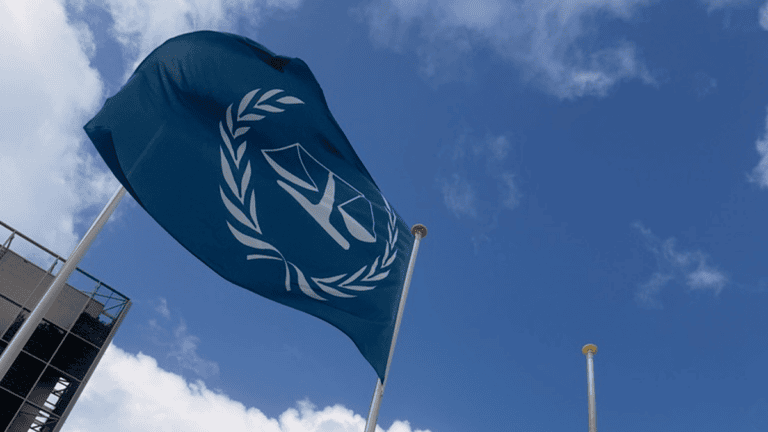
Yet, despite the devastation the war had wrought, the conflict had also sown the seeds for positive changes in the world over the next several decades. The horror of the Holocaust helped to spawn the genocide prevention movement, with its rallying cry of “never again.” Though the promise of ending genocide remains unfulfilled, as recent tragedies in countries such as Rwanda and Sudan remind us, the work to create a world free of mass killings continues, and Citizens for Global Solutions is proud to be a part of this effort. Additionally, the Nuremberg trials which took place after the war to prosecute those who had carried out the Nazi genocide eventually led to the creation of the ICC, which works today to prosecute war criminals and hold them responsible for their actions and to seek justice for their victims. CGS continues to advocate for U.S. support for the ICC and its crucial work around the globe.
Finally, the Second World War fundamentally transformed the relationships between the nations of Europe. After centuries of conflict, countries such as Britain, France, and Germany at last recognized the necessity of coexisting peacefully with one another. Beyond this, they realized the value of creating an entity which would tie their countries together politically and economically, and therefore prevent future wars from occurring. In 1951, the movement towards unity began when six European countries signed a treaty to unite their nations’ coal and steel industries under common management. By 1992, the modern European Union (EU) had been created. Today, the EU consists of twenty-seven countries, ten of them formerly Communist nations which joined the Union in the “big bang” expansion of the mid-2000s.
Today, sixty-five years after V-E Day, Europe remains united and at peace—an achievement that not long ago would have seemed all but impossible. As the world today continues to be plagued by violence, wars, and instability, post-war Europe shines as an example that ancient conflicts can be resolved and that former enemies can come together as allies and even friends—truly a cause for rejoicing.