
Originally published on the CGS blog on April 4, 2014.
For over two weeks now, hundreds of students have occupied the Taiwanese Parliament, the Legislative Yuan, protesting the pending Cross-Strait Service Trade Agreement (CSSTA).
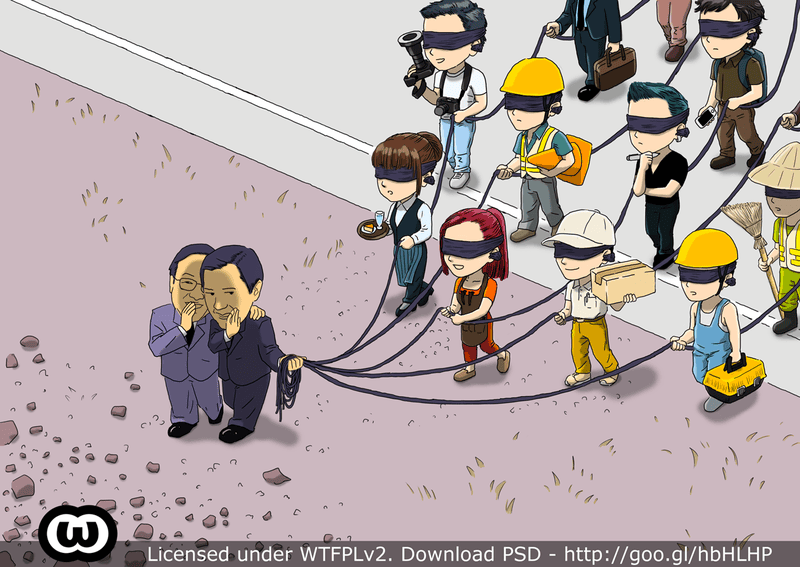
This agreement was hastily brought to the floor on March 17th by President Ma Ying-jeou’s ruling Kuomintang, disregarding a prior agreement with the opposition to give the treaty a standard clause-by-clause review. Since then, hundreds of students have descended on the Parliament building, decrying the CSSTA as being “signed in a black box” without the approval of the public or the validation of the democratic process. What’s more, many fear the agreement as a whole is an “unequal agreement” that opens Taiwanese business and politics to greater influence from mainland China. After weeks of continued occupation and failed attempts at negotiation, recent days have seen the protests – termed the “Sunflower Student Movement” – grow to street demonstrations drawing over 100,000 people from across the country. The movement marks the first occupation of the Legislative Yuan by protesters in the history of the Republic of China, even prior to the government’s 1945 retreat to the island at the end of the Chinese Civil War.
The Sunflower Protests have put the country at a crossroads in more ways than one.
While activists had initially demanded that the CSSTA undergo the agreed-upon clause-by-clause legislative review, many now call for outright rejection of the agreement and the creation of a new government body to review all future treaties with Beijing. Beyond just the future of cross-strait relations is concern over the future of democratic politics in Taiwan.
Having only recently emerged from decades of authoritarian rule in the early 1990s, many are concerned by President Ma’s disregard for the legislative process in his rush to approve the CSSTA. Though Speaker of the Legislature Wang Jin-pyng assured students that they would not be removed by force, as protests swell in the streets of Taipei allegations abound of violence against peaceful demonstrators. Further allegations of attacks by police against journalists do nothing to allay fears of a democratic backslide. With the country’s young democracy coming under fire for the sake of improved trade relations with Beijing, many protesters decry President Ma as a “traitor,” and accuse him of “selling out” to the mainland. Some protesters in Taipei displayed signs reading “We don’t have another Taiwan to sell.”
President Ma is not wrong to encourage greater economic engagement with Beijing. Cooperation and trade with the mainland are key to reducing cross-strait tension and ensuring Taiwan’s long-term security. Yet that security must never come at the expense of the country’s hard-won democratic values and civil liberties. If the CSSTA cannot be agreed upon without police violence against students, crackdowns on journalists, and the bypassing of the democratic process, then it is better that it not be passed at all. The Sunflower Movement sends a message to Taiwan and the world that while negotiation and cooperation should be the first recourse in solving international disputes, it must never supersede basic values of democracy and human rights – a message that is especially relevant as Europe and NATO struggle to engage in dialogue with a resurgent Russia.
As the parliamentary occupation begins its third week, Taiwan has an opportunity to emerge with an even stronger democracy, strengthened by the voices of citizens fighting to preserve their independence. As the threat of greater violence rises, President Ma’s government must realize that protecting Taiwan’s democracy is more important than protecting the CSSTA.


