
Originally published on the CGS blog on June 23, 2009.
On June 23rd 2009, the Carnegie Endowment for International Peace hosted a panel with experts on Iran and the Middle East. Ambassador Nicholas Burns, Abbas Milani, and Karim Sadjadour spoke about the condition- some say revolution- in Iran with the disputed elections and mass protests. Foreign media has been forced out, and death toll figures rise daily. A brutal suppression of the demonstrations has begun, with videos and news of killings circulating the internet.
The panelists explained that despite the despotic government’s persistent attempts to suppress rebellions, the Iranian people’s desires have gained new momentum to affect change. Independent polls show that a majority of Iranians are discontent with the economic quandary that President Ahmadinejad has left them in, support the recognition of Israel, favor improved relations with the U.S., and seek the cessation of the nuclear weapons program in exchange for pe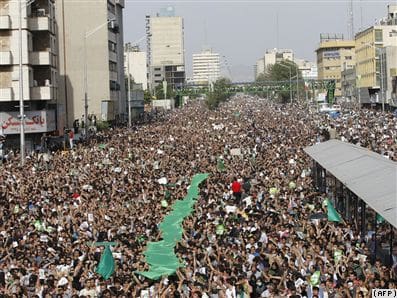 aceful nuclear technology. There is mounting evidence that, with popular views contradicting Ahmadinejad’s policies, the recent polls were a stolen election.
The panelists said that the Iranian ruling order had forever changed. The Ayatollah’s authority as the supreme religious leader was flouted when he was openly defied and publicly called a liar. The current uprising distinguishes itself from previous ones as it includes members of all ages and walks of life. Further, fractions have emerged within the ruling regime, which is an important precondition for democratic transitions.
Ahmadinejad and his supporters have attempted to frame the situation as a conflict between the Iranian government and foreign powers. By making demonstrators seem like puppets of an “imperial power” (the U.S.), the government seeks to undermine the movement and keep it from spreading beyond cities. Obama’s cautious and measured approach commendably navigates this trap set by Ahmadinejad. Obama condemned the suppression of expression and sympathized with the protesters, but stayed clear of inserting the U.S. in the middle of the conflict. The movement was truly born in Iran and is being sustained through the sacrifices and determination of the Iranian people. Obama’s efforts to keep the U.S.’ fingerprints off the uprising are strategic and laudable.
However, the way this will all play out also depends on the reaction of other countries. Turkey and Russia have already formally recognized Ahmadinejad’s electoral victory in the face of incontestable evidence of fraud. The rest of Iran’s neighbors, trade partners and other states have an important opportunity to speak out for the desires of the Iranian people.
For more information, visit: http://www.carnegieendowment.org/events/?fa=eventDetail&id=1360