Originally published on the CGS blog on May 7, 2010.
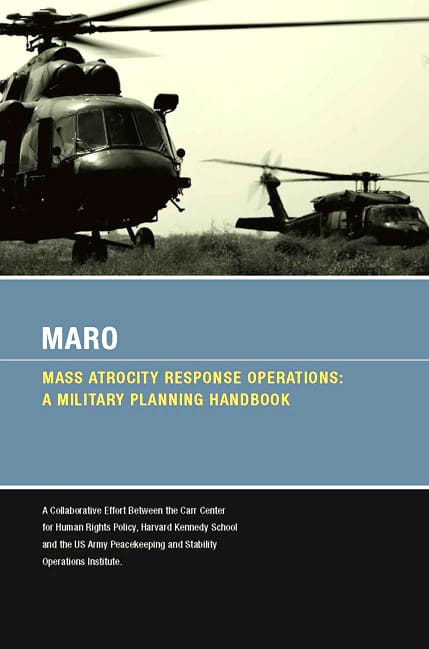
Though the government supports preventive measures for stopping genocide from ever starting and organizations like GlobalSolutions.org advocate for genocide prevention, what can we do when prevention fails? This week, an important military planning handbook was released to guide the government’s actions for Mass Atrocity Response Operations, otherwise known as MARO.
The book is a joint product of the Carr Center for Human Rights Policy at Harvard and the U.S. Army Peacekeeping and Stability Operations Institute, making the project a unique cooperation between academia and the military. MARO can become necessary when there is widespread and systematic killing of civilians, such as in the case of ongoing genocide. If the U.S. government makes the decision to intervene militarily in a situation in order to stop the killing and end the violence against civilians, this handbook gives options and scenarios for how that type of operation might be executed.
The authors of the handbook make the case that mass atrocities response operations are affected by political dynamics not found in other operations, making the handbook very relevant for planning purposes. Three major factors set MARO apart. The multi-party dynamic means that there aren’t just friends and enemies, but perpetrators, victims, and bystanders. In mass atrocity situations like genocide, there is an illusion of impartiality. Military intervention inevitably becomes political, and the military must be prepared for the possibility of backlash from, for example, the people that the military intervened to protect. There is also the possibility of rapid escalation. When organized mass murders of civilians are taking place, the military must be prepared to act fast. The MARO handbook provides guidance that takes into consideration these three conditions.
The authors of the handbook hope that should the President face the decision of whether or not he must “do something” to save innocent civilians from being killed, this handbook can guide the question of “how” such an intervention might take place. For example, had it existed when the Clinton administration had to decide what to do in the case of Rwanda, the President’s considerations might have been different.