Originally published on the CGS blog on April 5, 2012.
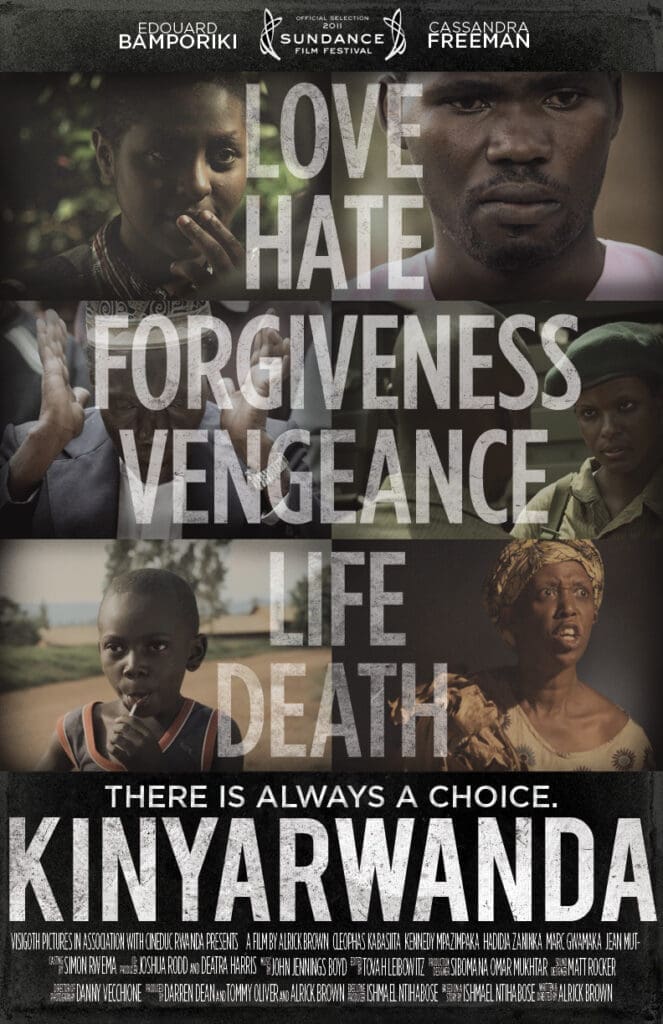
During the Indiana Genocide Prevent Summit I had the wonderful experience of watching the Sundance Film Festival award winning movie, Kinyarwanda and meeting its dynamic young director, Alrick Brown. This movie is a passionate investigation of genocide, reconciliation, love and religion that deserves to be viewed and discussed. Here’s its synopsis:
“During the 1994 Rwandan genocide, the Mufti of Rwanda, the most respected Muslim leader in the country, issued a fatwa forbidding Muslims from participating in the killing of the Tutsi. As the country became a slaughterhouse, mosques became places of refuge where Muslims and Christians, Hutus and Tutsis came together to protect each other. Kinyarwanda is based on true accounts from survivors who took refuge at the Grand Mosque of Kigali and the Imams who opened their doors to give refuge to the Tutsi and to those Hutu who refused to participate in the killing.
The story interweaves six different tales that together form one grand narrative, providing the most complex and real depiction yet presented of life and human resilience during the genocide. With an amalgamation of characters we pay homage to many, using the voices of a few. We follow the young lovers, the child, the couple, the soldiers, the Imam, and the priest as they are swept up by the chaos of the world around them.”
Alrick Brown (keep your eye on him, he is going places) has woven together a wonderful story that breaks down stereo types and places the systemic horrors of genocide in a very human setting. In one scene Christians, who have taken refuge in a mosque, are praying side by side with their Muslin brothers and sister. It’s a story that deserves to be told.
Put this movie on your must see list. You can preorder it now on Amazon before its May 1 release date or find it on many cable video-on-demand networks. It is unrated, but the violence is mainly off screen. I suggest that you bring together friends and family together for a viewing and discussion of this very accessible movie.
Film critic Roger Ebert gave it four stars and said, “I thought I knew something about Rwanda, but I didn’t really know very much. I was moved by “Hotel Rwanda” (2004), but not really shaken this deeply. Not like this … Here is a powerful film.” I give it five stars and believe you will too. We need more stories that educate about genocide and why it must be prevented.