Originally published on the CGS blog on May 8, 2014.
Russia’s intervention into the internal affairs of Ukraine may seem like a breathtaking assault on the international system. After all, Ukraine and its citizens have the right to determine their own future without the interference of other states, an international norm that has also become international law.
But Russia’s rather blatant meddling isn’t so much groundbreaking as it is a feature of the system. The question is less whether we’re okay with Russia breaking what had been a stable equilibrium in Ukraine (we shouldn’t be okay with it, though), but whether we’re okay with a system that favors the powerful, especially powerful states, over the weak, especially those in weak states.
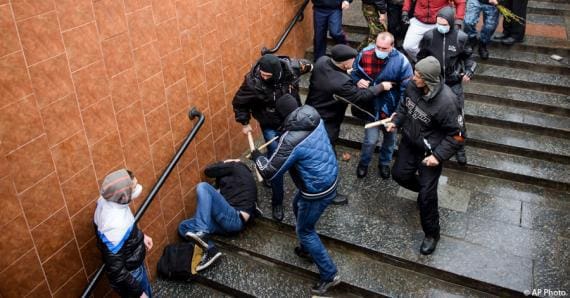
While Russia denies allegations that it is supporting pro-Russian militias and demonstrations in Eastern Ukraine, there are good reasons to doubt those denials. More importantly, the norm of non-interference has clearly been broken: Russia admits to sending forces to Crimea and directly influenced various events leading up to its alliance with Russia; claims that Russia can get pro-Russian militias in Eastern Ukraine to stand down and obvious troop buildups along the border are meant to influence the policies of the Ukrainian government in ways that are typically out-of-bounds for international politics.
That a given state is sovereign, or has the legitimate and exclusive authority to exert control within a territory, has been a norm of the international system for hundreds of years now. But given all the wars we’ve had over territory and legitimate leadership, it’s important to recognize that who decides which authority is sovereign in a given territory is a paramount concern. Just as it’s important to remember that the constituency who decides when an illegitimate intervention into a state’s exclusive authority isn’t that state – it’s the society of states.
The problem is the violator of Ukraine’s sovereignty is Russia, one of the most powerful members of the society of states who has the ability to both covertly and overtly effect dramatic changes within Ukraine. If Russia decides it no longer wishes to respect the international norm of sovereignty with respect to Ukraine, it’s not Ukraine who has the power to stop them: the difference in literal power between them – economically and militarily – is far too great. That burden falls on the society of states.
Look to history and you’ll see that powerful states have a long history of interfering in the internal affairs of other states, from the long colonial histories of Western Europe to U.S. actions in Latin America and the Middle East to Russia’s activities in Abkhazia and South Ossetia. Powerful states use their power to achieve various ends, sometimes obeying norms and sometimes ignoring them, depending on the situation.
The UN Security Council would seem to be an ideal check against powerful states breaking norms against weaker states. But Russia is one of its five veto-bearing members; the UNSC can’t issue a binding resolution on any Russia-related subject, and it’s unlikely to pass even a weaker statement when so much business before the Council requires Russia’s consent. The powerful get to do what they want and get institutions that serve their interests more often than not.
With luck, a strong international response to Russia is going to show powerful states that bullying less powerful states is no longer worth the effort and consequences. It’s not likely, but it’s possible and worthwhile. I suspect the only way to accomplish real change, though, is with new institutions altogether, a paradigm shift. The most important question is: how do we get the powerful to play along? That’s a question for another day.