Originally published on the CGS blog on April 16, 2010.
When most Americans think of Franklin Delano Roosevelt, the 32nd president of the United States – whether they remember him personally or simply learned about him in their U.S. history classes – they are likely to recall a few key things about him: he was our country’s longest-serving president (in office for twelve years); was elected more times than any other American president (four); created the New Deal; and served as Commander-in-Chief during World War Two. However, in addition to these noteworthy achievements, FDR, who died sixty-five years ago this week on April 12, 1945, has another enduring legacy – his role in the creation of the United Nations.
Even as the Second World War was raging across Europe and the Pacific, FDR played the role of “global statesman” by looking not simply to ensure that the Allies won the conflict, but that after the war was over, there would be an international venue for nations to resolve their differences without resorting to war. A previous attempt to create such a body – the League of Nations – after World War One had proven a failure, in part because the United States never agreed to join the League despite the efforts of then – President Woodrow Wilson. President Wilson had championed the League but was unable to get U.S. membership ratified by the Senate once the war was over and American attitudes had grown more isolationist.
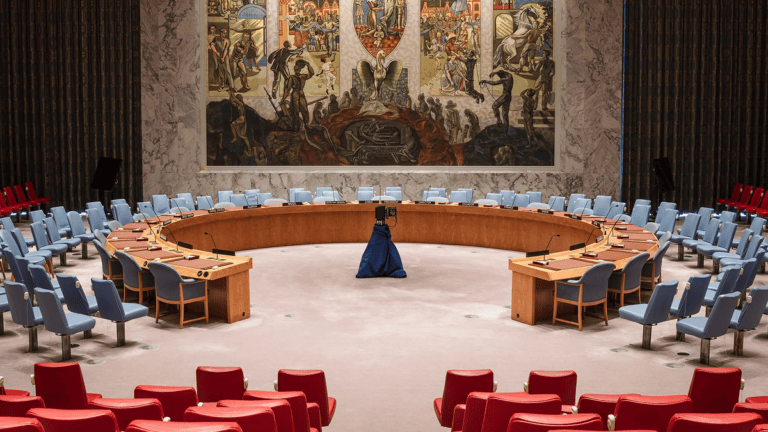
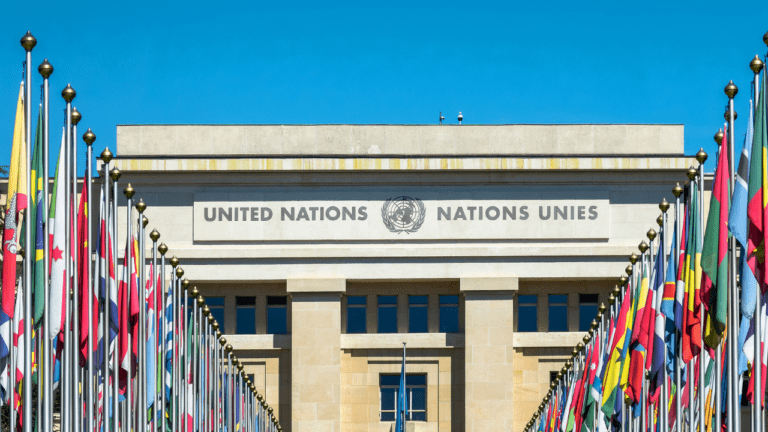
Determined to avoid a similar outcome, FDR worked throughout the final years of his life to create the United Nations and ensure that the U.S. would play an active role in the organization. On October 24, 1945, six months after FDR’s death, the U.N. officially came into existence once the U.N. Charter was signed by China, France, the Soviet Union, the United Kingdom, the United States and a majority of other signatories. FDR’s wife, Eleanor Roosevelt, also played a large role in the creation of the U.N. and served as U.S. delegate to the United Nations General Assembly.
From 51 original members, the U.N.’s membership has grown today to include 192 member states. The United Nations today is actively involved in a wide range of areas including peacekeeping, peacebuilding, conflict prevention and humanitarian assistance.
On the 65th anniversary of Franklin Roosevelt’s death, GlobalSolutions.org acknowledges his key role as a “global statesman” in helping to create the United Nations…a legacy which, six and a half decades later, still endures.