Originally published on the CGS blog on June 17, 2009.
On June 17, 2009, the Committee on Foreign Affairs hosted a hearing on North Korea’s nuclear missile tests and the 6-Party Talks, along with an expert panel of witnesses to advise on the issue. North Korea’s aggressive actions with regard to ignoring international calls for denuclearization and the arrest of two American journalists earlier this month have caused much stir in the political field. The chief concerns were the development of an arms 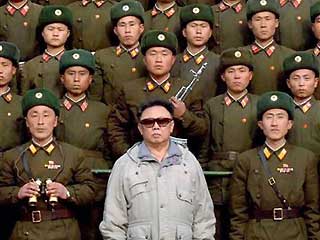 race in Asia in response to Pyongyang’s moves, and the transfer of nuclear technology and weaponry to hostile groups. The country already has a record of transferring such equipment to Iran and Syria. In no mood to compromise, Kim Jong Il has declared his commitment to enrich uranium and develop nuclear weapons.
Congressman Royce raised a convincing case for blocking North Korea’s financial access. Exploiting its notoriety for producing counterfeit money, Congressman Royce noted that North Korea was dependant on hard cash and had a poor domestic currency. Blocking the country out of the international financial system proved effective in the past, when banks refused to do business with Kim Jong Il and he was unable to pay his generals. It was this effect that pressured Kim Jon Il to enter the last round of the 6-Party talks.
The members were divided on the effectiveness of pursuing the 6-Party talks, which North Korea has effectively trashed. They also disagreed on the suitability of sending an envoy to the region, and weather the issue of the arrested American journalists should be treated as a separate humanitarian matter, or as part of the main discourse.
The role of Russia and China was thought of as crucial, as they both have acted as North Korea’s benefactors. Besides having trade links, the two countries would not want to provoke North Korea to destabilize the region, and a fall in Kim Jong Il’s regime would mean an influx of unwanted refugees for China. A weakened North Korea and an empowered South Korea would mean effectively strengthening a U.S. ally. China and Russia’s support for the U.N. Security Council resolution condemning the nuclear tests and calling for sanctions against North Korea are an encouraging development.
At a time when Kim Jong Il’s health and mental capacity are uncertain, regime change is at the forefront and we must prepare for the possibility of a regime collapse or the accession of inexperienced and nationalistic generals and heirs. The country is plagued by extreme poverty and malnutrition, and even aid provision is complicated by the diversion of provisions to the military. As Congressman Scott said, “There are no limits to what a government will do when it ceases to care about its people.” The belligerent and self-isolating acts of North Korea are hard to understand and provoke varied responses, but failing to cap the threat would go far in empowering anti-democratic forces around the world, and perhaps even provoke other parties, such as Iran, to develop their own programs.