
Originally published on the CGS blog on July 8, 2014.
Last Monday brought a devastating conclusion to the 18-day search for three missing teenagers in Israel with the discovery of the bodies of Naftali Fraenkel, 16; Gilad Shaar, 16; and Eyal Yifrach, 19. Tens of thousands attended the funeral, and the international community echoed the nation’s grief; Barack Obama said that as a father, he could not imagine the pain of the parents. Yet as a world leader, he urged restraint in Israel’s response, encouraging Israel and the Palestinian Authority to work together in pursuing justice and to “refrain from steps that could further destabilize the situation.”
UN Secretary General Ban Ki Moon suggested that “this heinous act by enemies of peace aims to further entrench division […] and to widen the conflict. It must not,” he asserted, “be allowed to succeed.”
Months after American-brokered peace talks broke down, their warnings against provoking escalation went unheeded.
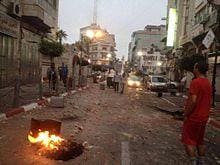
That night, the homes of Marwar Qawasmeh and Amer Abu Aisha, Hamas members suspected of being the kidnappers, were demolished. Air strikes were launched against the Gaza strip in reply to militant rockets. Thousands of homes were searched in the West Bank and 400 Palestinians were arrested, with some killed in confrontation with soldiers. Right-wing extremists mobbed the streets of Jerusalem, shouting anti-Arab slogans and attacking Arabs.
And, in a shocking act of brutality that has inspired mass rioting: the kidnapping and murder of Muhammad Abu Khdeir, age 16.
In the wake of these tragedies, Israel/Palestine has a choice. Governments and citizens may use these deaths as a springboard for retaliation, revenge, and eventual ruin, or they may find in their shared bereavement a new opportunity for reconciliation.
Many have pursued the option for destruction this week. Netanyahu’s denunciation of extralegal retaliation is undermined by the military barrage, the arrests, and the continued establishment of settlements. Defense Minister Ya’alon’s proposal to create new settlements in honor of the boys would use the murder of the innocent as a platform for provocation. Hamas, whose constitution rejects “so-called peaceful solutions,” applauded the kidnappers of the Israelis, vowing revenge for Khdeir in a sure incitement to claim more lives. Rather than using the children’s murder to validate reprisal, their monument should be a pledge to end the conflict.
Others are making courageous strides towards that end.
In the same square where an angry mob attacked Palestinian youth, a rally against anti-Arab violence took place. The Israeli Opposition Leader who attended called for an end to the “circle of blood” which extremists seek to perpetuate against the general will.
Abbas denounced the abduction and assisted in the search for the boys, risking tension in the new coalition–and in his own party–to save lives. Israel arrested six on the suspicion of Khdeir’s murder. Both parties’ willingness to hold their own extremists accountable for violence are necessary for future reconciliation.
The family of Naftali Fraenkel invited that of Muhammad Abu Khdeir into their home to comfort one another, and there is an initiative underway, headed by Jews and Muslims, to make July 15th (17 Tammuz and Ramadan) a joint interreligious fast day against violence. This is a better legacy for the boys: rallies in the name of nonviolence, enforced accountability under the law, empathetic dialogue, and new plans for a shared future to commemorate the youths’ shared fate.
We at Global Solutions hope that these initiatives to choose law over revenge, empathy over extremism, and to interrupt the cycle of violence will yield fruit. We hope that the United States will encourage and sustain the courage of those who, after tragedy, reject the option for destruction and pursue the option for reconciliation.


