Originally published on the CGS blog on June 10, 2013.
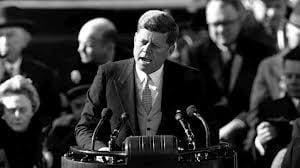
On June 10, 1963, then-President John F. Kennedy gave the commencement speech at American University. What could have been merely an exciting day in the graduates’ lives became one of the most important turning points in the Cold War era.
In the wake of the Cuban Missile Crisis, President Kennedy chose this day to reveal his new approach to the Soviet Union and the United States’ nuclear program. He declared that the United States would not continue testing nuclear weapons and would seek to form an agreement with other nations to ban nuclear tests in the atmosphere. This led to the passage of the Limited Nuclear Test Ban Treaty (LTBT), and later and more importantly, the Nuclear Nonproliferation Treaty of 1968. A good way to honor JFK would be to ratify the Comprehensive Test Ban Treaty, the updated version, which would ban all types of nuclear testing, including those left out in 1963.
In addition to setting in motion these critical agreements, JFK’s speech also accomplished a second important feat: it changed the course of U.S.-Soviet relations for the better. The President boldly and eloquently made an appeal to the humanity of the Soviets. He acknowledged the differences between us, but also drew important comparisons:
“So, let us not be blind to our differences-but let us also direct attention to our common interests and to the means by which those differences can be resolved. And if we cannot end now our differences, at least we can help make the world safe for diversity… Our most basic common link is that we all inhabit this small planet. We all breathe the same air. We all cherish our children’s future. And we are all mortal.”
For me, this passage is immensely powerful and has many implications for the present. It allows us to accept something that leaders and everyday citizens alike often struggle with: there are fundamental differences between and among people that do not need to be eliminated in order for a solution to be reached. JFK pointed out that our common humanity-the air we breathe, the dreams we hold-are interests we share and are incentive to compromise with those different from ourselves.
The effects of this speech demonstrate a breakdown of a seemingly irreconcilable difference, the U.S. and Soviet Union’s stance toward one another. The Soviet response to this speech was astounding. It was translated into Russian and printed in near entirety for the Soviet public to read, something relatively unheard of at the time. Soviet leader, Nikita Krushchev, called the current U.S. envoy, Averell Harriman, to say that the speech was the greatest given by an American president since FDR.
The President asked Americans “to reexamine our own attitudes, as individuals and as a Nation, for our attitude is as essential as theirs.” This message has a lot to say about international cooperation and about ways we can play a more responsible role in the world. It calls us to look first within ourselves and our nation before placing blame on others. JFK’s words combined with his strong leadership on this and many fronts, allowed for powerful changes to take place.
As we sit here, with tensions escalating in the Middle East, with the climate continuing to change, with countless people without basic human rights, we may be wise to follow JFK’s example and start paying attention to the things we share.