
Originally published on the CGS blog on February 7, 2012.
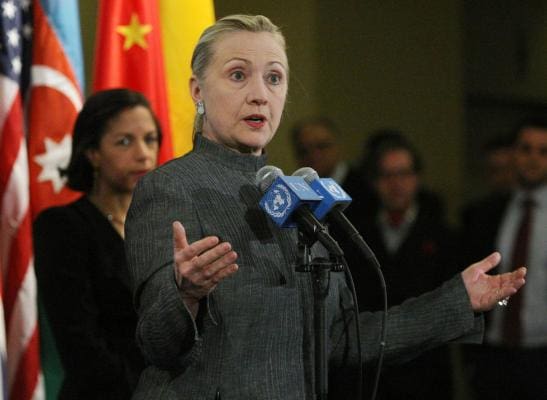
This weekend, Secretary of State Hilary Clinton was in Germany speaking at an event supporting women in international security. Secretary Clinton remarked “that when we think about peacemaking, which is, after all, one of the critical tasks of any of us in international security, that something is missing. And that is women. There are not enough women at the table, not enough women’s voices being heard”. Women are underrepresented in peacekeeping forces and in international peace negotiations. This is an unfortunate revelation, considering studies and experiences have show that the presence of women in peacekeeping operations can be extremely beneficial to the success of the effort.
In the report “U.S. Engagement in International Peacekeeping,” launched by GlobalSolutions.org, as a leading organizer of the Partnership for Effective Peacekeeping, the benefits of female peacekeepers are explored. The report notes that women peacekeepers can relate to local women and are less intimidating than male forces. Female peacekeepers have made great strides in preventing sexual and gender based violence (SGBV) in the communities in which they are placed. According to the report, a force of Indian women police officers arranged night patrols that prevent SGBV. Female officers also inspire local women to become involved in security forces.
Clinton also mentioned United Nations Security Council Resolution 1325, which recognizes the importance of women’s rights in conflict areas and addresses the gender imbalance in peacekeeping forces by calling for women to play a larger role in the peace process. The Peacekeeping Report also suggests certain actions that should be taken by the United States in order to promote women in peacekeeping, including adding preferences for women within job descriptions for staff officers and the creation of incentives to encourage women to join peacekeeping forces.
The United States has already taken a major leap in promoting women in peacekeeping through the National Action Plan on Women, Peace, and Security. This plan calls for more attention to be paid to women’s rights, ensures that humanitarian assistance will be distributed equitably, and lays the groundwork for increasing the role of women in the peace process. Specific attention is also called to the prevention of SGBV. The Peacekeeping Report recommends that Congress fully fund the National Action Plan. These objectives are vital for our current and future foreign policy goals. Secretary Clinton confirmed the importance of these efforts when mentioning the steps that have been taken to promote women in Afghani police forces. As the Secretary said, “part of what we have to do as we try to test whether peace is possible in Afghanistan, is to make it very clear that peace will not come at the expense of women’s rights and roles. They have suffered too much for too long”. To read “U.S. Engagement in International Peacekeeping: From Aspiration to Implementation,” click here.


