
Originally published on the CGS blog on April 1, 2009.
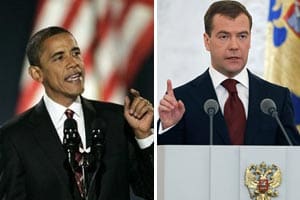
Today, Wednesday, April 1, U.S. President Barack Obama and Russian President Dmitry Medvedev met to begin talks about reducing the number of nuclear weapons in the United States and Russia. Both leaders agreed to work towards expanding the terms set forth in the 1991 Strategic Arms Reduction Treaty (START), which is set to expire at the end of this year. Obama and Medvedev each agreed to immediately start work on an outline for a replacement treaty, expected to call for a further reduction in nuclear weapons by both countries to no more than 1,500 each. Currently, the United States has 2,200 nuclear warheads and Russia has 2,800.
This is really great news. Not only do these talks signify a bolstering of the U.S./Russia relationship, which has often been strained in recent years, but this is a step in the right direction towards the U.S. finally ratifying the Comprehensive Test Ban Treaty (CTBT). The United States signed the CTBT, which bans all nuclear weapons testing, but Congress has yet to ratify it. President Obama has stated his support for ratifying the CTBT, which would mark a signficant step towards ending the possibility of a new nuclear arms race and would guard against any further risks to human health or the environment that nuclear testing causes.
Another bonus: negotiating a new bilateral arsenal reduction treaty with Russia would almost certainly give the U.S. more leverage when talking to other countries like North Korea and Iran about their illicit nuclear production programs.