
Originally published on the CGS blog on July 11, 2011.
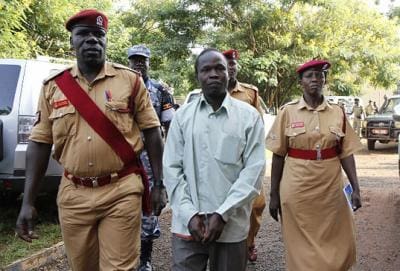
Today, the International Crimes Division court in Gulu, Uganda began its first ever war crimes trial for the Lord’s Resistance Army commander, Thomas Kwoyela. The LRA commander is being charged with 53 counts of willful killing, hostage taking, destruction of property, and causing injury. He is also accused of leading village raids, such as an attack on a Congolese village in 1996.
Formed in 1987, the Lord’s Resistance Army began its reign of terror in northern Uganda by abducting young children to become child soldiers and committing brutal acts of violence against innocent civilians. Over the years, the rebel army has spread to neighboring countries, particularly the Democratic Republic of Congo, South Sudan, and the Central African Republic. In 2005 the International Criminal Court indicted the LRA’s leader, Joseph Kony and his closest advisors for committing crimes against humanity. The international community has not been able to capture Kony, especially after two failed attempts at a peace process in 2006 and 2008 in Juba, South Sudan.
The Ugandan government established the International Crimes Division of Uganda’s High Court in 2009. The government agreed to set up this special court so that LRA fighters and lower level leaders could be tried or apply for amnesty. This domestic court allows for a widespread and complete investigation of the Lord’s Resistance Army’s crimes as the ICC continues its investigation on the highest ranking LRA leaders.
On the first day of the trial, the defense pleaded for amnesty and a fair trial. Kwoyela’s lawyer stated,
“Higher officers in the LRA … were granted amnesty. Since the brigadiers were granted amnesty, the denial by the directorate of public prosecutions … infringes on his (Kwoyelo’s) constitutional rights to fair treatment.”
The defense lawyer’s statement shows one of the controversies in the trials of LRA fighters. Because the vast majority of LRA fighters and commanders were abducted and forced to fight in the rebel army, there exists a fine line between victim and perpetrator when bringing LRA members to justice. The International Crimes Division court has to find the right balance between taking into consideration forced conscription and not appearing lenient on war crimes.
The international community should keep a close eye on the trials occurring in the International Crimes Division to ensure that LRA fighters and leaders receive fair treatment. Elise Keppler of Human Rights Watch summarizes the necessity of ensuring fair trials for those prosecuted in the Ugandan court when she stated,
“Domestic war crimes prosecutions are essential to ensuring perpetrators of serious crimes committed during the conflict in northern Uganda do not escape justice… But trials must be fair and credible and witnesses need adequate protection. This first trial before the International Crimes Division will test whether these standards are being met.”
There are many arguments against the use of the International Crimes Division court, such as idea that it undermines the ICC or that the Kwoyelo trial is politically motivated, but what it comes down to is the fact that there exists a court is wholeheartedly focused on bringing justice to a region that has been ravaged by war for over twenty years.


