Originally published on the CGS blog on November 22, 2010.
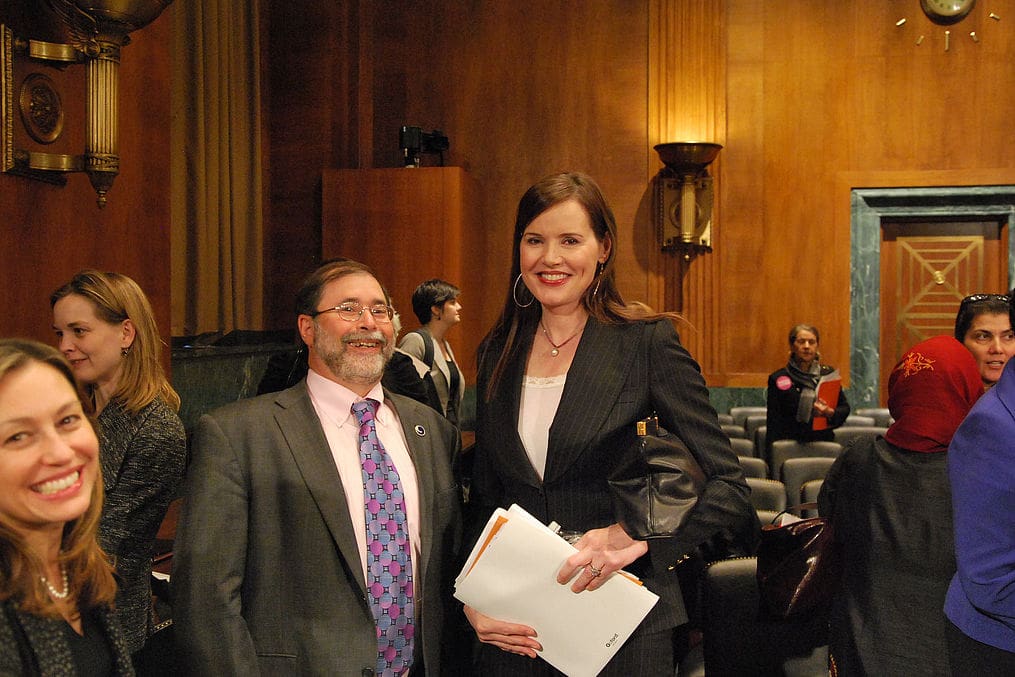
For the first time in eight years, the Senate conducted a hearing about U.S. ratification of CEDAW. The hearing was held in the Senate Judiciary Committee’s Subcommittee on Human Rights and the Law. Over 200 activists attended the hearing and more than 100 organizations submitted statements about the treaty for the record.
Hearing witnesses included Wazhma Frogh of the Afghan Women’s Network, actor Geena Davis, Marsha Greenberger of the National Women’s Law Center, and Stephen Groves from the Heritage Foundation.
Frogh described why U.S. ratification is so important, “Failure to ratify CEDAW is of huge international significance. In Afghanistan, conservative elements try to use America’s failure to ratify CEDAW to attack women’s rights defenders. They say that if United States believes in women’s rights as a universal right, why haven’t they signed on to CEDAW? Today, we don’t have an answer. Perhaps tomorrow, with your help, we can answer back.”
Davis urged the Senate to continue its leadership on women’s human rights, “The time for change is now. We cannot wait to see if real gender equality happens in the natural course of time, when all evidence tells us it doesn’t. The lives of too many women and girls are at stake. We must act, and one important action we can take is to ratify CEDAW now.”
CEDAW, regarded as the most important international mechanism for women’s equality, provides a blueprint of human rights for women and girls. For the past 30 years, CEDAW has served as an important tool for women, girls and their governments to strengthen laws to protect the human rights of women. The treaty has been used to change constitutions, pass new legislation, and influence court decisions.
Women’s rights are human rights, and CEDAW affirms fundamental principles of human rights and equality for women and girls. The U.S. should strive to be a leader and set an example for the rest of the world in its commitment to women and expanding women’s rights.
Around the world, the status and rights of women are linked to a broad array of critical global issues including disease prevention, democratization, poverty reduction, environmental protection and economic development and growth. The treaty is a criticaltool for creating an awareness of and advancing women’s basic human rights.
Although the United States was instrumental in creating the treaty, it is one of seven countries that has not yet ratified CEDAW. Failure to ratify undermines U.S. leadership in promoting human rights, democracy and the rule of law. U.S. ratification of CEDAW would send the world the message that we consider ending discrimination against women and girls a critical priority.
Ratification of CEDAW would reinforce the United States’ unequivocal commitment to women’s progress at home and around the world.
Keep up the momentum for U.S. of ratification of CEDAW!
- To view a recording of the hearing and read witness statements, click here.
- Contact Senator Durbin’s office and thank him for conducting the hearing.
- Click here to contact your Senators and ask them to support CEDAW and to urge Senator Kerry to hold a VOTE on CEDAW now!