
Originally published on the CGS blog on October 23, 2013.
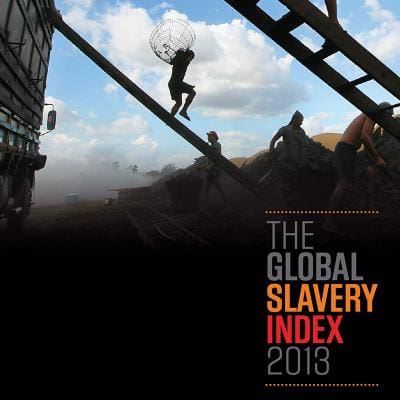
The Global Slavery Index estimates that there are between 28.3 and 31.3 million people (29.8 million mean) subject to modern slavery in the world today. The Index, a project of the Walk Free Foundation, includes several related concepts in its definition of modern slavery. The mean figure of 29.8 million people includes those bought and sold as property, “classically” defined slavery; victims of human trafficking; and “forced labour”, those coerced into working through various means. According to the Foundation, “the significant characteristic of all forms of modern slavery is that it involves one person depriving another people of their freedom.”
As a percentage of the total population, Mauritania has the most people living in slavery. Though higher than the Index estimate, one Mauritanian NGO estimates that 20 percent of the population live in slavery. In Mauritania, “chattel slavery” is most common, meaning “adults and children in slavery are the full property of their masters who exercise total ownership over them and their descendants.” This status can be hereditary and slaves can be bought, sold, and rented out. Individuals have no rights and face violence and sexual assault. Force begging is common amongst child slaves. For Americans, these conditions must bring to mind our own shameful history of chattel slavery.
Nearly half of all people living in slavery in 2013, 14 million, live in India. Many of these enslaved people, including 500,000 children, work in the cotton industry; India is the world’s second largest cotton exporter. Workers face dangerous working conditions, financial exploitation, and lung disease from cotton dust and pesticides. According to the International Business Times, India is “one end of a fabulously lucrative global business that ultimately provides clothing for high-end shops in the west.” International corporations Monsanto and Bayer AG are “major purchasers” of Indian cottonseed.
Forced labor slavery received international attention when in September, the Guardian ran a story revealing the appalling working conditions of thousands of Nepalese migrant workers hired to prepare Qatar for the 2022 World Cup. The article highlighted the deaths of 44 men between June 4th and August 8th, nearly one death per day, more than half of whom died of heart attacks, heart failure or workplace accidents. These workers have been denied food, adequate housing, and pay and their travel documents have been confiscated. In the words of one man: “We’d like to leave, but the company won’t let us.”
There is no question that all forms of slavery are reprehensible. The importance of adherence to, and strengthening of, laws and international regimes banning slavery is paramount. The Domestic Workers Convention, recently entered into force, is one such example. National level legislation must also accompany such treaties. Unfortunately, as in Mauritania, despite legislation against it, slavery persists. Governments must uphold their legal responsibilities and other institutions, such as schools, universities, mosques and churches, must work to build public opinion against these practices.
It also shouldn’t take an international event like the World Cup for attention to be paid to this on-going set of problems. In addition to laws, addressing these issues requires recognizing flaws in the dominant economic system that demands goods be produced for foreign markets as cheaply as possible. It requires the purchaser of goods in Western countries to pressure manufacturers to provide better protections and working conditions for their employees, no matter the country, and to pressure governments to enforce regulations in international supply chains.


