
Originally published on the CGS blog on May 25, 2012.
“We agreed that both, when it comes to economic development and when it comes to peace and security issues, empowering women to have a seat at the table and get more engaged and more involved in these processes can be extraordinarily fruitful. And this is something that we will also be introducing during the G20.”
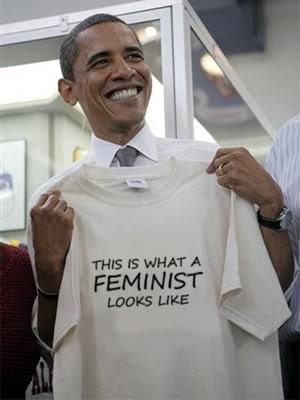
True to his word, President Obama made a historic commitment at the G8 and NATO summits by placing women empowerment as a major part of the summit’s agenda this past week. President Obama not only emphasized the importance of protecting women’s rights and advancing their participation in the global setting, but recognized that empowering women worldwide is the key to global economic development and international security.
Data and research collected by Pulitzer Prize winners Nicholas Kristof and Sheryl WuDunn supports this idea that has now taken center stage in the NATO talks. They have found that “the poorest families in the world spend approximately 10 times as much on a combination of alcohol, prostitution, candy, and lavish feasts as they do on educating their children,” which they say comprises about 2% of their incomes on average. One way to reallocate this misuse in spending is to put some financial responsibility in the hands of women. Economist Esther Duflo of M.I.T. agrees. In an experiment conducted by Duflo with men and women planting different crops in the Ivory Coast, the results showed that when men’s crops flourished and they were flushed with money, the household on average spent more money on alcohol and tobacco. When women’s crops flourished in other years, the household spent more on food for the entire family.
In the early 1990s, chief economist of the World Bank, Larry Summers, said “Investment in girls’ education may well be the highest return investment available in the developing world.” After analyzing thousands of aid organizations, Kristof noted that “aid has been most effective when aimed at women and girls,” further pointing out that policy experts who look at the numbers see that investments in women and girls have a net economic return. Kristof and WuDunn observed a study in Indonesia that found if a wife has brought more resources into the marriage-instead of everything belonging to the husband-then the children of the family were healthier and more educated than those in families where the wife legally had no assets.
Botswana is one of the fastest growing countries in the world, and its former President Festus Mogae attributes their economic boom to the empowerment of women and girls, which allowed women to participate in the work force and government. He noted that half the government sector is now comprised of women. Some development experts theorize that given the studies of how a wife will use her money to better her whole family, when women enter the government sector, “they can do for their countries what they do for a household.”
What does empowering women have to do with international security? Kristof notes that some scholars say they believe “the reason Muslim countries have been disproportionally afflicted by terrorism is not Islamic teachings […] but rather the low levels of female education and participation in the labor force.” It is no secret that the under-representation of women in the peace processes in some of the most conflict-ridden countries is a major deterrent to creating a strong and lasting peace. As American Ambassador Princeton Lyman said in a Congressional hearing on the conflict in Sudan: where there is conflict, women are the ones who suffer the most-as they are targeted in mass rapes and other acts of gender based violence. Women are barred from peace processed in the very regions where the conflicts affect them the most.
Outstandingly, the NATO Chicago Summit Declaration included the priorities of the US’s first ever National Action Plan on Women, Peace, and Security. That blueprint states: “widespread sexual and gender-based violence in conflict situations, the lack of effective institutional arrangements to protect women, and the continued under-representation of women in peace processes, remain serious impediments to building sustainable peace.” As mentioned before, women are targets in conflict zones because rape, as a crime of war, is used to destroy families and communities. Kristof notes that in impoverished and conservative societies, rape is used as an act of war because of the strict codes of sexual honor that places a woman’s value based on her chastity. Although these codes are meant to protect women, Kristof notes, “in fact they create an environment in which women are systematically dishonored.”
For example, in the early 2000s it became clear that Sudan-sponsored Janjaweed militias were seeking out and targeting women in Darfur-using rape as a tool for ethnic cleansing. To hide this from the international community, the Sudanese government often punished women who sought medical treatment after their attacks, charging them with fornication. The international community cannot let this happen again. The international community needs to put pressure on countries that are committing human rights violations such as these to change their legal codes to protect women. For President Obama and other leaders to place human rights for women as a priority at the NATO and G8 Summits is a huge and long-awaited step in the right direction.
If none other than a human rights issue, the empowerment of women and girls is an economic necessity to utilize the other half of the population that is barred from economic advancement. And if none other than to protect the most marginalized group in war, protecting women and girls from rapes in conflict and giving women more representation in the peace processes will improve international security.


