
Originally published on the CGS blog on February 5, 2013.
Barbie is an iconic doll, who has been around since the 1950s. I had numerous Barbies (most of who were decapitated by my younger brother). I had Baywatch Barbie, Texas Longhorn cheerleader Barbie, teacher Barbie, wedding Barbie (with Ken) and all the Barbie books to match. I can thank my aunt for signing me up for the Barbie book club, in which Barbie, and her siblings/friends, went on all kinds of adventures. Barbie had numerous jobs in these books, to match her doll personalities. She was a vet, a doctor, nurse, pre-school teacher and a fashion designer.
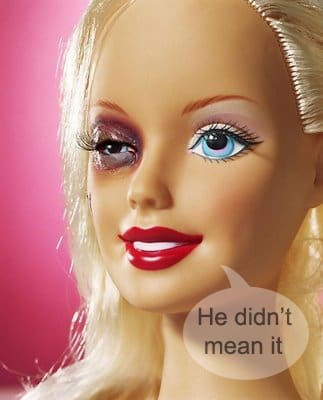
Although it is encouraging to show girls that Barbie can have a variety of careers, there was never a real-world Barbie. Barbie is distorting the way girls think about themselves because Barbie is not representing issues that girls are going through. Barbie never shows real world problems–she’s never been abused, drank too much, or been sexually assaulted. Barbie never ages, doesn’t gain weight, doesn’t commit crime and doesn’t fall into depression. Barbie has never had an eating disorder, depression, or anxiety. She’s perfect–and not realistic. Recently, a woman spent $80,000 on plastic surgery to look like Barbie and she’s absolutely terrifying. Isn’t it time that Barbie begins to look more like the rest of the world’s female population?
Just for Women posts these stats on their website:
- 90% of all women want to change at least one aspect of their physical appearance.
- 81% of 10 year old girls are afraid of being fat.
- Every 15 seconds a woman is battered.
- 57% of rock music videos portray women as a sex object, a victim, as unintelligent, or in a condescending way.
- 1 in 3 girls who have been in a serious relationship say they’ve been concerned about being physically hurt by their partner.
- Women are devalued in the workplace, making only 76% of their male peers’ salaries.
- One out of four college-age women have an eating disorder.
- Women make up nearly 51% of the population, but hold just 16% of the seats in Congress.
- Three-fourths of girls with low self-esteem engage in negative activities, such as disordered eating, bullying, smoking or drinking.
- Only 2% of women think they are beautiful.
- 1 in 3 girls between the ages of 16 and 18 say sex is expected for people their age if they’re in a relationship.
If Barbie is supposed to be the “norm,” why can’t we have single-mother Barbie or Real Curves Barbie? If Barbie is supposed to represent what any girl can be, why is there no real world Barbie? In fact, since Barbie was introduced to the public, she has lost weight. Slumber Party Barbie was introduced in 1965 and came with a bathroom scale permanently set at 110 lbs with a book entitled “How to Lose Weight” with directions inside stating simply “Don’t eat.” If Barbie was a real human, at 5’9″ and weighing 110 lbs, she would have a BMI of 16.24 and fit the weight criteria for anorexia.
Those girls around the world who have Barbies grow up with the projection of beauty that platinum blonde hair, bleach white skin and large breasts are what you need. It’s time to change the image that society projects onto women. If we are going to start challenging societal norms of what is beautiful, we need to start at the root of the issue, which is women are still viewed as unequal to men. The United States must pass the Convention on the Elimination of all forms of Discrimination Against Women (CEDAW), which would send the message to girls everywhere they are equal to males and deserve to live free of discrimination. Worldwide, we as Global Citizens need to challenge the sexism that women experience. Girls should have equal opportunity for education. Several factors set girls back from being able to attend school, including poverty, the threat of sexual violence, and discrimination against girls. Women and girls deserve everything that men deserve. Help us change the message about women, help us show girls that they can be themselves and do not need to embody a plastic doll.
So get involved! Lend your voice to the billion women on the planet. Our website has numerous ways to join the cause: you can attend our Webinar this Saturday February 9th from 1-2 pm EST featuring Ellie Smeal of the Feminist Majority and Sandra Fluke, women’s rights advocate! Or you can attend any number of One Billion Rising rallies around the country!


