Originally published on the CGS blog on July 17, 2012.
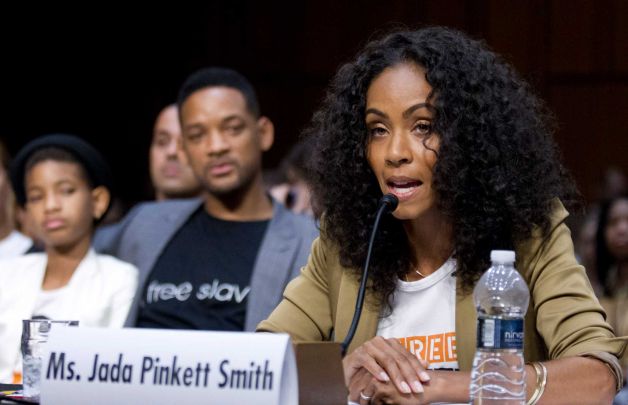
This morning the US Senate Committee on Foreign Relations held a hearing on The Next Ten Years in the Fight Against Human Trafficking: Attacking the Problem with the Right Tools. Holly Burkhalter of International Justice Mission, David Abramowitz of Humanity United, and Jada Pinket Smith of Don’t Sell Bodies testified, citing the enormity of the issue on a global scale.
While keeping myself from diving over the row of chairs separating me from Will Smith and his daughter Willow, I was shocked to hear that worldwide, there are 27 million women, children, and men being held in modern-day slavery. I am already convinced on how urgent this issue of sex trafficking and forced prostitution is; for it is a topic I am passionate about. Yet to others, what could have been the most convincing element of the testimonies to bring greater awareness, action, and prevention of human slavery were the stories of three women that Ms. Pinkett Smith brought to sit in the hearing. These three women had been either abducted as children, abused by her own parents, or kicked out of foster care-and all had suffered as victims of sexual slavery.
Even Senator Cardin had to reiterate and make sure-these women were held in sexual slavery in the United States? Yep. But through grassroots organizations, they were rescued, given psychological and academic help, and now live as successful citizens of the US. Thus, the theme of the United States leading by example came up several times. If the United States is to get serious about stopping human trafficking on the global scale, we cannot ignore the grim fact that there are women and girls in our own country that are exploited-which I think should just motivate us even more as global citizens to put an end human trafficking.
Senator Durbin brought up the issue of a more legalized form of sexual slavery-child marriage. As I have mentioned before, child marriage not only cuts a girl’s life short of the potential she could be for her community and the world, but it stands in the way of a country’s ability to thrive economically. A girl who is married at a young age is more likely to die in childbirth and is less educated. It’s a form of sexual slavery that needs to end. It was Senator Durbin who introduced the International Protecting Girls by Preventing Child Marriage Act of 2010 but the bill was defeated in the House.
So with all these issues tied to sexual slavery and human trafficking, what can you do? The issue seems huge (I mean that is 27 million people worldwide!) but there are some specific solutions-small things-that can help end global human trafficking. For one thing, you can call or write to House Minority Leader John Boener (R-OH) and Committee on Foreign Affairs Ranking Member Ileana Ros-Lehtinen (R-FL) and ask why (on earth?!) they, and other House members opposed the bill to protect girls from child marriage.
Further, you can advocate for education of local police forces (both here and abroad), so that the victim is not treated like the perpetrator-because even women above the age of consent are being held against their will through violence, abuse, and deception. Often these victims are the ones arrested for prostitution and suffer social consequences. Awareness and education are the keys. In her testimony, Burkhalter emphasized political will. If the United States puts political pressure on countries that are rampant with sexual slavery, these countries will be more willing to make changes. Yet the political will starts with you. Call, write, tweet, Facebook-do what you can to show your representative that this is a global issue that is not only morally wrong, but it robs real people of their freedom and potential. Political will starts with you, so human trafficking can end with you.