
Originally published on the CGS blog on April 2, 2014.
When a child soldier escapes or is liberated from his captor, he returns home to his family, but often cannot leave the war zone or trauma behind. These children have been so abused both mentally and physically that they often have difficulty reintegrating into their community. Community and family members shun them, reinforcing their feelings of isolation, anger, and frustration. Simple interaction with other kids, classmates, or community members can turn violent. The question then becomes: how do these children re-enter society and function as members of the community?
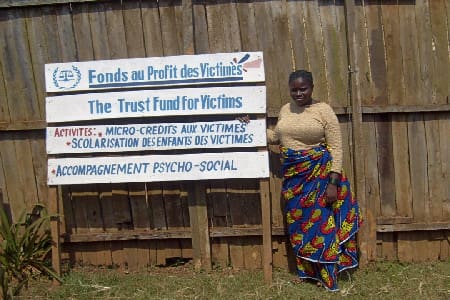
The Trust Fund for Victims (TFV), set up by the International Criminal Court’s (ICC) Rome Statue, focuses on helping these and other types of victims. The TFV provides support specifically for the victims of those whom the Court prosecutes. It has two mandates:
- to implement court-ordered reparations; and
- to provide physical and psychological rehabilitation or material support.
The TFV differs from regular humanitarian aid organizations in that it works more with individuals or small groups directly affected by war crimes or mass atrocities. Conversely, more blanket humanitarian groups focus on whole communities that are affected by a range of challenges, from direct violence to poverty.
As described by Ambassador Tiina Intelmann at a recent meeting of the Washington Working Group on the ICC, the Trust Fund helps “mend the fabric” of societies torn apart by war crimes and mass atrocities. Currently the TFV has missions in Uganda and the Democratic Republic of Congo, working with child soldiers, burn victims, sexual assault victims, and amputees. These projects promote reconciliation at the individual, family, and community levels by helping victims reintegrate into their society and combating marginalization. The TFV works not only with the victims themselves, but also the people in their communities – educating the community members to lessen the alienation of victims. The TFV works closely with NGOs and other community groups to raise awareness and mobilize people, but their focus is much more specific compared to the broad mission of many other groups.
Funding for the TFV comes from states parties, private groups, or individuals. However, many nations are standing in the way by not ratifying the Rome Statute and therefore preventing contributions from the state and private donors. In the United States, cooperation with and government donations to the TFV are prohibited as our government has failed to ratify the Rome Statute. There is a campaign to create a tax-deductible group that would receive private donations, allowing individuals to provide support for the TFV even though the government can not. (We’ll keep Global Solutions Action Network members informed as this effort unfolds.)
As the ICC takes on additional and larger cases in the coming years, this funding will be even more crucial as the TFV will be called upon more and more to assist the children and other victims in post-conflict rehabilitation and reconstruction.


