
Originally published on the CGS blog on October 20, 2011.
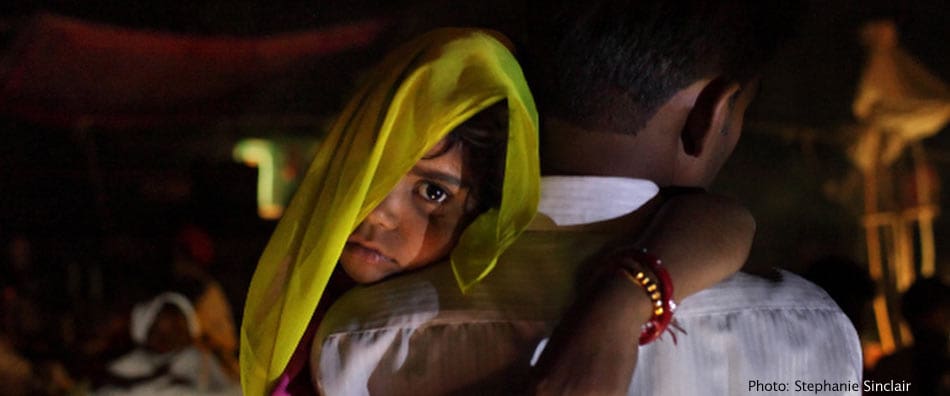
On Thursday, October 6, 2011 the International Center for Research on Women (ICRW) conducted the Insights to Action: Solutions to Child Marriage event highlighting an international crime issue that has been plaguing our global community for decades. Child marriage is a harmful traditional practice that denies 10 million girls a year their rights to health, education and security. Every day, more than 25,000 girls are married before they turn 18, with little if any say in the decision. That’s 19 girls a minute denied their voice. Insights To action: Solutions to Child Marriage by the International Center for Research on Women exposed a problem swept under the rug by the global community for years. In recent years, national and international communities have begun to increasingly recognize child marriage as a serious issue, as it is a violation of girls’ human rights and is a hindrance to key development outcomes. The highest rates of child marriage occur in India, West & North Africa, South Asia and Latin America.
For a long time child marriage was responded to solely through legislation. No, groups, no programs, no organizations. Legislation, as we know, moves as slow as molasses and by the time something “effective” is passed the violation of child’s rights were the norm.
In 2009, commissioned by the World Health Organization, the ICRW took the first step to evaluate the progress that has already been made to fight the issue of child marriage by researching & evaluating programs already in place. They found that 23 out of 150 programs worldwide were active in preventing the problem (both directly & indirectly) and with those 23, began a systematic review. In this review they found that five (5) strategies were most effective. These five included: empowering girls with information, skills and support networks; educating and mobilizing parents and community members; enhancing the accessibility and quality of formal schooling for girls; offering economics support and incentives for girls and their families; and fostering an enabling legal and policy framework.
ICRW felt that the results of the review were overall positive but the next step will involve much red tape and unconfirmed funding. A nation’s sovereignty must be taken into account, religious/tribal practices must be respected and obtaining the authority to bypass these things is nearly impossible. However, the innovative social change mechanisms and 21st century technologies for communication, connection, education, and mobilization, has ICRW hopeful. Through research and reviews like this programs are expanding and prevention experts are becoming more aware to orchestrate action all over the globe. Kudos to ICRW!
If you’re interested in helping out visit: www.girlsnotbrides.org and/or www.icrw.org


