
The 2026 United Nations High-Level Political Forum brings together governments, civil society organizations, and changemakers from around the world to advance progress toward the Sustainable Development Goals (SDGs). Among those contributing to the global conversations were two fellows from Citizens for Global Solutions’ (CGS) Global Governance Fellowship, who were invited by Green Hope Foundation Founder and President, Kehkashan Basu, M.S.M., MBA to serve as keynote speakers during United Nations parallel side events at the UN Headquarters in New York.
Building on their previous experience as keynote speakers during the 70th session of the Commission on the Status of Women (CSW70) parallel side events, the fellows returned to the United Nations to share their research. Their participation emphasized the growing recognition that young people are essential partners in shaping solutions to today’s most pressing global challenges.
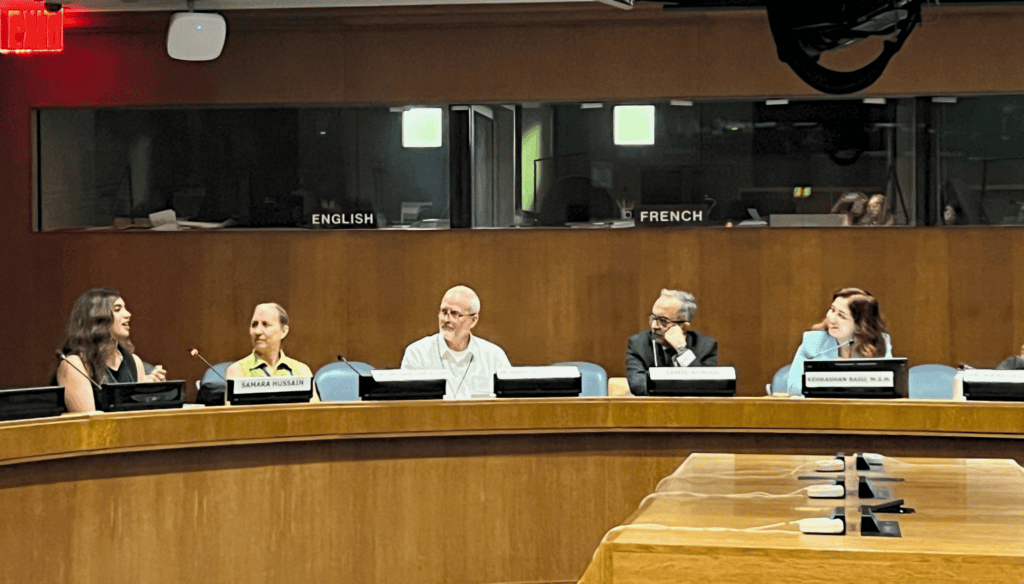
Samara Husain is a senior nursing student at Trinity Washington University who is currently completing her externship at the Surgical Oncology Unit at MedStar Washington Hospital Center and an Alumni Fellow of the Global Governance Fellowship ‘26. As a keynote speaker, Samara brought a public health perspective to the conversation, demonstrating how housing is not only an urban planning issue but also one of the most important factors of health. Safe housing, clean environments, reliable water and sanitation, and accessible healthcare are all essential components of healthy communities. By reframing housing as a public health issue, Samara showcased the connection between SDG 11, Sustainable Cities and Communities, and SDG 3, Good Health and Well-Being.
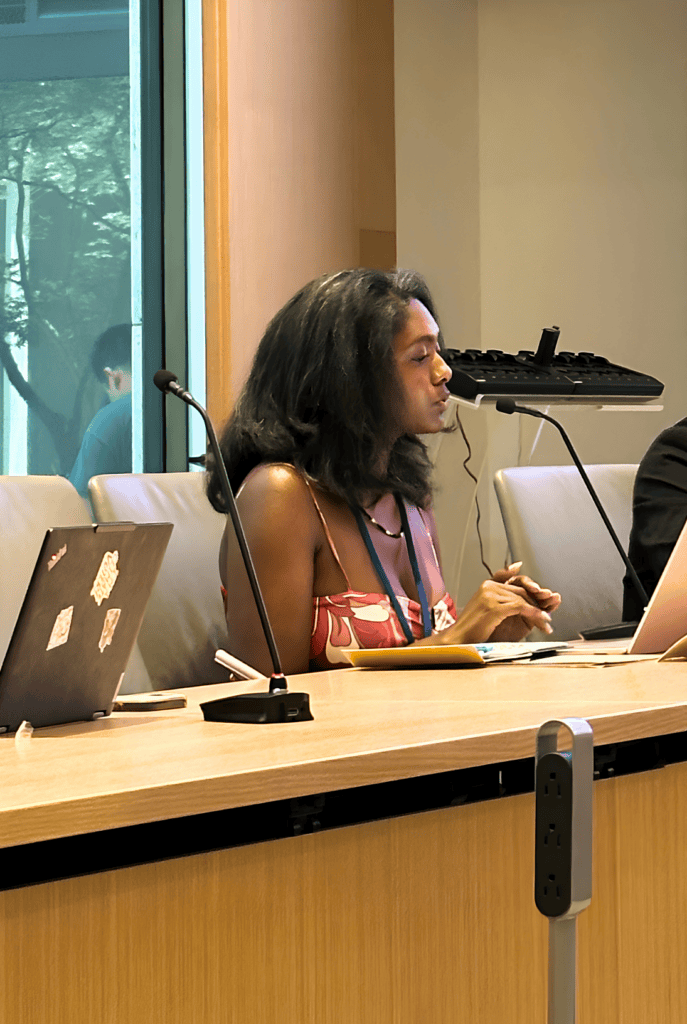
Anastasia Tomlinson is a junior majoring in Politics and Policy and minoring in Public Health at Trinity Washington University, an advocate for nuclear disarmament and Alumni Fellow for the Global Governance Fellowship ‘26 cohort. Expanding her research on health, housing, and gender in Brazil, Anastasia focused on SDG indicator 9.1.1, which measures the number of rural people who live within 2 km of an all-season road. Anastasia detailed the gaps between this indicator’s reported data and the reality for the people living in Brazil. She highlighted the importance of accessible healthcare, specifically hospital access, and how not considering infrastructure from public health (SDG 3) and gendered (SDG 5) standpoints inhibits inclusive progress for rural women.
Samara and Anastasia’s presentation highlighted the power of grassroots initiatives and demonstrated how collaboration between youth leaders and community-based organizations can drive meaningful change. Through partnerships with organizations such as Green Hope Foundation and ImpulsoGov young advocates are helping bring grassroots solutions into global policy conversations.
One of the most impactful aspects of the discussion was its multifaceted approach, with each panelist contributing a unique perspective shaped by their expertise and lived experiences. The conversation explored both the tangible foundations of sustainable communities, such as housing, transportation, healthcare, and public infrastructure, and the equally important social infrastructure that creates a sense of belonging, trust, and community. As Samara reflected, sustainable development is “both about the spaces we build and also about the relationships, systems, and opportunities that enable people to thrive within them.”

The greatest takeaway from the panel was recognizing just how interconnected the Sustainable Development Goals truly are. The SDGs do not exist in silos, progress in one area depends on collaboration across many others. The intergenerational dialogue among the panelists was mirrored by an equally diverse audience, and the thoughtful questions that followed enriched the conversation with both fresh perspectives and the wisdom of lived experience. This exchange demonstrated how meaningful solutions emerge when people from different backgrounds, generations, and disciplines come together to learn from one another.
__
This article was first shared with subscribers of CGS Field Notes, our LinkedIn newsletter featuring insights, updates, and analysis on global governance from Citizens for Global Solutions. Subscribe on LinkedIn to get future stories like this one delivered straight to your feed.


