Originally published on the CGS blog on June 3, 2008.
The term “Article 98 agreement” refers to the provision of the Rome Statute establishing the International Criminal Court that prohibits the Court from prosecuting someone located within an ICC member state if doing so would cause the member state to violate the terms of other bilateral or multilateral treaties to which it may be a party.
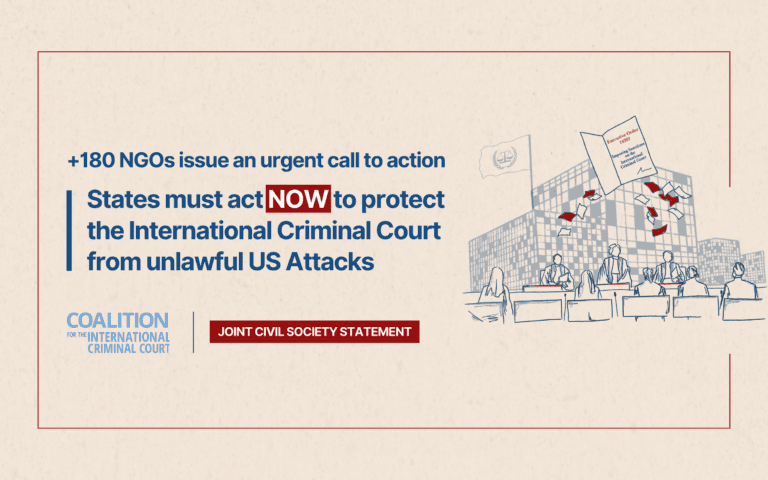
Since the summer of 2002, the Bush administration has aggressively sought to conclude these agreements, also known as bilateral immunity agreements (BIAs), with every country in the world. GlobalSolutions.org has been able to verify that the United States has entered into BIAs with approx 97 countries. However many of the ICC member states have refused to sign a BIA because they believe that doing so would breach their legal obligations under the Rome Statute.
By refusing to sign a BIA, many U.S. allies lose their U.S. military aid and are at risk of losing additional economic support funds. Countries are at risk of losing U.S. aid because of two provisions attached to U.S. appropriations legislation, the American Servicemembers? Protection Act (ASPA) and the Nethercutt Amendment. There are serious unintended consequences associated with this policy. By way of illustration, the Economic Support Funds (ESF) earmarked for Brazil (FY 05-07) and at risk under the Nethercutt Provision would:
“be used for the promotion of sustainable economic growth and regional stability, expansion of free trade, control of international crime, terrorism and drug trafficking, poverty alleviation, environmental protection, and reduction of infectious disease. Brazil has the largest economy in South America and is home to significant U.S. investment. The U.S. and Brazil frequently cooperate effectively on numerous issues, including promoting democratic values and stability in the region.”
Regardless of the type or amount of aid cut or exempted, we believe that the U.S. must abandon its underlying policy of penalizing countries simply for being members of the ICC. The simple fact is that the ICC is of utmost importance to these countries, and is widely viewed as the only impartial, effective legal institution capable of providing justice to victims of war crimes, genocide, and crimes against humanity.The U.S. must find less alienating ways of addressing its concerns about the Court.
To that end it is encouraging to see many in Congress wish to remove the Nethercutt restriction. FYI I am including a link to the letter below outlining some of the concerns of civil society on this matter.
Link — here .