Originally published on the CGS blog on July 15, 2009.
The African Union [AU], made up of all 53 African states with the exception of Morocco, issued a resolution on July 3, 2009, stating that they would refuse to cooperate with the indictment of Sudanese President Omar al-Bashir by the International Criminal Court [ICC]. This decision stands in contrast with the AU summit meeting held the previous month, where the countries reaffirmed their commitment to the Rome Statute.
The resolution explains that the AU members have decided not to cooperate with the warrant against al-Bashir “in view of the fact that a request of the African Union [to defer al-Bashir’s indictment] has never been acted upon.” It also cites Article 98 of the Rome Statute, which indicates that “the Court may not proceed with a request for surrender or assistance which would require the requested State to act inconsistently with its obligations under international law with respect to the State or diplomatic immunity of a person or property of a third State, unless the Court can first obtain the cooperation of that third State for the waiver of the immunity.”
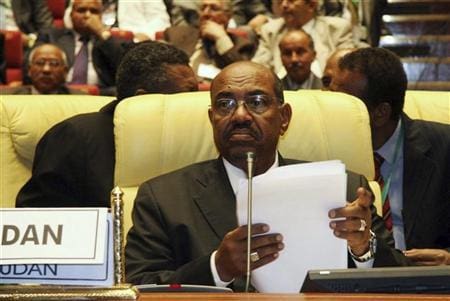 While al-Bashir’s lawyers and AU members argue that al-Bashir has sovereign immunity under Article 98 as head of state, ICC Prosecutor Luis Moreno Ocampo has asserted that “there is no sovereign right to commit genocide or crimes against humanity.”
The refusal of the AU to cooperate with the Court is an affront to international justice and the hundreds of thousands of Darfurians who have suffered at the hands of the national military. However, Botswanan Foreign Minister Phandu Skelemani has stated that it will contradict the other members of the AU and uphold its treaty commitments to work with the ICC to bring al-Bashir before the Court.
This decision to withhold cooperation is a serious disappointment to the ICC and the international community. However, it does not overrule the obligations of the 30 African states that are party to the Rome Statute. Africa makes up the largest block member constituency of the ICC and therefore has a strong influence on how effectively it operates. In addition, three of the four cases presently before the ICC were referred to the Court by AU member states. (The fourth, Darfur, was referred by the UN Security Council.) It is also important to note that the Rome Statute gives the Prosecutor the power to determine whether or not to proceed with a referral, a principle that was carefully considered during the drafting of the Statute in 1998 and received wide support from African states.