
Originally published on the CGS blog on February 13, 2013.
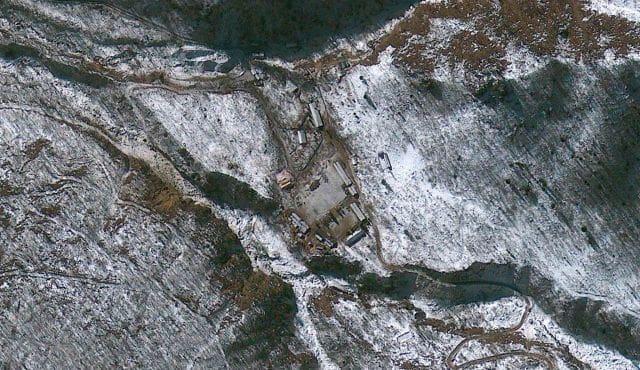
North Korea’s latest nuclear test highlights the limits of what the United Nations and its member states can do when an outlaw nation is determined to run roughshod over existing international laws.
Policymakers and diplomats in Washington, DC and at the UN are scrambling for a way to respond to the young dictator Kim Jong Un’s latest delinquency.
President Obama called the detonation a “highly provocative act” following North Korea’s December 12 ballistic missile launch which “violates North Korea’s obligations under numerous United Nations Security Council resolutions… and increases the risk of proliferation.”
The President said that, “North Korea’s nuclear weapons and ballistic missile programs constitute a threat to U.S. national security and to international peace and security” and called for “swift and credible action” by the international community. During his State of the Union Speech he said that North Korea’s nuclear test “will only isolate them further, as we stand by our allies, strengthen our own missile defense, and lead the world in taking firm action in response to these threats.”
Although he did not say what that could entail, UN Ambassador Susan Rice told reporters that Security Council members could “not only tighten existing measures but aim to augment the sanctions regime that is already quite strong.” Following an emergency Security Council Meeting she said that the Council “must and will deliver a swift, credible and strong response by way of a Security Council resolution that further impedes the growth of [North Korea’s] nuclear and ballistic missile programs.” She reminded reporters that the Security Council has already warned North Korea that it would carry out “significant action” if it conducted another nuclear or ballistic missile test “and indeed we will do so.”
However, North Korea is already the most heavily sanctioned nation in the world. UN restrictions already include a total embargo on the supply, sale or transfer of arms and arms-related material to or from North Korea; a ban on imports and exports of a list of goods and technology; a ban on exports of luxury goods; frozen assets; a travel ban preventing access to individuals listed by the UN; and multilateral action to prevent illicit trafficking in nuclear, chemical or biological weapons, ballistic missiles and related technology. Unfortunately, these steps have not yet had the desired effect.
So what else? Daryl Kimball and Greg Thielmann call for ratification of the Comprehensive Test Ban Treaty (CTBT) in an Arms Control Association blog saying that:
“The latest DPRK nuclear test explosion… makes it all the more important that … the U.S. and China, reinforce the global taboo against testing by taking concrete action to bring the CTBT into force, which will help us better detect and deter nuclear testing … in the future.
“As President Obama said in 2009, “After more than five decades of talks, it is time for the testing of nuclear weapons to finally be banned.” Indeed.”
Another possible way to limit North Korea’s options is to impose a new innovative pressure tactic originally developed for use in Syria and Libya by the Center for Global Development (CGD) called contract sanctions. Under this scenario, the United States and Great Britain, the world’s leading financial centers, with support from the European Union and other players would announce that any new contracts signed with the Kim Jong Un’s regime are illegitimate. How would governments and firms considering doing business with Kim Jong Un respond if they knew that there was a significant risk that they would not get paid?
According to CDG’s Kimberly Ann Elliott and Owen Barder:
“Unlike traditional trade sanctions, preemptive contract sanctions are self-enforcing. Trade sanctions offer those who violate them a windfall: potential profits increase since competition from those who comply with the sanctions has been eliminated. In contrast, preemptive contract sanctions increase the risk for those who would violate them. The incentive to sign a long-term contract with the target regime is decreased.”
The bottom line is that North Korea’s latest nuclear blast shows just how reliant we are on an effective global network of institutions and laws; and how relatively weak that network still is. Kim Jong Un’s nuclear tantrum should be seen not only as a threat, but as a clear message that we need a cooperative global system with the capacity and means to ensure a safer future for us all. And we are not there yet.


