Originally published on the CGS blog on July 20, 2015.
Having just crossed the border from Italy to France, my train stops at the next station for longer than the usual five-minute interval. Police board the train; I take out my passport, which has become habit at this point. The woman sitting next to me, a French native who has lived in Italy in for the last 20 years, leans over.
“They are checking for illegal migrants,” she says. “Sometimes they hide in the bathrooms.”
With our passports verified and the train cleared, we begin moving again.
“Look,” my seatmate points out the window. “They’re arresting one now.”
While I knew about the current migrant crisis as I left for Europe this summer, I never expected to come into contact with it as much as I did over the last two months of my trip. Despite having our own immigration crisis back in the U.S., the issue seemed even more visible while in the Eurozone; from migrants on the street trying to sell me a selfie stick to camp sites to scenes like this on the train, it was quickly apparent how serious this crisis has become.
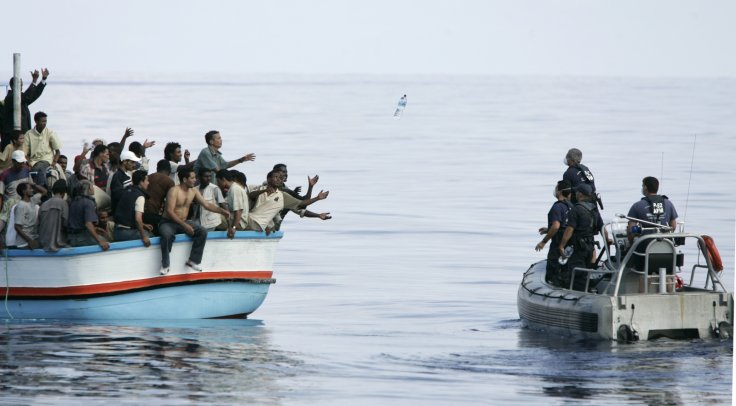
Currently, “the number of migrants arriving at the EU’s external borders has risen by a factor of 2.5 this year compared with 2014, from 61,500 to 153,000.” Italy and Greece have been burdened the most, with almost 60,000 migrants coming to Southern Italy this year, and nearly 80,000 coming to Greece. Though both countries have called for their EU counterparts to help with the sudden influx, many have been reluctant, with some countries threatening to close their borders; France and Switzerland have already begun refusing entry from Italy, with police-led passport checks that disregard the “passport-free travel rules governing Europe’s Schengen area.” (This is exactly what I witnessed that day on the train.)
Though Italy has threatened to act with or without the EU—“If Europe chooses solidarity, good. If it doesn’t, we have Plan B ready. But it would first and foremost hurt Europe,” warned Prime Minister Renzi—many member states have continued to shirk responsibility. While a deal was reached at the end of last month to resettle around 60,000 asylum seekers throughout Europe, participation in this plan was made voluntary rather than mandatory, with many states choosing to focus more on deterrence and deportation rather than assistance. For example, Hungary has plans to build a four-meter high fence along the Serbian border, while, as already mentioned, states like France have become much stricter with cross border travel.
Ultimately, this is not only part of the broader debate of immigration, but also about the EU in general. While all member nations joined the EU for its obvious benefits—travel, tourism, and trade—many have shied away from the consequences—immigration, crime, and financial crisis. Moving forward, the EU (and other large international organizations such as the UN) will have to figure out how to develop the political capital to hold states accountable and actually reach solutions.
This in itself is a large task: it involves not only enabling all nations (regardless of economic power and size) to have a voice, but also changing states’ perception of what they owe refugees, economically or politically. With so many EU states facing their own crises, many fail to sympathize with these refugees or recognize their own advantages. How many refugees would gladly trade their violent battles back home for the diplomatic ones in Europe? Many already have.
And yet, it’s hard to expect an entire country’s perspective to change when other able countries fail to pick up the slack. How can we expect the EU to help migrants when member states won’t help each other? As the woman sitting next me on the train said, “I feel bad, but we just can’t support them all.”