Originally published on the CGS blog on February 11, 2013.
On February 11th, the United Nations Foundation organized a panel on the United Nation’s Post- 2015 Development Agenda, featuring Mr. Will Davis, director of Washington’s United Nations Development Programme and Mr. John Norris, executive director of the Center of American Progress.
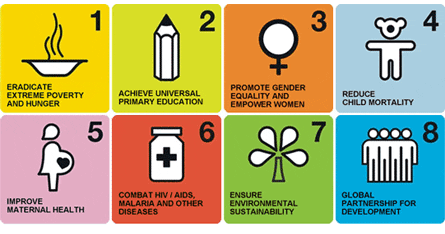
The United Nation’s Millennium Development Goals (MDGs) were created “to establish peace and a healthy global economy” by highlighting major issues such as children’s health, female empowerment sustainable environment, poverty, disease and development. These goals were created in 2000 and were set to be achieved by 2015. The year 2015 is approaching and the United Nations has so far been doing a successful job in achieving these goals- but what happens after 2015?
Davis and Norris both emphasized the continuing need for developmental goals after 2015 and how as a society, we must continue to not only achieve these existing goals but also create goals that are both realistic and broad. There is a strong need for educating people on the existing MDGs. Only 8% of the world is fully aware of the MDGs and we need to increase that percentage in order to make these goals more realistic and successful. This can be accomplished in several ways, such as educating the youth early on in school systems, involving non-government and non-profit organizations, creating alliances with United States agencies and engaging the private sector.
Overall, the United Nations Foundation hosted an excellent panel discussion pertaining to the future of the United Nation’s Millennium Development Goals. I invite you to read more about their findings on WorldWeWant2015.org.