Originally published on the CGS blog on August 13, 2014.
In the age of world hunger, endangered species, and a crippled environment, we are constantly looking for new sources of food to take the pressure off our currently over-tapped resources. Insects have been increasingly pointed to as a more sustainable source of protein, as they have “a far smaller carbon footprint than most livestock.” The UN’s own Food and Agriculture Organization has even promoted this practice as a healthy and environmentally friendly alternative to meat in its 2013 report.
2 billion people worldwide have no qualms about eating insects – why are Americans totally buggin?
Many small companies have begun trying to market bug-filled products in cute and innovative ways as an attempt to overcome the inevitable “ick-factor”; my personal favorites are chips with a cricket base called “Chirps” and the movement to rename locusts “sky prawns.” There are also more subtle ways to consume insects, such as through the use of cricket flour, keeping these creepy crawlers out of sight and (hopefully) out of mind.
Some fast facts for why we should all start eating bugs include:
- They’re a great source of protein
- Crickets have as much calcium as milk (if you eat enough)
- Insects are not that biologically different from shellfish
- They emit considerably less greenhouse gases and waste than other animals
- They require little to no land to cultivate
- Insects use about 2 pounds of feed to produce 1 pound of meat. Cattle, on the other hand, need 8 pounds of feed to produce 1 pound of beef
- In fact, many insects can consume waste products like animal blood, eliminating the need for feed made especially for them (i.e. soybeans or corn)
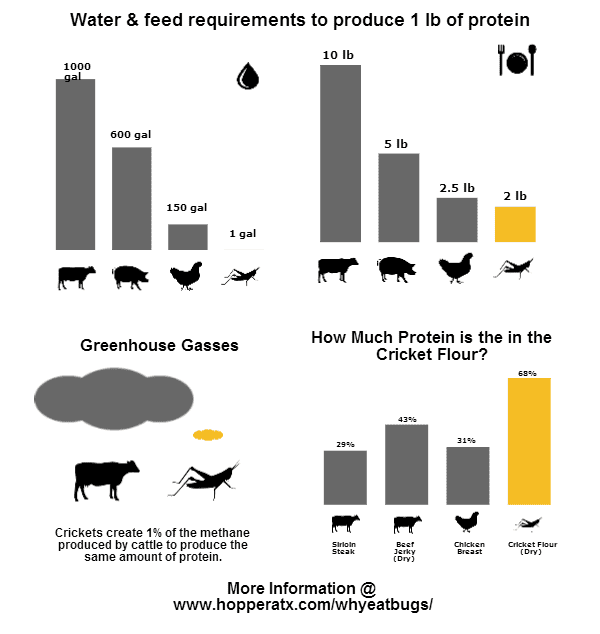
The consumption of insects also has huge implications for the developing world. “Insect-rearing is less capital-intensive than other animal husbandry, giving poorer farmers a method of entry”; this is extremely relevant in a time when many poor fisherman are competing with corporations for over-harvested populations of fish. Moreover, their feed-efficiency makes them perfect feed alternatives for farm animals (for those leery to stray from traditional protein sources). Insects could even prove beneficial to emergency relief efforts, with some working to make “Grow Your Own Locust” kits for African Refugees.
Disgust factor aside, there are still some regulatory barriers to widespread insect consumption. Currently, many countries do not have insect-product regulations; the US in particular has a lack of federal regulation, as there have been few studies regarding the use of insects as animal feed or main meals.
While it seems unlikely that “cricket crackers” or “French flies” will be a trend anytime soon, the entomophagy movement seems like a step in the right direction toward a more sustainable–and definitely more creative–world.