|
|||||||||||
Blog TagsBlog Archive
Subscribe!Search This Site: |
01/25/2010 - 3:23pmUN Peacekeeping Presence Grows in HaitiPosted by Hannah Karns
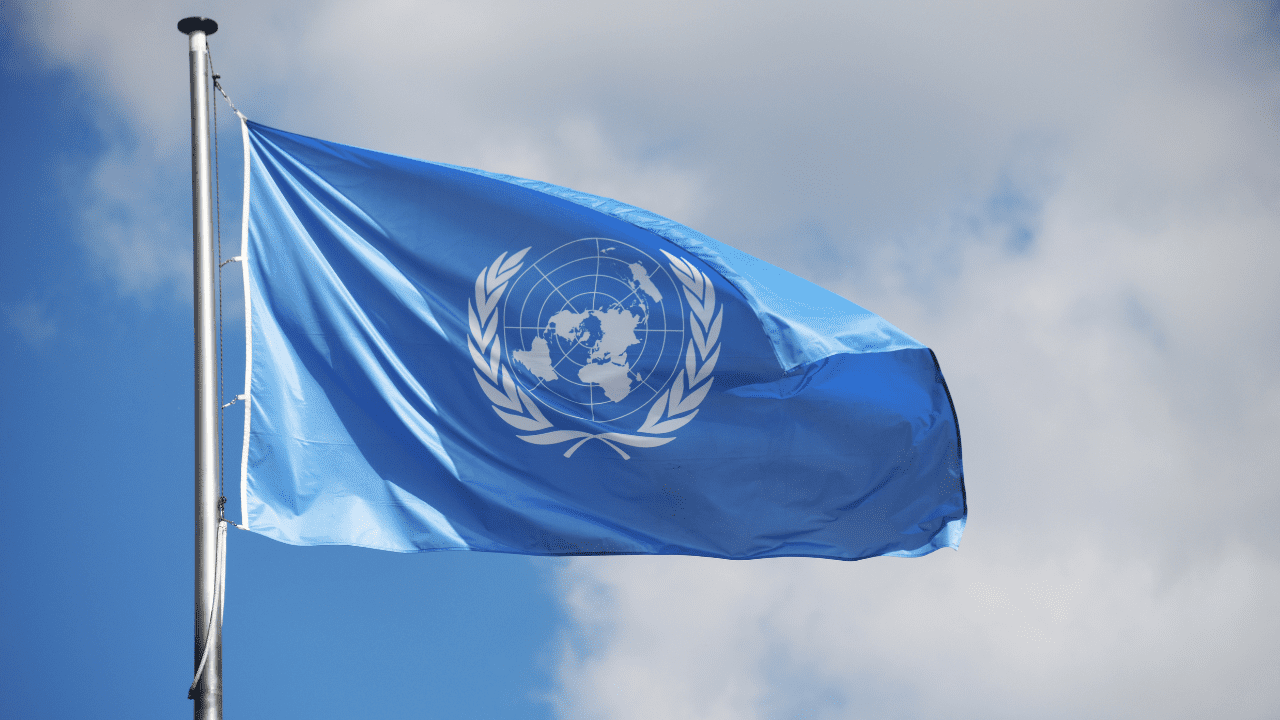
As of January 25, 2010, The United Nations continued its work to provide emergency relief services to the people of Haiti with a meeting of senior United Nations officials today. The purpose of the meeting was to coordinate the various sources of aid that are currently being channeled toward the nation. Immediate goals for the crisis-stricken state include stabilization and security efforts, which are being led primarily through the efforts of UN Peacekeepers.
Based upon the United Nations Security Council resolution of January 19, the United Nations Stabilization Mission in Haiti (MINUSTAH) expanded its forces to 8,940 troops and a police force of up to 3,711 individuals. After visiting Port-au-Prince, UN Secretary-General Ban Ki-Mmoon requested an additional augmentation of troops for the region after surveying the devastation. In describing the mission, Alain LeRoy, the UN Secretary-General for peacekeeping, stated that “their main task is to assure security and, of course, to help the Haitian people remove the rubble in all the places it can.” The latest figures indicate that there have been 81 total fatalities, of which 21 are confirmed UN Peacekeeping fatalities. The earthquake claimed the head of MINUSTAH, Hedi Annabi, as well as individuals representing Tunisia, Nigeria, Canada, Mexico, Italy, USA, Germany, Niger, Democratic Republic of Congo, France, Guatemala, India, Philippines, United Kingdom, and Brazil. According to the UN News Centre, “the earthquake has caused the single greatest loss of life in the UN’s history.” With at least 50 people unaccounted for, the UN must combine efforts to assist the Haitians as well as identify the dispatched personnel. Although early recovery efforts are currently underway, it is apparent that much greater investments into reconstruction and redevelopment of infrastructure will be necessary. The first UN peacekeeping operation in Haiti began in September of 1993. After initial issues of cooperation with the Haitian government, the UN had several successful missions. In 2000, the presidential elections were contested and, as a result, armed conflict broke out in 2004. With Security Council Resolution 1529 (2004), the United Nations Stabilization Mission in Haiti (MINUSTAH) was established. The devastating effects of the January 12 earthquake have further engaged UN efforts in Caribbean country. It would appear almost certain that the United Nations will have a continued presence in Haiti for years to come as the nation works to rebuild all that was destroyed. Tags:
08/13/2009 - 3:32pmRice on the Right Track with U.S.-U.N. RelationsPosted by Komal Hiranandani
Yesterday the U.S. Permanent Representative to the United Nations, Susan Rice, delivered a strong and promising speech on the U.S.’s position towards the United Nations and global cooperation. Many of her statements reflected progress on issues that we at Citizens for Global Solutions have been working hard to further.
Working towards nuclear non-proliferation, Rice recalled U.S. work to have the Security Council condemn North Korea’s nuclear weapons tests, and ongoing efforts to constructively engage Iran in the non-proliferation process. She also said that the U.S. is aiming to achieve a successful NPT [Non-Proliferation Treaty] Review Conference next year. Referring to the U.S.’s new seat on the Human Rights Council- another action we have championed- Rice acknowledged the need for the U.S. to be involved with such institutions to increase their effectiveness and scope, and to help address their shortcomings. Elaborating on other causes that we support, Rice said, “We no longer oppose mentions of… the International Criminal Court. We no longer balk at… the Convention on the Elimination of All Forms of Discrimination Against Women [CEDAW]. And we’re forging a new path on climate change commensurate with our global responsibilities.” She also mentioned the importance of the U.S. paying its dues to the U.N., and noted that the U.S. cleared its accumulated debt to the U.N. earlier this year through Congress- a goal that we pushed hard to achieve. Rice neatly summarized our philosophy here at Citizens for Global Solutions: “We face an extraordinary array of global challenges: poorly guarded nuclear weapons and material, a global financial meltdown, wars in Afghanistan and Iraq, Iran and North Korea building their nuclear weapons capabilities, al-Qaeda and its affiliates, genocide and mass atrocities, cyber attacks on our digital infrastructure, international crime and drug trafficking, pandemics, and a climate that is warming by the day. These are transnational security threats that cross national borders as freely as a storm. By definition, they cannot be tackled by any one country alone.” Read the speech here Tags:
07/30/2009 - 9:41amAmbassador Rice Addresses House Foreign Affairs Committee on PeacekeepingPosted by David Greenberg
Following the Committee hearing, two panels discussed the challenges of peacekeeping. The first panel included Bret Schaefer, writer for the conservative think tank The Heritage Foundation. Mr. Schaefer noted the importance of peacekeeping in the world, stating that it is vital that these operations get the resources they need to effectively accomplish their missions. Ms. Erin Weir of Refugees International participated in the second panel. She spoke at length of the important new concept that has been the focus of much discussion at the United Nations, The Responsibility to Protect. This norm, which every U.N. member has endorsed, professes that countries have a right and a duty to intervene in foreign instances of genocide, war crimes, ethnic cleansing, and crimes against humanity. What was most encouraging was that the focus of the day was not whether the U.N. should engage in peacekeeping operations at all, but how these essential missions can be improved.
Tags:
07/27/2009 - 10:52amResponsibility to Protect versus "Humanitarian Imperialism" in the U.N. DebatePosted by Nora Conklin
The United Nations General Assembly's debate on the Responsibility to Protect [R2P], held on July 23, showed conflicting beliefs about the role of nations intervening in cases of genocide, war crimes, and mass atrocities. A week before the debate, Nicaraguan Reverend Miguel D'Escoto Brockmann, who is president of the UN General Assembly as well as a Catholic priest, issued a panel discussion and presented a position paper suggesting that R2P was essentially colonialism in disguise. "Recent and painful memories related to the legacy of colonialism give developing countries strong reasons to fear that laudable motives can end up being misused, once more, to justify arbitrary and selective interventions against weak states," he said. "We must take into account the prevailing lack of trust from most of the developing countries when it comes to the use of force for humanitarian reasons." Panelist Noam Chomsky reiterated this, saying that "virtually every use of force in international affairs has been justified in humanitarian terms, even the worst monsters." According to Reverend D'Escoto, the true means to end genocide and mass atrocities involve world finanical reform, Security Council reform, and following a lesson from Jesus - he said in his note that "Jesus' emphasis on the redistribution of wealth to the poor and on nonviolence reinforces the right perspective on responsibility to protect." While Revered D'Escoto's remarks elicited both support and shock from the Assembly, Secretary General Ban Ki-moon and his special adviser on R2P, Edward Luck, addressed the issues raised during his panel discussion. "The responsbility to protect does not alter the legal obligation of member states to refrain from the use of force except in conformity with the Charter. Rather it reinforces this obligation," Luck quoted Ban as saying. Furthermore, in a speech he delivered on Tuesday before the debate, Ban urged member states to "resist those who try to change the subject or turn our common effort to curb the worst atrocities in human history into a struggle over ideology, geography, and economics." 07/23/2009 - 11:30amWhat's Happening in Kosovo?Posted by Komal Hiranandani
On July 22, the Atlantic Council hosted a roundtable discussion on the U.N. Mission to Kosovo (UNMIK), and the future of the U.N. in the region. A distinguished group of people, representing an array of positions, were present, including UNMIK Chief of Staff, Robert Sorenson; First Counselor from the Embassy of Serbia, Djerdj Matkovic; and Executive Director of the National Albanian American Council, Avni Since Kosovo declared independence from Serbia last year, the region has continued to face problems of corruption, poor social and economic indicators, and low investment due to its disputed status. 62 countries (including the U.S.) have recognized Kosovo's independence. Mistrust between communities and manipulation by political forces have hampered development in the region and its national movement. At the request of Serbia, the International Court of Justice is to look into the legality of Kosovo's declaration of independence. Many actions taken by political actors revolve around this pending investigation. Though Serbia does not recognize Kosovo's independence, the representative from the Serbian embassy explained that it desired the welfare of the people in the region. It was also acknowledged that mismanagement of Serbian funds in the region had to be addressed, as resources have been working their way to Serb radicals. Corruption has to be more aggressively countered, and action needs to be taken against individuals and corporations whose illicit activities have already been proved. The poor economic conditions require attention- 60% of the region's people under 30 years of age are unemployed. A robust civil society is still a long way in the making. UNMIK, EULEX, and all the other organizations in Kosovo have a long road ahead of them, and international support for this volatile area is encouraging and essential. Tags:
07/01/2009 - 3:33pmWorld Peace Through Law - a guest post from Jim RanneyPosted by Laura Hendrick
World Peace Through Law: Rethinking an Old Theory and a Call for a UN Peace Force by: James T. Ranney1 of the Philadelphia CGS Chapter World federalists make what they view as an airtight argument for world federalism which runs as follows. There are only two ways to resolve true conflict (conflict that cannot be mediated) at the international level: (1) by war (not such a good idea any more, since WWIII would entail the almost certain extinction of at least our species), and (2) by law. Therefore, they say, choose law. And by "law," they mean law that is the only kind worth having, enforceable law, enforceable upon individuals, i.e., world law, created by a global legislature and enforced by global courts and global police, unlike the inadequate currently-existing international "law" and the weak system of UN-based collective insecurity that we now have.2 This article will explore another possibility, that the "law" in the phrase "world peace through law" need not be that of a global legislature, that there are other ways of securing world peace through law, both in the short term and in the long run. Tags:
06/19/2009 - 1:42pmCitizens for Global Solutions Applauds Passage of Peacekeeping PaymentsPosted by Lydia Dennett
Recently The 2009 Supplemental Appropriations Bill was passed by both chambers of Congress. This bill will repay the U.S.'s debt to the United Nations which has accumulated since 1999 and appropriates $906 million for peacekeeping operations. This bill is an important demonstration of President Obama's commitment to showing U.S. leadership through diplomacy as well as his commitment to engaging effectively with the United Nations. The actual amount of money appropriated from the bill to peacekeeping represents 1% of the whole, which demonstrates how relatively little it costs the US to maintain it's commitment to UN peacekeeping. Citizens for Global Solutions applauds not only the United States paying back this debt but also many other sections of the bill. These include money given for international food, refugees and disaster assistance as well as prevention of the flu-pandemic, nuclear non-proliferation and an expansion of credit lines to the International Monetary Fund. All of these things will increase the U.S. involvement in the world and provide much needed assistance to other countries. Link to the Press Release. Tags:
06/08/2009 - 4:15pmPanel on Obama and the Two-State Solution for Israel and PalestinePosted by Komal Hiranandani
Dr. Asali called for a compromise, defined as a two-state solution brought about by negotiation between Palestine, Israel, and the United States, as well as Egypt and Saudi Arabia. He lauded Obama for showing respect to and addressing the concerns of displaced Palestinians, noting that progress cannot be made when parties feel victimized. He believed that Obama has the political commitment that was lacking in previous administrations, and we as citizens have a direct influence upon this. He also noted the significance of Obama's approach to recognizing new challenges and navigating through them, saying that the U.S. should encourage Israelis, Palestinians and Arabs to work together to oppose the escalating threat of Iran. The U.S. should also not require Palestinian unity as a precondition for talks, especially with respect to Hamas, as this has been used to hinder progress with negotiations in the region. The Palestinians have been striving for a homeland for decades, and their calls should not be ignored on the grounds of disunity. Dr. Kramer, however, warned the Obama administration against falling into the same traps as its predecessor in terms of fixating on so-called unfinished business. In particular, he discussed the importance of addressing the threat and influence of Iran as a top priority in the changing Middle Eastern landscape. He discussed new obstacles to the two-state solution, such as the diversity of Palestinians and Iran's strategic interests in the West Bank changing as a result of its nuclear development. In addition, he advised Obama to deemphasize the urgency with which the issue has been framed, as this raises the asking prices all around. On the other hand, Dr. Shehata discussed the influence of Egypt as moderator and its relationship with the U.S., saying that the road to Washington goes through Tel Aviv. However, he stressed that Egypt was not a neutral mediator but a direct party to the conflict, noting the effects that may have on its role in the negotiations. In terms of Obama's June 4, 2009 speech in Cairo, Egypt, Shehata praised Obama's sincere engagement and fair treatment of the conflict, clearly referring to illegal Israeli settlements in the West Bank as an occupation. Throughout the panel, many different opinions and perspectives were discussed to show the complex and intricate nature of the Israeli-Palestinian conflict and how Obama will approach the two-state solution. Although this issue will not be resolved easily or quickly, we are confident in Obama's ability to enhance the peacekeeping initiatives of the United States. For more information visit: http://www.wilsoncenter.org/index.cfm?fuseaction=events.event_summary&ev... By Nora Conklin and Komal Hiranandani 05/20/2009 - 1:55pmForeign Affairs Mark-Up HearingPosted by Alexander Murray
I attended the House Foreign Affairs Committee Mark-Up Hearing for the Foreign Relations Authorization Bill today, and I was pleased to see that the Bill will be accepted with limited amendments. The amendments that have been added only seek to expand and suggest areas that the State Department should use its funds, not to inhibit the progress of or cut back on the amount of funding for State Department actions. Though it went through successfully, it was not without opposition from the Republican minority. They suggested an amendment in the form of a substitute Bill that would have eliminated the repayment of arrearages to the United Nations, capped increases in funding at 3.7% (the current rate of inflation) of the previous year's numbers, and eliminated funding for U.N. peacekeeping operations, Though the substitute was voted down, I think it's time for our Republican Congresspeople to learn from their elders... Tags:
05/19/2009 - 10:22amForeign Relations Authorization Bill ReleasedPosted by Alexander Murray
On Wednesday May 20, 2009, the full House Committee on Foreign Affairs will meet to discuss H.R. 2410, the Foreign Relations Authorization Bill introduced by Committee Chairman Howard Berman (D-CA). Citizens for Global Solutions applauds Mr. Berman for his attention to the need for increased engagement between the United States and the international community. The Bill includes legislation that runs parallel to the interests of Citizens for Global Solutions, and we encourage the rest of the Committee to support these measures. The legislation that we find most important includes: 1. Paying back our dues and arrearages to the United Nations and other international organizations, as well as synchronizing our payments so that they are received at the first of the year for which they apply; 2. Reauthorizing and expanding the Global Peace Operations Initiative (GPOI); 3. Paying our share of international peacekeeping activities, as well as increasing our logistical support for such missions; and 4. Developing our capacity for early warning and genocide prevention to combat situations where mass atrocities against civilians occur. We urge the Committee to pass this legislation as is in order to show that the United States is committed to working both with the international community and from within to meet the challenges that our world faces today.
418 7th Street SE, Washington, DC 20003-2796
Phone: (202) 546-3950 Fax: (202) 546-3749 Privacy Policy |
||||||||||
|
|
|||||||||||