|
|||||||||||
Blog TagsBlog Archive
Subscribe!Search This Site: |
02/19/2010 - 10:43amVice President Biden Speaks About Increased Nuclear Budget and Test Ban TreatyPosted by Michael Serra
Vice President Biden spoke on February 18 at the National Defense University regarding the budget increase for the National Nuclear Security Administration as well as the Comprehensive Test Ban Treaty. Increasing the budget for nuclear weapons seems as though the United States is directing policy contradictory to what President Obama had recommended for nuclear non-proliferation. Yet in this speech, Vice President Biden sought to prove that these budget initiatives were in fact for both non-proliferation and American national security. Vice President Biden echoed the sentiments of President Obama by showing that the United States can be a leader in non-proliferation while still maintaining a high level of security. He reiterated this by defining the United States as a leader for a post nuclear world, but to reach this goal we still need a limited nuclear arsenal. The Vice President explained that nuclear deterrence worked as a Cold War doctrine and retaining an arsenal will further deter our enemies. Eventually through our leadership, new technologies will evolve bringing a new form of deterrence making nuclear weapons obsolete. Explaining the budget increase of five billion dollars over the next five years for nuclear weapons was a main focus of Vice President Biden's speech. He illustrated that even though these are hard times economically, upgrading our aging nuclear arsenal with modern technology will both aid non-proliferation and national security. Through this effort, we will reduce the number of nuclear warheads but increase the technological capabilities of our weapons, thus supporting non-proliferation as well as security. By expanding the nuclear budget, U.S. laboratories will be able to afford research for specializations in locating and disarming nuclear material before they fall into unfriendly hands. Furthermore, Vice President Biden spoke about the Comprehensive Test Ban Treaty. He made it a point to say that testing nuclear weapons previously has brought much harm to individual health and the environment. These tests were set up to confirm and evaluate the effectiveness of nuclear weapons, but now there is no need for this. Biden stated that our labs today know more about our nuclear arsenal than they ever had while testing the objects. The Comprehensive Test Ban Treaty again allows for progressive steps towards non-proliferation without compromising national security. By ratifying this treaty, the United States will help lead the world past the threat of nuclear war. Along with the treaty, increasing the National Nuclear Security Administration budget will continue this Administration’s progressive policy. Support non-proliferation with Citizens for Global Solutions. 10/27/2009 - 4:48pmNuclear Nonproliferation or Disarmament?Posted by Samantha Taylor
In light of growing threats from Iran and North Korea, the prospect of nuclear non-proliferation is on everyone’s minds. But, is it even possible? If so, what would it entail? President Obama led a session at the UN in the end of September which addressed these issues, concluding that a stronger nuclear nonproliferation strategy is necessary to achieve “a world without nuclear weapons.” The international com A second nuclear treaty was a bilateral agreement between the US and the USSR. The Strategic Arms Reduction Treaty I (START I) limited each signatory to 1,600 Strategic Nuclear Delivery Vehicles and 6,000 Accountable Warhead. This treaty will expire in December and it is crucial that its successor goes beyond solely limitation and calls for the complete disarmament of nuclear weapons. 10/26/2009 - 4:47pmProliferation and InstabilityPosted by Joseph Marcus
Nuclear proliferation equates to regional instability and insecurity. We have seen destabilizing situations. Pakistan- India, Iran-Middle East, and the fear of loose fissile material. It’s about time the U.S. change its rhetoric in regard to nuclear proliferation. Unlike the past administration, this administration does not shun the International Atomic Energy Agency (IAEA). The IAEA has just arrived in Iran to conduct inspections, and the U.S. is finally holding high level talks with Iran on their nuclear program. These talks are being conducted through a multilateral approach --with the support of the Permanent-Five members of the United Nations. It is not surprising that Iran and North Korea’s attempts to process nuclear material have led to regional uncertainty and tension. States in those regions feel threatened and often feel the need to counter any shifts in regional power. During the Bush administration, Israel drew up plans to attack a few of Iran’s nuclear sites. Iran has also threatened Israel should it attack any Iranian territory. China, Japan, South Korea, Russia, and other powers around the Korean Peninsula feel uneasy. These tensions only fuel our stance that nuclear proliferation is of no benefit to anyone. We still have enough nuclear weapons to destroy the world many times over. It is time for the U.S. to set an example. We have taken some steps with Russia to reduce our stockpile, but it is time to do more. We must ratify the Comprehensive Nuclear Test Ban Treaty, fulfill our obligations under the Non-proliferation Treaty, and must strengthen the IAEA. 07/07/2009 - 12:10pmRobert McNamara's Legacy of PeacePosted by Lydia Dennett
His disagreements with President Johnson regarding the Vietnam War lead to his eventual resignation. In 1967 McNamara advised the President to stop sending in troops and bombing North Vietnam. After the war McNamara became an advocate for organizations like the International Criminal Court. He wanted to prevent another war like the Vietnam War and believed that the US needed to submit to the ICC. He also believed in the need for restrictions on the use of nuclear weapons. McNamara's experiences during the Vietnam War influenced his contributions to organizations like the ICC. His legacy is long and important and he will be remembered.
06/17/2009 - 3:58pmCommittee on Foreign Affairs Hosts Hearing on Approaches to Engage North KoreaPosted by Komal Hiranandani
On June 17, 2009, the Committee on Foreign Affairs hosted a hearing on North Korea's nuclear missile tests and the 6-Party Talks, along with an expert panel of witnesses to advise on the issue. North Korea's aggressive actions with regard to ignoring international calls for denuclearization and the arrest of two American journalists earlier this month have caused much stir in the political field. The chief concerns were the development of an arms Congressman Royce raised a convincing case for blocking North Korea's financial access. Exploiting its notoriety for producing counterfeit money, Congressman Royce noted that North Korea was dependant on hard cash and had a poor domestic currency. Blocking the country out of the international financial system proved effective in the past, when banks refused to do business with Kim Jong Il and he was unable to pay his generals. It was this effect that pressured Kim Jon Il to enter the last round of the 6-Party talks. The members were divided on the effectiveness of pursuing the 6-Party talks, which North Korea has effectively trashed. They also disagreed on the suitability of sending an envoy to the region, and weather the issue of the arrested American journalists should be treated as a separate humanitarian matter, or as part of the main discourse. The role of Russia and China was thought of as crucial, as they both have acted as North Korea's benefactors. Besides having trade links, the two countries would not want to provoke North Korea to destabilize the region, and a fall in Kim Jong Il's regime would mean an influx of unwanted refugees for China. A weakened North Korea and an empowered South Korea would mean effectively strengthening a U.S. ally. China and Russia's support for the U.N. Security Council resolution condemning the nuclear tests and calling for sanctions against North Korea are an encouraging development. At a time when Kim Jong Il's health and mental capacity are uncertain, regime change is at the forefront and we must prepare for the possibility of a regime collapse or the accession of inexperienced and nationalistic generals and heirs. The country is plagued by extreme poverty and malnutrition, and even aid provision is complicated by the diversion of provisions to the military. As Congressman Scott said, "There are no limits to what a government will do when it ceases to care about its people." The belligerent and self-isolating acts of North Korea are hard to understand and provoke varied responses, but failing to cap the threat would go far in empowering anti-democratic forces around the world, and perhaps even provoke other parties, such as Iran, to develop their own programs. 04/27/2009 - 11:01amThe Road to Zero NukesPosted by Alexander Murray
George Perkovich, the Vice President of Studies and the Director of the Non-proliferation Program at the Carnegie Endowment for International Peace, spoke on April 20, 2009 about the prospects of reducing global nuclear stocks to zero. He discussed the numerous issues that must be resolved in order to even begin a discussion on going to zero nukes, but focused on one central issue that needs to be the first step: Bilateral negotiations between the US and Russia and between the US and China. It may come as no surprise that these countries are at the heart of the issue. The US and Russia have by far the largest nuclear stockpiles in the world and China, though they possess far fewer nukes, is the up and coming superpower that could eventually catch up with the other two. They each also have a large amount of influence over their allies, and the power to coerce them into action. If the US, Russia, and China can all get on the same page, they will be able to deal with some of the more specific issues that are stalemating progress towards disarmament. The issues that Dr. Perkovich highlighted were the Iran issue (Russian influence), the Fissile Material Cut-off Treaty (getting China on board), and the issue of extended deterrence without nuclear weapons (US influence to strengthen Russia-Europe relations and China-East Asia relations). As Dr. Perkovich describes it, the Road to Zero Nukes is an uphill battle, but one that is possible to win. Not only would zero nukes ensure a more peaceful global environment, the path to achieving it will bring the major powers together for a common goal, thus forming a relationship based on cooperation rather than opposition. 04/06/2009 - 1:04pmNorth Korean Nuclear TestsPosted by Elizabeth April
North Korea tested a long range nuclear rocket over the weekend, following talks last Wednesday between President Obama and Russian President Dmitry Medvedev about reducing their countries' nuclear stockpiles. This act violates United Nations Security Council Resolution 1718, which prohibits North Korea from manipulating ballistic missile technologies. It was adopted unanimously in October 2006 as a result of claims that the country had performed successful nuclear tests in the beginning of the month. Members of the United Nations Security Council convened Sunday to discuss the event but were unable to give an official response due to Chinese and Russian resistance. Department of State Press Secretary Robert Wood said Secretary of State Hilary Clinton has since been in contact with the council's permanent members to negotiate a "strong, coordinated and effective response." Following the launch, President Obama called for the immediate ratification of the Comprehensive Test Ban Treaty , which has been previously blocked by the Senate. He also announced yesterday that in addition to working towards a reduction in warheads in the US and Russia, he may provide the Nuclear Proliferation Treaty (NPT) with the authority it has lacked. Strengthening the treaty will ensure that in the event of a violation, offending actors face swift, strong international sanctions. In conclusion, the President stated: "I'm not naive. This goal will not be reached quickly ' perhaps not in my lifetime. It will take patience and persistence. But now we . . . must ignore the voices who tell us that the world cannot change. We have to insist, 'Yes, we can'." 04/01/2009 - 1:31pmObama and Medvedev Talk About START Treaty and Reducing NukesPosted by Laura Hendrick
Today, Wednesday, April 1, U.S. President Barack Obama and Russian President Dmitry Medvedev met to begin talks about reducing the number of nuclear weapons in the United States and Russia. Both leaders agreed to work towards expanding the terms set forth in the 1991 Strategic Arms Reduction Treaty (START), which is set to expire at the end of this year. Obama and Medvedev each agreed to immediately start work on an outline for a replacement treaty, expected to call for a further reduction in nuclear weapons by both countries to no more than 1,500 each. Currently, the United States has 2,200 nuclear warheads and Russia has 2,800. This is really great news. Not only do these talks signify a bolstering of the U.S./Russia relationship, which has often been strained in recent years, but this is a step in the right direction towards the U.S. finally ratifying the Comprehensive Test Ban Treaty (CTBT). The United States signed the CTBT, which bans all nuclear weapons testing, but Congress has yet to ratify it. President Obama has stated his support for ratifying the CTBT, which would mark a signficant step towards ending the possibility of a new nuclear arms race and would guard against any further risks to human health or the environment that nuclear testing causes. Another bonus: negotiating a new bilateral arsenal reduction treaty with Russia would almost certainly give the U.S. more leverage when talking to other countries like North Korea and Iran about their illicit nuclear production programs. 01/20/2009 - 6:33pmHistory and a Breath of Fresh AirPosted by Don Kraus
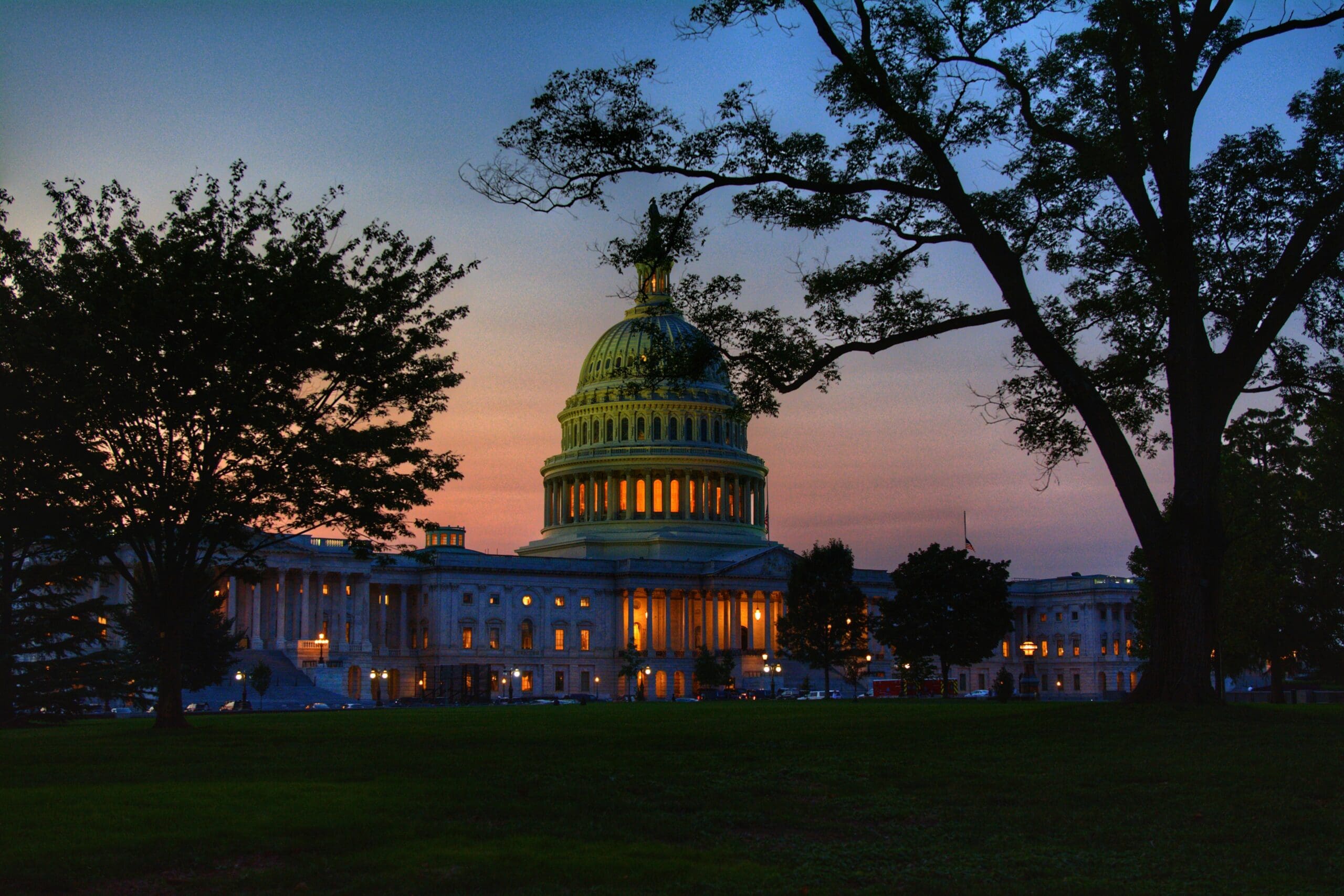
We stood together - cold, packed in - with Americans from every state and of every race and ethnicity. We had camped out in CGS's office, woke up early, and hiked to join a slow moving and cramped line to get in. We had "good" tickets in the Purple zone, on the Capitol grounds (picture on right). We couldn't really see, the sound was only ok, but we were there. And that's how those around us seem to feel too. The details didn't manner - we were there at a moment when the course of our nation - of our world - was being defined. We were there at the end of the era where a person could be judged by the color of their skin. And we were there at the end of a nightmare when the United States acted as if it was above the law, exceptional, imperial, and dead wrong. I was impressed by the amount of President Obama's speech that focused on the world. These are good and strong words for those who understand that that we cannot succeed, nor can there be peace, unless our nation understands that we must lead by example and cooperate with other nations to benefit all. It's a breath of fresh air that we now have a leader who believes this too. Here are some of the quotes from Obama's inaugural address that I felt were most important:
With Obama now at the helm our task, as global citizens, is to supply the energy to help make these changes happen. We must be the voice that keeps our nation looking outwards, that urges it to link arms with others, and to build a world based on the principles of democracy, human rights, and justice that we hold dear. I look forward to working with you and with the Obama administration to overcome the challenges of our day and to make the dreams of our parents, grandparents and those who came before us a reality. 01/12/2009 - 2:29pmResults of "Responsible U.S. Global Engagement" callPosted by Don Kraus
What a wonderful turnout we had for last Saturday's Responsible US Global Engagement call! 184 chapter leaders and activists of CGS and our co-sponsoring organizations took time out on a Saturday to phone in and hear about our priorities for the beginning of the Obama administration, as well as those of some other organizations that are working on the same issues. Most importantly, we went over some specific ways CGS members in every state can help achieve these foreign policy goals. We want make sure our goals become priorities for the Obama administration and that our constituents play a role in drawing up policies on the United Nations, human rights, climate change and arms control. If you are a Citizens for Global Solutions activist, you'll find the information in your January Partners for Global Change Toolkit. Others who would like to get involved can find out how by emailing Laura Hendrick at Outreach@globalsolutions.org. Sharon Kelly of Human Rights First led off our call with a great assessment of the prospects for achieving some important human rights goals during the next few months. HRF will be working to close the Guantanamo Bay detention center and ensure that the detainees are moved to prisons where they can have regular access to attorneys. HRF also wants to shut down the military tribunal system and try the detainees in the regular court system. Another goal they're optimistic about achieving is increasing accountability for US contractors overseas; they've drawn up a detailed blueprint for this which you can find on their website. Finally, they're asking the new president to issue an executive order prohibiting torture. Next, Katherine Silverthorne of E3G talked about the upcoming goals on climate change. We should be able to make some major progress on slowing climate change, since the Obama administration has already made it clear that the environment is going to be a key issue for them. Katherine talked about some of the steps they're taking to get the US involved in the next meeting of the UN conference on Climate Change, scheduled for Copenhagen later this year. It will be the last government-level meeting before the Kyoto agreement needs to be renewed, so it'll be a very important gathering. John Isaacs of the Council for a Liveable World gave us an update on arms control issues. The Council is calling on the administration to resume talks with Russia on a new arms control agreement that would significantly cut U.S. and Russian nuclear stockpiles, and strengthen the monitoring provisions of the START treaty. The Council also wants Congress to ratify the Comprehensive Test Ban Treaty, and it's pressing the administration to bring more countries on board so the treaty can go into effect. Finally, Todd Shelton of InterAction briefed us on their goals; increasing resources for agencies involved in development and diplomacy; putting a development professional in charge of U.S. development programs and ensuring that that the National Security Council staff includes a senior staffer dedicated to development; ensuring that international talks on the global financial crisis include representatives of developing countries, and that decisions on managing the crisis take account of critical development needs; and lobbying Congress to grant at least as much money for the International Affairs Budget as the current administration has requested. That's a lot to work toward, but we have a lot of manpower in the combined forces of these organizations. If we all get involved, we can do it. The next step is to go to the Partners Toolkit and find out how you can help. Our new director of Community Outreach, Laura Hendrick, gave us a great list of things we can do to help us reach our global objectives. Again, check your Partners for Global Change Toolkit, or contact Laura at Outreach@globalsolutions.org I want to thank our co-sponsoring organzations that participated on Saturday's call: 20/20 Vision, the United Nations Association , Women's Action for New Directions, and Americans for Informed Democracy . On Wednesday, we'll be part of a group of organizations releasing a letter to the Obama administration formally calling for the adoption of these goals. Watch for the press coverage of that. Tags:
418 7th Street SE, Washington, DC 20003-2796
Phone: (202) 546-3950 Fax: (202) 546-3749 Privacy Policy |
||||||||||
|
|
|||||||||||