|
|||||||||||
Blog TagsBlog Archive
Subscribe!Search This Site: |
04/15/2009 - 9:04amObama Requests $836M for U.N. Peacekeeping OperationsPosted by Abigail Long
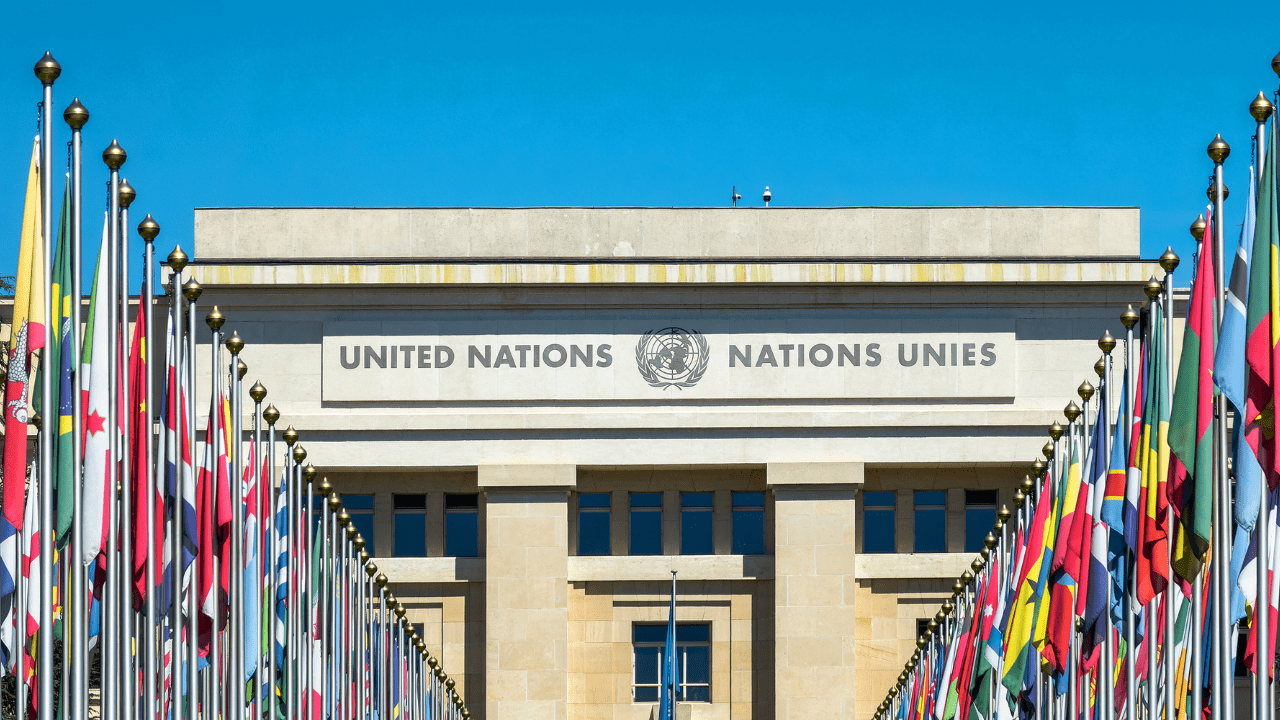
Citizens for Global Solutions was thrilled to see that in the recent FY 2009 Supplemental Appropriations Bill that was just released by the White House, President Obama requested $836,900,000 for U.N. Peacekeeping operations. By supporting U.N. peacekeepers, the United States is able to address regional instability throughout the world, prevent pandemics, reduce the spread of terrorism, and avoid refugee crises. The total debt that the United States owes the United Nations is $1.56 billion; therefore, $836 million represents extraordinary action to catch up on this debt. The $836 million, a mere 1% of the overall Supplemental request, includes the maintenance of current U.N. peacekeeping operations and the funding of an expanded mission in the Democratic Republic of the Congo. Also, money from that fund will go to the United Nations Mission in the Central African Republic and Chad [MINURCAT]. When the United States falls so deeply into arrears, the U.N. is not able to send as many troops on the peacekeeping missions. For example, the United Nations is authorized to send 31,569 personnel to Darfur but the actual number is 17,692 because of the low level of funds. Citizens for Global Solutions insists that Congress maintain this level of funding in the Supplemental Appropriations Bill to U.N. Peacekeeping Operations and encourages you to express this same sentiment to your Congressperson. This significant contribution will help generate goodwill toward the United States and restore our financial standing at the United Nations. ACT NOW to make sure the U.S. pays its peacekeeping dues 04/09/2009 - 10:21amThe Build Up to Copenhagen: Bonn, Germany MeetingPosted by Abigail Long
The United Nations Framework Convention on Climate Change [UNFCCC] may not begin until December 7th but the preparatory talks are already underway. The Framework Convention on Climate Change consists of 192 countries, including the United States and China. All parties meet once a year in a Conference of Parties. Since the first commitment period of the Kyoto Protocol will end in 2012, a new Climate Change agreement will need to be negotiated immediately. Therefore, the goal of the Copenhagen conference is to establish a new agreement to stabilize greenhouse gases in the atmosphere in order to prevent dangerous climate changes in the future. Countries will meet in advance of the conference in a series of preparatory talks. The purpose of the preparatory talks is to allow countries the chance to focus on and review in detail the issues that will be discussed in the Copenhagen negotiations. Three more two week meetings are scheduled to occur before the final meeting in Copenhagen. Bonn, Germany was the site of the latest round of negotiations which concluded April 8, 2009. The climate change team of the Obama Administration attended and shared their enthusiasm and dedication for the creation of a productive treaty in Copenhagen. Todd Stern, from the U.S. Climate Change team stated: We do not doubt the science, we do not doubt the urgency, and we do not doubt the enormity of the challenge before us. The facts on the ground are outstripping the worst case scenarios. The costs of inaction - or inadequate actions - are unacceptable. Discussions in Bonn have established positive momentum for a smooth and constructive UNFCCC in Copenhagen. The Executive Secretary of the UNFCCC, Yvo de Boer, clearly laid out the four areas that the Copenhagen Protocol must deal with successfully:
Key issue areas such as "targets for the reduction of greenhouse gas emissions by industrialized countries and the matter of financing mitigation and adaptation measures in developing countries appeared to be stymied" (Click here for full article ). CGS will follow the upcoming meetings and keep you in the loop on the resolution of those key issues. 04/05/2009 - 10:05amStudents study how to be Global CitizensPosted by Diane Hodges
He demonstrated those points by showing the group the winning videos and animations from our 2008 Multimedia contest. He also rolled out the first video in our new campaign, "What does it mean to be a Global Citizen?" The massive effort features video of people from all ages and professions, explaining in their own words, the need for global engagement, and the reasons they have decided to become more involved with world issues. The initial video features people ranging from original United World Federalist member Ed Rawson who lives in a Washington, D.C. suburb, to a college student who grew up on an isolated island off the northwestern coast of Washington state.
Don pointed out that the world is at a major crossroads and the key challenge of the next decade that the students will face is how to how to address "the most dangerous deficit facing humanity;" the gap between the need for effective collective action at the global level and the ability of the international community to satisfy that need.
These are major achievements that resulted from decades of hard work Tags:
04/02/2009 - 11:14amU.S. moves to reclaim human rights mantlePosted by Diane Hodges
"We must scrupulously guard the civil rights and civil liberties of all citizens, whatever their background. We must remember that any oppression, any injustice, any hatred, is a wedge designed to attack our civilization." -- Franklin Roosevelt More than 60 years ago, President Roosevelt reminded us that protecting the human rights of others is the only way to protect our own human rights. Here in the United States, human rights is an issue that has been overshadowed by other concerns during the past few years, but now we are beginning to see our way clear to making this, once again, a cornerstone of U.S. policy. One of the first actions of the Obama administration was to announce the end to policies that allowed for the torture of anyone in U.S. custody. One of their next actions was to announce plans to close the Guantanamo Bay detention center. Now, the Administration has taken yet another step and announced that the U.S. will run for election on the U.N. Human Rights Council. This action sends a strong signal to the international community that the Obama administration is committed to defending human rights for all global citizens, and it moves the U.S. one step closer to returning it to its previous role as a leader in the defense of human rights around the world. As a member of the Council, the U.S. will be able to provide a voice for the voiceless, and to ensure that those who violate human rights will be held accountable for their crimes, anywhere in the world. The Human Rights Council is the only international body through which promotes human rights and addresses pervasive human rights violations. The Council will only be able reach its potential with the help of strong leadership from the United States. It is also a key platform through which to empower those who are discriminated against the most, including women and girls. The decision by the Obama administration to seek a seat on the Council demonstrates its commitment to work more closely with our allies around the world, a move that can only make Americans safer, in every way. Tags:
03/31/2009 - 10:13amLack of U.S. Commitment to DarfurPosted by Sharon Haber
The U.S. is presently not a part of the ICC, so it does not have to follow the jurisdiction of the ICC. Yet, as a world power and a leader in promoting freedom and equality, many would agree that a stronger stance on arresting and persecuting Sudan's President Omar al-Bashir should be taken by the U.S. The U.S. State Department, during a press release on March 30, 2009, made a comment on the concern of such a warm welcome for al-Bashir by the Arab League. The State Dept. said that the Arab League meeting should have been a way for the League to express its condemnation of the Sudanese president, his actions, and show support for the ICC's decision and rejection of the current violence that has been ongoing in Sudan. This was hardly a direct answer, but a way of skirting around the subject. Directly quoting the U.S. State Dept.:
One would have to wonder how the U.S. State Department could answer the question of concern by the White House, and yet not answer a direct question about whether or not any action would be taken towards the Arab League for taking such a clear stance behind al-Bashir. Can't we just have a clear answer? It seems that despite the United States supporting the arrest of al-Bashir, little is being done by the U.S. to voice concerns that he remains free to roam about Africa, the Middle East and the world. This Sunday (March 29, 2009) al-Bashir attended the Arab League's meeting in Qatar, where other Arab leaders have all, in unison, declared their support for al-Bashir. The secretary-general of the Arab League, Amr Moussa, said:
(Read full story at Aljazeera.net) Of course this concern or action by the Arab League did not happen as some may have hoped. The U.S. should be standing behind their support for the arrest and prosecution of this oppressive ruler who has allowed the starvation, rapes, and murders of thousands of his own people. It should be expected that a country such as the U.S. would pressure other countries to follow through on the arrest warrant that has been issued for al-Bashir. Of course it seems that the U.S. is not willing to publicly pressure countries of which al-Bashir has recently visited to arrest and extradite al-Bashir in order to achieve justice. 03/26/2009 - 7:40amUS is Mute While Bashir Travels FreelyPosted by Don Kraus
According to the New York Times and other media sources indicted Sudanese president Omar al-Bashir has visited with Egyptian president Hosni Mubarak. Bashir has not been deterred by the arrest warrants issued by the International Criminal Court. He visited Eritrea on Monday and is expected to attend an Arab League summit meeting in Qatar next week. Neither the State Department nor the Whitehouse has commented on Bashir's travels and defiance of the Court's jurisdiction, other than to say that he is not welcomed in the United States. State Department spokesperson Robert Wood, when asked if the U.S. is encouraging other nations to arrest Bashir dodged a clear response and said:
In fact other than a supportive statement by U.N. Ambassador Susan Rice, the White House has basically withheld comment on the ICC until it completes a review of U.S. policy regarding the Court. The administration should finish this policy review quickly. It should call for extensive and thorough U.S. cooperation with the Court and support for its prosecutions and trials. It should support U.S. participation in the Court's meetings. And it should make clear that U.S. relations with the Court are in an entirely new era. The historic ICC arrest warrant for Sudanese president Omar al-Bashir makes these steps especially urgent. In FY09 the U.S. will supply Egypt with $1.3 billion in military financing. Ideally, Congress should condition this funding to ensure Egyptian cooperation with the apprehension of war criminals like Bashir. At the very least the U.S. should quickly state its desire for Cairo and other Arab League nations to cooperate with the Court. The United States is now in the odd and unsustainable position of strongly endorsing the most important action that the ICC has ever taken while evading any commitment to support or participate in it as an institution. While Secretary of State Clinton has been hindered by the slow confirmation process to bring on new political staff, she should not allow the United States to stand mute on the sidelines while allowing a mastermind of systematic mass-murder and rapes to freely roam the world and flaunt the jurisdiction of the Court and the U.N. Security Council which authorized the Court's actions in Sudan. Tags:
03/14/2009 - 10:24amPartners focus on action for DarfurPosted by Diane Hodges
See what Ms. Ahmadi had to say to the UN Security Council. 03/11/2009 - 11:29amGoodbye Nethercutt & the BIA CampaignPosted by Don Kraus
Senate passage of the Omnibus appropriations bill quietly marked the end of Congressional sanctions on nations that have ratified the International Criminal Court. It also officially ends the Bush administration's Bilateral Immunity Agreement (or Article 98) campaign, clearing the way for greater U.S. cooperation with the Court. Thank you Representative Lowey, Senator Leahy and your staffs! Beginning in the summer of 2002, the Bush administration aggressively sought to conclude bilateral immunity agreements with every country in the world. Bilateral immunity agreements (BIAs), also known as "Article 98" agreements, prohibited countries from sending U.S. personnel to the ICC for any reason. This includes U.S. servicemembers, nationals, or employees of the U.S. government (past and present, including non-national contractors). Over 100 nations were pressured into signing these agreements, even though doing so meant violating the commitment they took on when they ratified the ICC treaty. They were forced to put all U.S. citizens on their territory, even mercenaries and common criminals, above the laws that they expected their own citizens and leaders to obey. In 2002 Congress passed the American Servicemembers Protection Act (ASPA), which hampered U.S. cooperation with the Court and sanctioned nations that ratified it by withholding funding for military financing and education. By January, 2008, at the urging of the Defense Department, these economic sanctions were eliminated. In 2004, then Rep. George Nethercutt (R-WA) introduced an amendment to the State/Foreign Ops appropriations bill to suspend Economic Support Funds to members of the ICC who did not sign BIAs. Rep. Jim Kolbe (R-AZ), the Republican chair of the appropriations subcommittee, spoke strongly against this amendment when it came to the House floor: "At a time when we are fighting the war on terrorism, reducing this tool of diplomatic influence is not a good idea. If we accept [this amendment], the U.S. will be hamstringing itself, placing a straitjacket on its diplomatic tools, when we have a lot of U.S. national security objectives that must carry the same or equal weight as securing [BIAs]." While the amendment originally failed by voice vote, it later passed by a roll call vote of 241 to 166. Now, thanks in large part to the work of House Foreign Operations and State Sub-committee chair Nita Lowey (D-NY) and her staff, the language has been removed from appropriations bill. Although her counterpart in the Senate, Patrick Leahy (D-VT) has successfully kept this language off of the Senate bill for many years, House Republican opposition ensured it remained in the final bill that went to President Bush. With the removal of the Nethercutt language, the BIA campaign is now officially over. Except... What will the Obama administration do once nations that were forced to sign these agreements begin to withdraw from them? Stay tuned Tags:
03/04/2009 - 9:07amICC Issues Bashir Arrest Warrant - Time for the US to CooperatePosted by Don Kraus
This warrant is an example of actions that the Court was specifically created to take, in order to hold the world's most heinous criminals accountable for their actions. It proves that no one, including a head of state, is above the law. The United States should immediately provide all assistance to the Court in apprehending President Al-Bashir, by taking him into custody if he enters our airspace, waters or territory; by freezing all economic and/or military aid to the Sudanese government until Sudan complies with this warrant; by using diplomacy to pressure President Al-Bashir and other nations to comply with the ICC demands; and contributing our enormous resources to this investigation to ensure that justice is served. However, before the U.S. can credibly pressures other nations to hand Al-Bashir over to the Court, it needs to do 3 things:
We need to take these steps not only because it is the right thing to do, but because it will be difficult for other nations to take us seriously when we urge them to abide by the Court's rulings. You can help spread the word by taking action.
Tags:
03/04/2009 - 6:58amI Remember When the ICC Was A Pipe DreamPosted by Scott Hoffman
I first became active in the World Federalist Association, predecessor to Citizens for Global Solutions, in 1983, when I lived in the Boston area. One of the objectives on our radar screen at that time was the creation of an International Criminal Court, but at the time it seemed almost as close to science fiction as would have been a full-fledged world federation. One of the global circumstances we Federalists deplored was the almost complete lack of accountability for crimes against humanity committed outside of responsible national jurisdictions. Yet there seemed virtually no interest anywhere in creating institutions to deal with this problem. And yet, by the late eighties, a consortium of Caribbean countries, supported by Federalists around the world, introduced the idea of an International Criminal Court in the General Assembly. And within ten more years, in August, 1998, the ICC treaty was created in Rome. Now, in its approaching indictment of Sudan's Omar al-Bashir, for the first time in history a sitting head of state is facing likely prosecution by a global legal authority. Just today, a young staffer in CGS's Washington office asked me what the prospects were for a United Nations Parliamentary Assembly, which could become a global legislature with democratically elected proportional representation. It's an idea gaining momentum in Europe, Canada and Latin America, but not much yet in the United States. "At this point, it's still science fiction," I started to say. If the International Criminal Court can come to fruition in less than a quarter century, it's reasonable to believe the same can occur with a U.N. Parliamentary Assembly. Almost 3,000 people have signed the appeal from the Campaign for a U.N. Parliamentary Assembly and that number continues to grow every day. Through continued work on the issue, perhaps the dream of a world federation could soon be within our grasp.
418 7th Street SE, Washington, DC 20003-2796
Phone: (202) 546-3950 Fax: (202) 546-3749 Privacy Policy |
||||||||||
|
|
|||||||||||