Subscribe!

Email:
Zip:

05/27/2010 - 12:23pm

A Global National Security Strategy

Today the Obama administration releases its first National Security Strategy (NSS).  The NSS is a document prepared periodically by the executive branch for Congress which outlines the major U.S. national security concerns and how the administration plans to deal with them.  It’s a strong improvement over the last NSS issued by the Bush administration in 2006. Much of the language in the NSS could have been taken from globalsolutions.org.  This is a strategy of an administration on the right track. It’s also a signal to civil society to both support the administration's efforts and to be willing to push the envelope of what is possible.

The NSS is a strategic document that sets direction at 30,000 feet. While it calls for “a just and sustainable international order that can foster collective action to confront common challenges” it doesn’t recommend tactical steps such as better training for U.S. ambassadors or greater recognition for Foreign Service officers who work in multilateral institutions.  It doesn’t discuss how the U.S. will improve its capacity to win votes in international bodies. However it does clear the way for these steps to happen.

Below are a number of relevant quotes from the NSS on nuclear weapons, a strengthened international order, the U.N, Peacekeeping, Genocide Prevention, and the International Criminal Court.  I’ve underlined particularly worthwhile passages.

In a perambulatory letter from President Obama he says:

 “We are clear-eyed about the challenge of mobilizing collective action, and the shortfalls of our international system. But America has not succeeded by stepping outside the currents of international cooperation. We have succeeded by steering those currents in the direction of liberty and justice – so that nations thrive by meeting their responsibilities and face consequences when they don’t….As influence extends to more countries and capitals, we will build new and deeper partnerships in every region, and strengthen international standards and institutions. This engagement is no end in itself. The international order we seek is one that can resolve the challenges of our times – countering violent extremism and insurgency; stopping the spread of nuclear weapons and securing nuclear materials; combating a changing climate and sustaining global growth; helping countries feed themselves and care for their sick; resolving and preventing conflict, while also healing its wounds.”

On pursuing a "World Without Nuclear Weapons":

"While this goal will not be reached during this Administration, its active pursuit and eventual achievement will increase global security, keep our commitment under the NPT, build our cooperation with Russia and other states, and increase our credibility to hold others accountable for their obligations. As long as any nuclear weapons exist, the United States will sustain a safe, secure, and effective nuclear arsenal, both to deter potential adversaries and to assure U.S. allies and other security partners that they can count on America’s security commitments. But we have signed and seek to ratify a landmark New START Treaty with Russia to substantially limit our deployed nuclear warheads and strategic delivery vehicles, while assuring a comprehensive monitoring regime. We are reducing the role of nuclear weapons in our national security approach, extending a negative security assurance not to use or threaten to use nuclear weapons against those nonnuclear nations that are in compliance with the NPT and their nuclear nonproliferation obligations, and investing in the modernization of a safe, secure, and effective stockpile without the production of new nuclear weapons. We will pursue ratification of the Comprehensive Test Ban Treaty. And we will seek a new treaty that verifiably ends the production of fissile materials intended for use in nuclear weapons."

The NSS calls for a strengthened international order saying:

“[W]e have an interest in a just and sustainable international order that can foster collective action to confront common challenges. This international order will support our efforts to advance security, prosperity, and universal values, but it is also an end that we seek in its own right. Because without such an international order, the forces of instability and disorder will undermine global security. And without effective mechanisms to forge international cooperation, challenges that recognize no borders – such as climate change, pandemic disease, and transnational crime – will persist and potentially spread....Indeed, our ability to advance peace, security, and opportunity will turn on our ability to strengthen both our national and our multinational capabilities. To solve problems, we will pursue modes of cooperation that reflect evolving distributions of power and responsibility. We need to assist existing institutions to perform effectively. When they come up short, we must seek meaningful changes and develop alternative mechanisms.

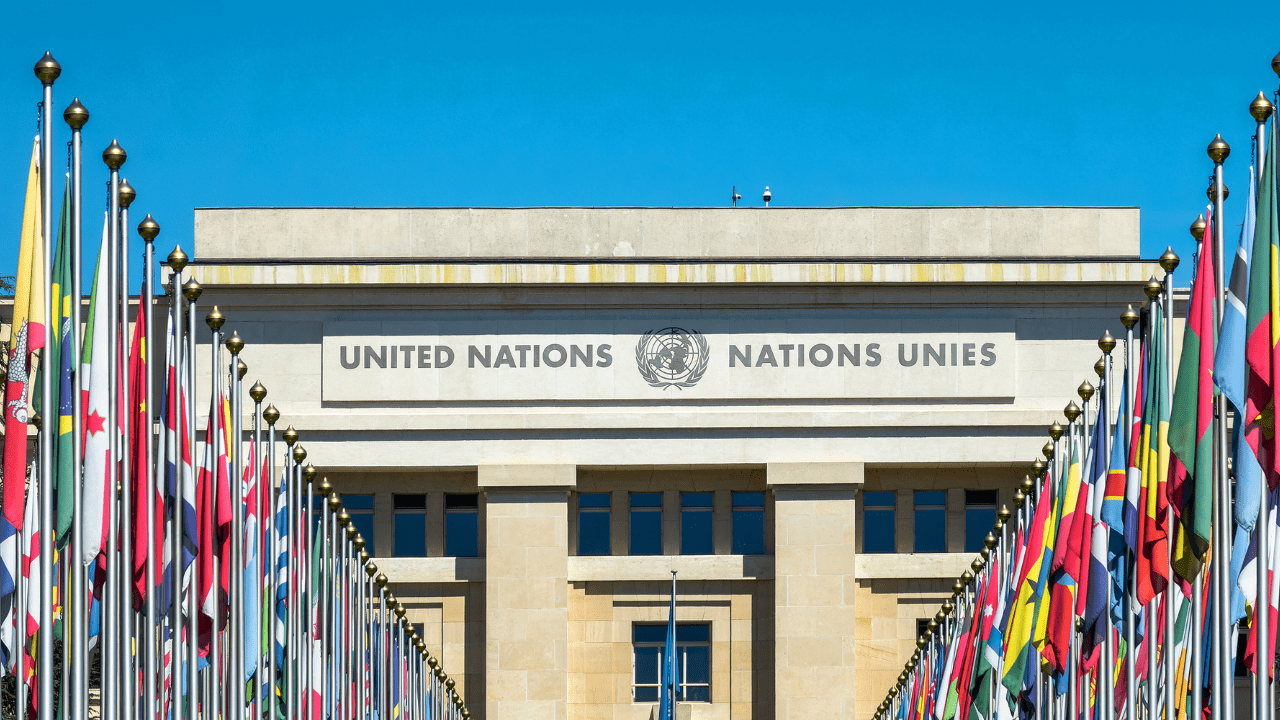
The NSS has a section on “Enhance Cooperation with and Strengthen the United Nations”.  It says:

“We are enhancing our coordination with the U.N. and its agencies. We need a U.N. capable of fulfilling its founding purpose – maintaining international peace and security, promoting global cooperation, and advancing human rights. To this end, we are paying our bills. We are intensifying efforts with partners on and outside the U.N. Security Council to ensure timely, robust, and credible Council action to address threats to peace and security. We favor Security Council reform that enhances the U.N.’s overall performance, credibility, and legitimacy. Across the broader U.N. system we support reforms that promote effective and efficient leadership and management of the U.N.’s international civil service, and we are working with U.N. personnel and member states to strengthen the U.N.’s leadership and operational capacity in peacekeeping, humanitarian relief, post-disaster recovery, development assistance, and the promotion of human rights. And we are supporting new U.N. frameworks and capacities for combating transnational threats like proliferation of weapons of mass destruction, infections disease, drug-trafficking, and counterterrorism.”

On “Peacekeeping and Armed Conflict”:

“The untold loss of human life, suffering, and property damage that results from armed conflict necessitates that all responsible nations work to prevent it. No single nation can or should shoulder the burden for managing or resolving the world's armed conflicts. To this end, we will place renewed emphasis on deterrence and prevention by mobilizing diplomatic action, and use development and security sector assistance to build the capacity of at-risk nations and reduce the appeal of violent extremism. But when international forces are needed to respond to threats and keep the peace, we will work with international partners to ensure they are ready, able, and willing. We will continue to build support in other countries to contribute to sustaining global peace and stability operations, through U.N. peacekeeping and regional organizations, such as NATO and the African Union. We will continue to broaden the pool of troop and police contributors, working to ensure that they are properly trained and equipped, that their mandates are matched to means, and that their missions are backed by the political action necessary to build and sustain peace.

It’s worth noting that absent from the NSS is any commitment to engage US personnel in blue-helmet peacekeeping missions.

There is great news on preventing genocide and mass atrocities:

“The United States and all member states of the U.N. have endorsed the concept of the "Responsibility to Protect.” In so doing, we have recognized that the primary responsibility for preventing genocide and mass atrocity rests with sovereign governments, but that this responsibility passes to the broader international community when sovereign governments themselves commit genocide or mass atrocities, or when they prove unable or unwilling to take necessary action to prevent or respond to such crimes inside their borders. The United States is committed to working with our allies, and to strengthening our own internal capabilities, in order to ensure that the United States and the international community are proactively engaged in a strategic effort to prevent mass atrocities and genocide. In the event that prevention fails, the United States will work both multilaterally and bilaterally to mobilize diplomatic, humanitarian, financial, and – in certain instances – military means to prevent and respond to genocide and mass atrocities.”

One item not mentioned in the NSS is a plan for the US military to develop a clear doctrine on civilian protection.  This would help to achieve the plans goals.

International Justice and the ICC:

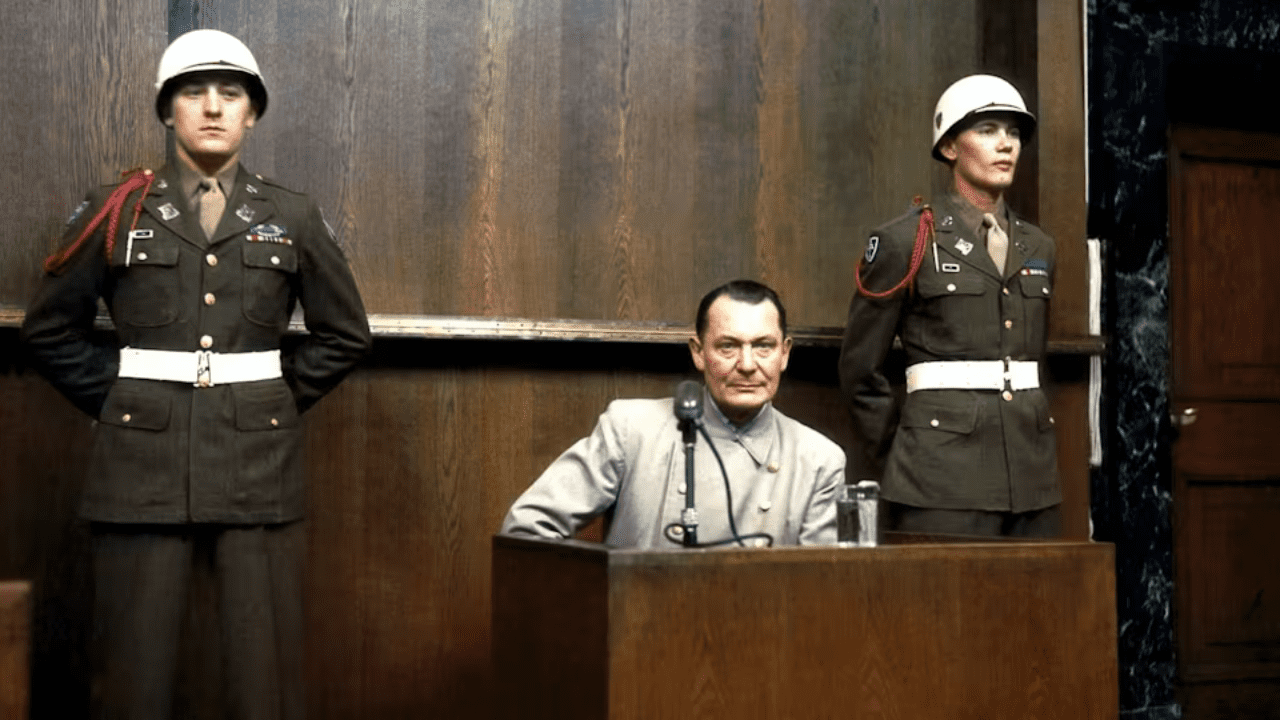
“From Nuremberg to Yugoslavia to Liberia, the United States has seen that the end of impunity and the promotion of justice are not just moral imperatives; they are stabilizing forces in international affairs. The United States is thus working to strengthen national justice systems and is maintaining our support for ad hoc international tribunals and hybrid courts. Those who intentionally target innocent civilians must be held accountable, and we will continue to support institutions and prosecutions that advance this important interest. Although the United States is not at present a party to the Rome Statute of the International Criminal Court (ICC), and will always protect U.S. personnel, we are engaging with State Parties to the Rome Statute on issues of concern and are supporting the ICC’s prosecution of those cases that advance U.S. interest and values, consistent with the requirements of U.S. law.”

Don Kraus

04/12/2010 - 5:25pm

Is Europe the "Second Superpower" of the 21st Century?

Usually, when the topic of European Union foreign policy comes up, responses range from doubts as to whether the 27-member body can even be said to have a coherent foreign policy, to questions on whether EU foreign policy matters much in a world increasingly dominated by rising powers such as China, India, and Brazil, as well as the United States.  But at a Brookings Institution event on April 8th entitled “The Foreign Policy of the European Union: Assessing Results, Ushering in A New Era,” panelists sounded a generally optimistic note on the future of a common foreign policy for the EU, and how Europe might still exert a positive influence on the world outside its borders.

Featured speakers at the briefing were Giuliano Amato, former Prime Minister of Italy and Vice President of the European Constitutional Convention; Daniel Hamilton, Director of the Center for Transatlantic Relations at Johns Hopkins University’s School of Advanced International Studies; Andrew Moravcsik, Professor of Politics and Director of the European Union Program at Princeton University; and Pierre Vimont, French Ambassador to the United States.  Former Prime Minister Amato noted that Americans are often much more enthusiastic about the EU than are Europeans; however, he asserted that grounds for optimism about the Union do exist.  He pointed out that the expansion of the EU to include twelve new nations, ten of which were formerly Communist states, since 2004 illustrates the “transformative power of Europe” and the attraction that the EU holds for non-member states in the region.  While Europe can play a positive role outside its own region of the world, Amato said that Europeans will have to work with the U.S. in order to tackle global problems, thus making the transatlantic relationship more important now than ever.

Daniel Hamilton described the EU as lacking a traditional foreign policy for the time being but stated that it does have an “untraditional” one.  Specifically, the accession of formerly Communist states to the EU in the decades since the end of the Cold War represent an historic achievement in uniting former bitter enemies across the continent in a united Europe after centuries of bloodshed.  He added that the recently enacted Lisbon Treaty, which provides new foreign policy instruments if not a traditional foreign policy for the EU, challenges Europe to “step up” its collaborative work in areas such as homeland and justice issues, and humanitarian assistance around the world—90 percent of which is currently provided by Europe.  Like Amato, he emphasized that strong U.S.-EU ties are essential in order for Europe to play a powerful role on the global stage in the future.

Professor Moravcsik cited several reasons for optimism about European foreign policy.  First, Europe is, in his words, the “second superpower” of the 21st century alongside the United States.  Also, he asserted that increasing decentralization of power in the EU, with more power being taken back by member states, would lead to a more effective Europe in the foreign policy sphere.  Finally, looking towards the future, he anticipated the EU playing a larger role in the areas of justice, home affairs, and development as more power devolves to individual European states.

The final panelist, Ambassador Vimont, remarked that the EU enlargement process of recent years has forced European countries to work together and was therefore useful.  In some ways, however, today’s enlarged Europe is now a “victim” of its own success—how can a such a multilateral institution of twenty-seven diverse countries hope to function successfully?  He urged Europeans to find ways to increase their flexibility and ability to work together in order to promote European ideals and values around the world.  Vimont echoed earlier statements that in today’s multipolar world, an improved transatlantic relationship is increasingly important and the time is right to work to improve U.S.-EU ties.

For more information on the event, please visit the Brookings Institution website at http://www.brookings.edu/events/2010/0408_european_union.aspx.

01/14/2010 - 4:28pm

Obama Remarks on Recovery Efforts in Haiti

Secretary of State Hillary Clinton has said that “three million people — about a third of Haiti’s population — had been affected” by the 7.0 magnitude earthquake that struck Haiti on Tuesday. International aid groups have estimated the death toll to be in the tens of thousands.

Juan Barreto/Agence France-Presse — Getty Image

Medical supplies have been highlighted as particularly crucial in the effort to save lives in a country which was already severely stretched for medical resources before the earthquake.  Tammam Aloudat, an emergencies specialist at the International Federation of Red Cross and Red Crescent (IFRC) Societies in Geneva stated that "[m]any other quakes have shown us very clearly that of people who suffer injuries and die as a result, most deaths occur within the first 72 hours."

President Obama remarked this morning on U.S. efforts to provide aid.  He noted the practical challenges that the aid effort faces, such as, communication difficulties and Haiti’s damaged main port and roads.  Obama said that rescue and relief workers are currently on the ground and a team worked throughout the night “to identify priority areas for assistance, and shared the results of that review throughout the United States government, and with international partners who are also sending support.” He also committed an immediate investment of $100 million to support U.S. relief efforts

Obama stated:  “We will partner with the United Nations and its dedicated personnel and peacekeepers, especially those from Brazil, who are already on the ground due to their outstanding peacekeeping efforts there.  And I want to say that our hearts go out to the United Nations, which has experienced one of the greatest losses in its history.  We have no doubt that we can carry on the work that was done by so many of the U.N. effort that have been lost, and we see that their legacy is Haiti's hope for the future.”  

Obama’s concluding remarks were directed to the people of Haiti: “we say clearly, and with conviction, you will not be forsaken; you will not be forgotten.  In this, your hour of greatest need, America stands with you.  The world stands with you…So today, you must know that help is arriving -- much, much more help is on the way.”

To donate, CLICK HERE

To read more, CLICK HERE

10/09/2009 - 4:26pm

Obama on the Nobel Prize "A Call To Action"

I was pleased by President Obama's 'aw-shucks' comments on winning the Nobel Peace Prize, saying:

"After I received the news, Malia walked in and said, "Daddy, you won the Nobel Peace Prize, and it is Bo's birthday!" And then Sasha added, "Plus, we have a three-day weekend coming up." So it's good to have kids to keep things in perspective."

But what really impressed me was how he framed his acceptance of it:

I will accept this award as a call to action -- a call for all nations to confront the common challenges of the 21st century. These challenges can't be met by any one leader or any one nation.... We cannot tolerate a world in which nuclear weapons spread to more nations and in which the terror of a nuclear holocaust endangers more people....We cannot accept the growing threat posed by climate change, which could forever damage the world that we pass on to our children -- sowing conflict and famine; destroying coastlines and emptying cities.

This is a call to action that needs to be answered.  Not only by nations, but by global citizens from across the world.  I believe President Obama understands the need for action. It's up to us to stand up together make this vision a reality.

10/09/2009 - 10:29am

The Nobel Prize for Peace for President Obama

Congratulations, President Obama!

This morning's announcement of the Nobel Peace Prize is an honor and well-deserved.

The honor is, of course, an honor that American shares. And, while there are naysayers, the award is deserved for the new approach to global policy that President Obama has brought by creating, in the words of the Nobel Committee,  the climate in which "Multilateral diplomacy has regained a central position, with emphasis on the role that the United Nations and other international institutions can play." The Nobel Committee specifically highlights the initiative he has taken to reach out to the Muslim world and to urge nuclear disarmament.

At Citizens for Global Solutions, we work daily with issues of international diplomacy and global institutions, and we can confirm that President Obama's approach has changed the very nature of the discussions that are held and the possibilities that are sought. Consider the following:

1. President Obama embraces a multilateral approach to global issues and shows confidence in global institutions. Putting partisanship aside, many of us agree that this is the best approach to global challenges such as nuclear weapons, climate change and peacekeeping. His support of multilateral diplomacy and global institutions display an understanding that there are universal values that all countries, including the United States, must acknowledge.

2. The award shows that ideas and leadership matter. This morning the initial reaction of some is to say that the award is "too soon." Let's examine that. President Obama has made clear his embrace of a multilateral approach to global problems. He went to Cairo to enunciate a new approach by the United States toward issues facing the Islamic world. He has specifically stated his aspiration that we achieve a world free of nuclear weapons. These are accomplishments. Many people in his position might not have reached these positions or, having reached them, might not have made these positions public. President Obama's actions have widened the range of what is possible in international diplomacy. Ideas and leadership matter, and the Nobel Committee is confirming that.

3. Americans and others who know and understand American history should recognize that the award of this Nobel Prize confirms that American ideas and leadership matter as well. The ideas of multilateral global problem-solving are consistent with the political philosophy that runs from the Enlightenment, through our Founders, and is seen in the accomplishments of Woodrow Wilson and Franklin Roosevelt. Most global institutions, including most prominently the United Nations, have been established and supported by the U.S. based on political ideas broadly accepted in the U.S. Those who worry about the role of the U.S. in the future of the world should take heart at the Nobel Committee's tacit acknowledgment that U.S. ideas and leadership are valued on the world stage.

4. Finally, let's acknowledge that the ideas that President Obama espouses and his actions that are being recognized, are fundamentally good for America. Let's be clear Americans are better off in a world in which peace and justice are assured through reliance on rule of law and universally accepted principles than in a world in which "might makes right." No nation has the power alone to enforce world peace. We see the limits of American military power, even as the as the U.S. devotes as much or more resources to defense than the rest of the world combined. But nations working together, resolving differences through diplomacy, and respecting principles supported by consensus can make a difference. It may be that the U.S. cannot continue forever to spend what it spends in maintaining world peace. If all the nations of the world shoulder this responsibility together, perhaps the burden can be more easily borne and perhaps more resources can then be devoted to education, health and welfare for everyone.

Robert A. Enholm
Executive Vice President
Citizens for Global Solutions

09/15/2009 - 12:13pm

Fed Chairman Ben Bernanke discussed Global recession

Today at the Brookings Institute Federal Reserve Chairman Ben Bernanke spoke about the past year's economic collapse. He spoke about the events in the United States and of the similar experiences across the world. In his statements he discussed the steps that regulators and the Federal Reserve took to slow the rate of decline and mitigate the effects of the downturn. However, he stressed the importance of the global response. He empathized how quickly the G7 finance ministers were able to reach a consensus on response principles. These principles included support for international financial institutions, inject public capital if needed, and securing deposits. He added that the global response was strong and-in his words-unprecedented. Chairman Bernanke noted that the domestic and international political will and capital was there to ensure that international cooperation was the focus. And this political will reduced the potential impact of the decline. Cooperation not competition will create a more sustainable financial system.

07/24/2009 - 11:03am

Obama Signs Disability Rights Convention

On Friday, July 24, 2009, President Obama will sign the United Nations Convention on the Rights of Persons with Disabilities. This is the first United Nations Convention that Obama will sign in his Presidency. It is estimated that there are 650 million people in the world with disabilities. The Convention on the Rights of Persons with Disabilities seeks to improve the standard of living while increasing employment opportunities and community access for all of them. The Convention also provides legal protection for people with disabilities, which many U.N. member states unfortunately do not have. The Convention is moving quickly; it opened for signatures on March 30, 2007 and there have already been 140 signatories. On its opening day there were 82 signatories to the Convention, 44 signatories to the Optional Protocol, and one ratification of the Convention. The Convention entered into force on May 3, 2008. Next, the Convention will go to the Senate to provide advice and consent to the treaty.

Now that Obama has signed the Convention on the Rights of Persons with Disabilities, it will be interesting to see what U.N. Convention he will move forward on next.

05/07/2009 - 12:09pm

Progress Report from the US Mission to the UN

The United States Mission to the United Nations released its Progress Report last week, giving a positive outlook on future US-UN relations and US engagement on international issues. The biggest thing to take from the Progress Report is that the current administration has acknowledged that and promoted the idea that international engagement is required to meet modern threats.

"We are showing the world that a new era of engagement has begun. For we know that America cannot meet the threats of this century alone, but the world cannot meet them without America." -President Barack H. Obama, Feb. 24, 2009

More importantly, the administration has put forth the idea that America should be leading the world in international affairs and in its engagement with the UN. As the largest contributor (and host country) to the United Nations, the US should be engaging the UN in a productive way to ensure that the organization moves in a direction that will benefit all nations. The antagonistic stance taken by the previous administration towards the UN has tarnished our reputation internationally, but the Obama administration has already taken great strides to reaffirm our commitment to multilateralism.

The current United States Mission to the UN has already been focused on many issues important to Citizens for Global Solutions. Ambassador Rice has been deeply involved in efforts to resolve the conflict in Darfur and praised the ICC indictment of Sudanese President Bashir. On global climate change, President Obama announced the launching of a Major Economies Forum on Energy and Climate, holding the first preparatory session in Washington on April 27-28. These talks are crucial to success at the Copenhagen conference in December. Lastly, the administrations dedication to human rights was shown in running for a seat on the UN Human Rights Council, an important step to reforming the organization to effectively combat human rights abuses globally.

04/05/2009 - 10:05am

Students study how to be Global Citizens

About 30 international students from North Carolina State University hustled themselves out of bed on a Saturday morning to talk about what it means to be a Global Citizen. CEO Don Kraus met with the students at the CGS office in Washington, D.C., where he emphasized the need to be engaged with the rest of the world by learning, lobbying and traveling.

He demonstrated those points by showing the group the winning videos and animations from our 2008 Multimedia contest.

He also rolled out the first video in our new campaign, "What does it mean to be a Global Citizen?" The massive effort features video of people from all ages and professions, explaining in their own words, the need for global engagement, and the reasons they have decided to become more involved with world issues. The initial video features people ranging from original United World Federalist member Ed Rawson who lives in a Washington, D.C. suburb, to a college student who grew up on an isolated island off the northwestern coast of Washington state.

Don also read the group a quote by Thomas Jefferson that
is engraved on the Jefferson Memorial here in Washington, D.C.:

"as new discoveries are made, new truths disclosed, and manners and opinions change with the change of circumstances, institutions must advance also, and keep pace with the times. We might as well require a man to wear still the same coat which fitted him when a boy, as civilized society to remain ever under the regimen of their barbarous ancestors."

Don pointed out that the world is at a major crossroads and the key challenge of the next decade that the students will face is how to how to address "the most dangerous deficit facing humanity;" the gap between the need for effective collective action at the global level and the ability of the international community to satisfy that need.

The U.S. government has now taken some major steps towards that goal: recently, the Obama administration announced that the U.S. will run for a seat on the U.N. Human Rights Council; the Administration began the process of reducing our nuclear weapons stockpile to the lowest level since 1955; and the U.S.Senate voted to increase funding for the International Affairs Budget.

These are major achievements that resulted from decades of hard work
by armies of supporters. By speaking to groups of students like these, Don is helping to ensure that the work will continue in the decades to come.

04/02/2009 - 1:29pm

A Rare, Open Moment

We are in a rare, open moment of history.

Consider this. During the last week:

  • President Obama has begun the process of reducing nuclear warheads to the lowest number since 1955.
  • Secretary of State Clinton and U.N. Ambassador Rice have announced that the U.S. will run for a seat on the United Nations Human Rights Council.
  • The Senate has agreed to accept a $4 billion amendment to restore President Obama's full International Affairs Budget request.

As I write, world leaders at the G20 are discussing fundamental changes to our international institutions. It's not a question of if they will change, but rather of how and when.

I never recall having this much good news at one time. Yes, I know we face daunting economic and security challenge. But this a moment to savor the wins. We are building momentum to advance the creation and empowerment of international institutions and laws more than at any point since the founding of the U.N. This is very good.

Now back to work ...

418 7th Street SE, Washington, DC 20003-2796
Phone: (202) 546-3950 Fax: (202) 546-3749
Privacy Policy