|
|||||||||||
Blog TagsBlog Archive
Subscribe!Search This Site: |
10/21/2009 - 1:00pmCompromise Isn't Always MoralPosted by Joseph Marcus
The global community has a moral obligation to reduce its greenhouse gases. Climate change talks in Copenhagen are set to begin in slightly over 46 days. And yet the United States is far from passing any legislation that would truly curb our greenhouse gas emissions below the scientific recommendations of 25-40 percent of 1990 levels. The House passed the American Clean Energy and Security Act of 2009. This bill, also known as the Waxman-Markey bill, proposes to reduce greenhouse gas emissions by only 17 percent of 2005 levels, or in other words: 4 percent of 1990 levels. Additionally, the Boxer-Kerry bill in the U.S. Senate has requested a reduction of 15-20 percent of 2005 levels, only 7% of 1990 levels. Both of these goals, according to the legislation, would be reached via a cap-and-trade program; thus using the all glorious (see: sarcasm) market forces to regulate greenhouse gas emissions. However, those opposed to the bill are now referring to this as "crap-and-trade" Good for them, using the same language as a five year old. This really furthers the debate in our country.
Although some jobs, in particular sectors and constituencies- may be lost, it does not negate our greater responsibility to our general citizenry, and the global environment. The Atlantic Slave trade employed thousands of people, from ship builders, sailors, capturers, traders, auctioneers, and more. However, the United States eventually decided to end slavery because our sense of justice and morality outweighed the fear of job loss. However, we were grossly behind Britain and other European nations in abolishing slavery. Now we look back on our participation and we are ashamed, particularly because we were not the first to abolish the slave trade. I am afraid the same thing will happen here. I am not equating those working in the coal industry-particularly the hard working blue-collar Americans-with slave drivers. I use this example only to illustrate that the time has come for the United States to take a principled stance. We are already grossly behind Europe once again, and just a few generations from now they will look back and ask "what were they thinking? Didn't they see their own hypocrisy?" We claim to be a world leader yet are continually following in shadows. Everyone's lives are in danger with as climate change is accelerated. We DO have a moral obligation. The idea that our children will have a better future than we had will not come to fruition if we ignore our environment. They will not have the same bio-diversity, their air will be dirty, their water polluted, their rivers dried, and their cities flooded.
10/14/2009 - 11:22amCalifornia Energy Regulation Offers Path Toward the FuturePosted by Bob Enholm
Ron Brownstein has an interesting article in The Atlantic (October 2009) that describes California's efforts to create sensible energy regulation and promote green technologies: http://www.theatlantic.com/doc/200910/california-energy As the United States and the world attempt to make meaningful progress in addressing climate change and moving toward renewable energy, the ideas underlying California's energy regulatory system may be ever more important points of reference. (Full disclosure: In 1976 and 1977, immediately after college, I worked as a staff economist for the California Energy Commission and witnessed the beginnings of the regulatory movement described here.) Robert A. Enholm
01/20/2009 - 6:33pmHistory and a Breath of Fresh AirPosted by Don Kraus
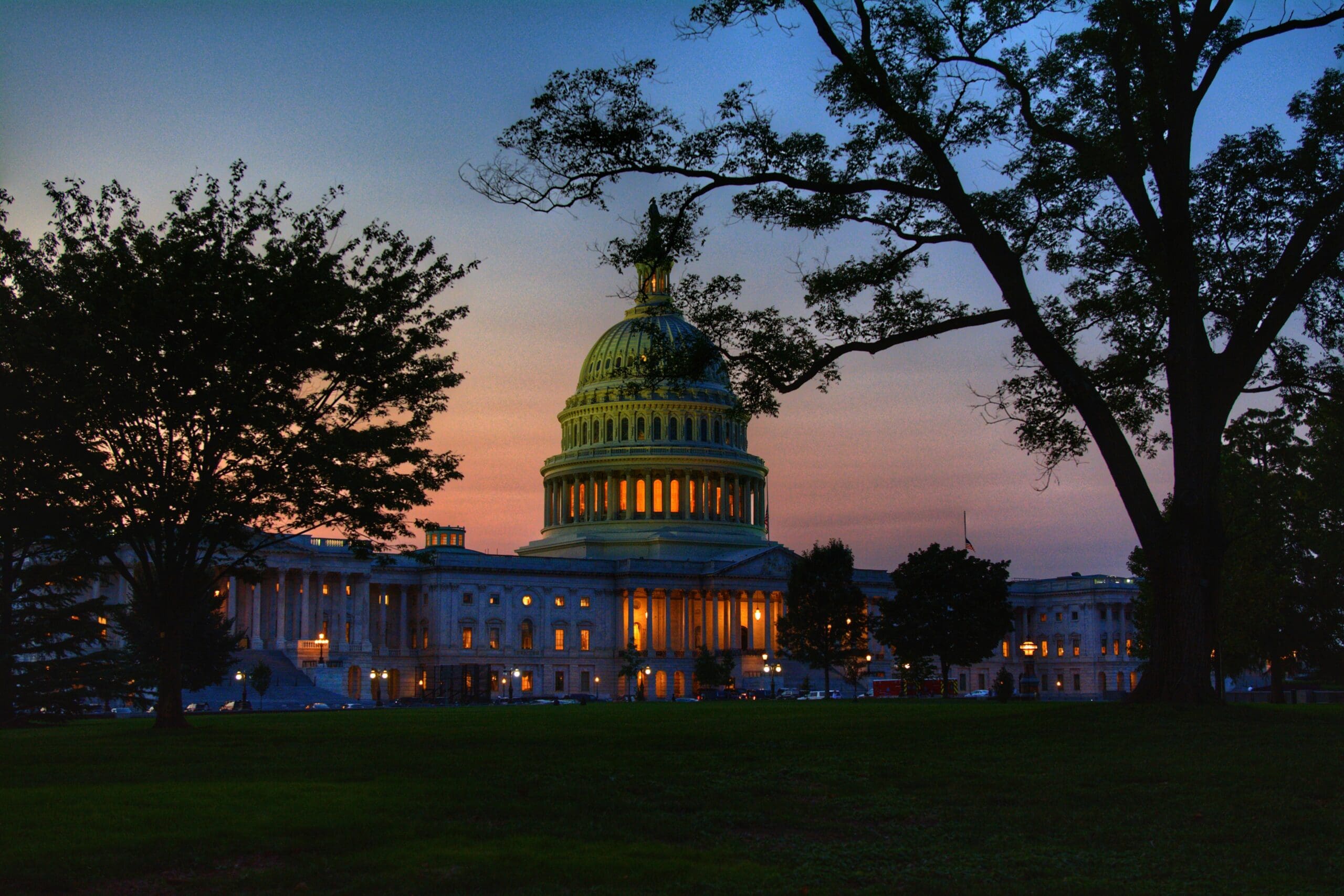
We stood together - cold, packed in - with Americans from every state and of every race and ethnicity. We had camped out in CGS's office, woke up early, and hiked to join a slow moving and cramped line to get in. We had "good" tickets in the Purple zone, on the Capitol grounds (picture on right). We couldn't really see, the sound was only ok, but we were there. And that's how those around us seem to feel too. The details didn't manner - we were there at a moment when the course of our nation - of our world - was being defined. We were there at the end of the era where a person could be judged by the color of their skin. And we were there at the end of a nightmare when the United States acted as if it was above the law, exceptional, imperial, and dead wrong. I was impressed by the amount of President Obama's speech that focused on the world. These are good and strong words for those who understand that that we cannot succeed, nor can there be peace, unless our nation understands that we must lead by example and cooperate with other nations to benefit all. It's a breath of fresh air that we now have a leader who believes this too. Here are some of the quotes from Obama's inaugural address that I felt were most important:
With Obama now at the helm our task, as global citizens, is to supply the energy to help make these changes happen. We must be the voice that keeps our nation looking outwards, that urges it to link arms with others, and to build a world based on the principles of democracy, human rights, and justice that we hold dear. I look forward to working with you and with the Obama administration to overcome the challenges of our day and to make the dreams of our parents, grandparents and those who came before us a reality. 11/06/2008 - 9:11amMcNerney easily defends his seat in CaliforniaPosted by Drew Asson
Jerry McNerney, another Freshman member of Global Solutions' Class of 2006, fought back a challenger from Dean Andal to win in California's 11th District. In what was thought to be a tight race before the election, McNerney easily defeated Andal 55 to 45 percent. Prior to being a member of the 110th Congress, McNerney was a alternative energy advocate and wind power engineer and businessman. In Congress, he is a member of the Science and Technology Committee. More importantly, he's bringing his expertise to bear on energy and climate change. He was given a seat on the Select Energy Independence and Global Warming Committee, a prestigious new committee started under the new House leadership in 2007. There, he joins other Global Solutions endorsed candidates Ed Markey (MA-07), Earl Blumenauer (OR-03), John Larson (CT-01) and Emanuel Cleaver (MO-05). Tags:
10/09/2008 - 1:10pmU.S. - India Nuclear Deal PassesPosted by Simone Pereira
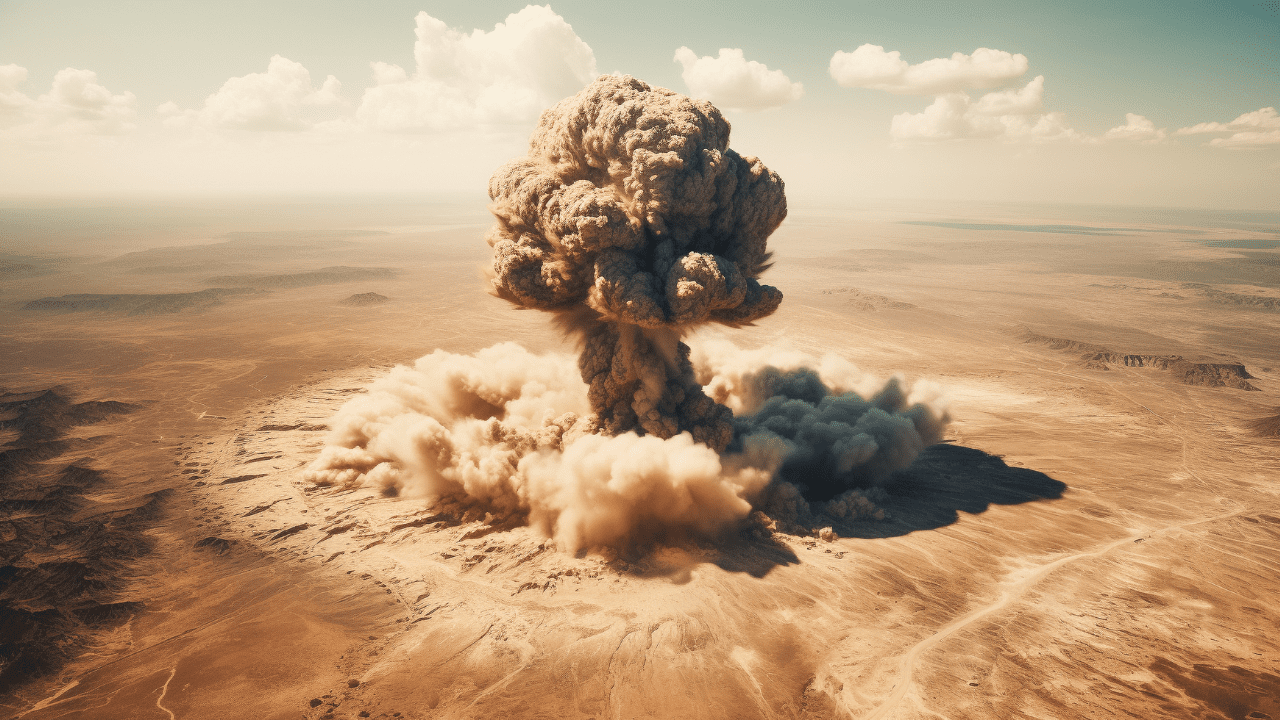
For the first time since its creation in 1974, the Nuclear Suppliers Group (NSG) granted India a waiver , thereby allowing this nuclear country to trade in technology with supplier states like the U.S., France and Russia. Ironically, the NSG, which has a membership of 48 countries, was started up in direct response to the nuclear tests carried out by the Indian government in 1974, and remains as a body to regulate and prevent the development of nuclear weaponry. The NSG was the last hurdle the American and Indian governments had to overcome before their Civilian Nuclear deal could be passed. On October 8, 2008, after over three years of negotiations and lobbying by government and independent agencies, the US-India Civilian Nuclear Agreement was signed into law. Some argue that this deal will help other states keep tabs on India's nuclear developments. Since the country refused to sign the Nuclear Non Proliferation Treaty (NPT) in 1968, it has been forced to develop its own capabilities using independent resources, and without any sort of tabulation by international bodies. By opening the way for bilateral trade between the U.S. and India, the former is able to maintain checks on Indian nuclear arsenals. The passage of this deal, however, proved to be no easy feat. In India, the Communist Party in the south represented the largest and most vocal opposition to the agreement. Amongst their concerns was the fear that while the US would gain unrestricted access to Indian nuclear sites, the Indian government would be highly restricted in their endeavors on American soil. They threatened the withdrawal of their support in government, which would have led to the crumbling of an already shaky coalition government under the Congress Party. Despite such strong opposition to the deal in India, the slow progress made in the U.S. over the past few years and the determination of both countries' leaders resulted in the agreement being signed and passed into law. Indian Prime Minister Manmohan Singh has since brokered a deal with France over nuclear resources, and is expected to negotiate with Russia soon. For India, this deal is a significant step towards increasing its legitimacy in the international arena. While India is not too far behind China in weaponry capabilities, the country's legitimacy has been drastically less favorable given its non-compliance with the NPT. The waiver granted by the NSG essentially grants India this legitimacy without the required signature to the NPT. This deal also opens up the forum for more extensive exchanges between these two countries, exchanges that will range from the economy to the military to social services. India's traditional rivals, Pakistan and China, however, do not share the same sentiment. Both are nuclear countries, and have been apprehensive of the growing closeness between America and India. While Washington mounts the pressure on Pakistan to cooperate more fully with the fight against Al Qaeda, this deal represents a strategic move by the U.S. to find a reliable and capable ally in the region. As it is, the Pakistani government has expressed concerns over Afghanistan's increasingly close ties with India, and this deal will merely reinforce Pakistan's concerns over encirclement by hostile countries. With regards to China, it is believed that America will use India as its ally in brokering trade deals with China and to maintain a leveled standoff against Russia. While it remains crucial to the deal that India does not launch any more nuclear tests, this deal does not work towards the NPT's goal of removing all nuclear weaponry. In the face of growing international uncertainty over security, the world needs more transparent deals that aim at removing nuclear weapons as an option in war. 08/26/2008 - 12:58pmObama Picks Sen. Joseph Biden for VP, But How Does Biden Stack Up On The Issues?Posted by Rumbi Maweni
After much anticipation and media-baiting, Obama's camp finally made their first pivotal chess move in the 2008 election process. The announcement of Senator Joseph Biden as a running mate was made via text message to supporters at three in the morning, just hours after it had already been confirmed by major news sources. By now, most of us have heard the mainstream media's various rationalizations for Obama's VP choice. Biden, the son of a Scranton, Pennsylvania car salesman hails from a working class background, thus he may pull in the white working class voters who supported Hillary Clinton in the primaries. Biden has a "solid pro-Israel record" according to at least one major Jewish organization; this will please Jewish voters. And Biden is the quintessential "everyman"; neither flashy nor terribly sophisticated, he will surely help play down Obama's perceived elitism. But some believe that the greatest asset that the Senator brings to the ticket is experience and expertise in foreign policy. Having spent 36 years, nearly three decades in the Senate, Biden chairs the Senate Foreign Relations Committee, co-chairs the Caucus on International Narcotics Control, and has also been a longtime chairman of the Senate Judiciary Committee. He has a a long and extensive background in foreign affairs, particularly Eastern European and Middle East politics. Given that Obama's choice of Biden for a running mate is already beginning to frame the ongoing debate in significant ways, now would be a good time to briefly scrutinize how Biden stacks up in accordance with the issues that matter most to Citizens for Global Solutions and its members, just as we will pay McCain's running mate the same amount of scrutiny when the time comes. Citizens for Global Solutions members who may have already chosen to support Barack Obama should know that, at the very least, Biden supports many of the issues CGS finds most pressing in today's political climate. Senator Joseph Biden has always scored favorably on our Annual Congressional Report Card, consistently scoring As and A+s on issues critical to our organization from at least 2005 onwards, particularly on four of our current biggest: Darfur, Energy, Climate Change, and Nuclear Non-Proliferation. On the genocide in Darfur, Senator Joseph Biden's record is reliably consistent. Having taken a congressional visit to Darfur, Biden received a cumulative A+ score on the Genocide Intervention Network's Darfur Scorecard recently for being a significant supporter of legislation to help stop the genocide. Biden was instrumental in passing the Darfur Peace and Accountability Act in the Senate of 2006. He also introduced a successful amendment to the supplemental appropriations bill to establish an Office of the Special Envoy for Sudan whose primary responsibility would be to push implementation of the Darfur Peace Agreement. Furthermore, Biden's rhetoric on Darfur has long matched his actions; he has always been notably forceful in his condemnation of the genocide and his will to act. In April 2007, hemade this oft-quoted statement before the Senate Relations Committee: "I would use American force now, I think it's not only time not to take force off the table. I think it's time to put force on the table and use it. Let's stop the bleeding. I think it's a moral imperative." However, his strongest statement on Darfur was in February 2007, when he declared to Iowans his policy on Darfur if he were elected president: "I warn you if I am your President I will do more than talk about Darfur. I will send American troops to impose a no-fly zone in Darfur and I will make sure that [we] take out the janjaweed. There is no [reason] why we are not imposing a no-fly zone. I visited Darfur. I looked at those 200,000 refugees that are dying. We have no moral right not to act." Biden has also been an adamant supporter of an energy policy that is very much in line with the energy policies we here at CGS advocate. Whilst running for president in 2007 he championed "energy security" as his top priority. At a rally in Hartsville, South Carolina on March 3, 2007 he firmly stated: "If I could wave a wand, and the Lord said I could solve one problem, I would solve the energy crisis. That's the single most consequential problem we can solve. It's what you have to do to get greenhouse gases under control." Biden strongly supports the increased use of biofuels as a means of combating oil dependency. Some of his proposals for decreasing oil dependency and increasing the use of biofuels have included co-sponsoring the Clean Power Act of 2005, which would have implemented a cap-and-trade system for carbon dioxide and other pollutants. During the primaries, he called for raising fuel-economy standards for automobiles to an average of 40 miles per gallon by 2017 by increasing fuel-economy targets within vehicle classes by about one mile per gallon per year. He also called for increasing ethanol and biodiesel production by upping the national renewable-fuel standard to require that the fuel supply include 10 billion gallons of renewable fuel a year by 2010 and 60 billion gallons a year by 2030. Biden's position on energy mirrors his concern for the environment as climate change continues to threaten the future of humanity. He has received an approval rating of 83 out of 100 from the League of Conservation Voters for his support of environmentally-friendly legislation. In 1986, he introduced the Global Climate Protection Act, the first bill designed to limit global warming pollution. Recently, he has co-sponsored the Boxer-Sanders Global Warming Pollution Reduction Act, the most stringent climate bill in the Senate. It would establish a cap-and-trade system for greenhouse-gas emissions and require the U.S. to reduce its emissions to 1990 levels by 2020, and to 80 percent below 1990 levels by 2050. He has held hearings in recent years on the national-security implications of global warming. On nuclear non-proliferation, Biden's record is less clearly defined, but he articulated his views on nuclear weaponry recently to the non-profit, Council for a Livable World, in the following statement: "I have been a leading supporter of non-proliferation programs since 1991 and I have worked to protect and increase their funding, broaden their scope and relieve certification requirements that diverted them from the mission of dismantling WMD capabilities, securing dangerous materials and finding productive careers for former WMD personnel. Right now, I am pressing for improved IAEA safe guards at nuclear facilities; improved capability to determine the origin of nuclear materials so that we can bring deterrence into the 21st century; increased funding for ex-weapons scientists in the FSU; repeal of Nunn-Lugar certification requirements; destruction of chemical weapons in Libya; a program to allow Iraqi ex-weapons scientists to come to the U.S. (instead of Syria or Iran); a fund for implementing future nuclear agreements with Iran or North Korea; and increased funds for the very important low end of non-proliferation: buy backs of handguns and automatic weapons in troubled countries." Biden's long run in the Senate lend him a kind of transparency that Obama lacks. Voters curious about Biden's positions need only look back on his extensive voting record and major legislative decisions. As far as politics go, however, this is not necessarily an immediate boon for the Obama camp. Despite the media's curiously adulatory reception of Obama's choice of Senator Joseph Biden, considering that this is a man who inspired little adulation during the primaries, the truth is that Biden is both a potential strength and a potential liability for the Democratic ticket. As McCain supporters have been quick to point out, Biden is friendly with and has much in common with McCain having often supported McCain on key issues. Biden may be used by Republican pundits to make McCain's case. Furthermore, Biden lacks Obama's silver-tongued eloquence and his record of making less-than-palatable statements is almost as lengthy as his legislative record. One hopes, however, that the American public will choose to look beyond the politics of personality and focus on the candidates' respective positions on issues that are central to their core values as well as to creating global peace and prosperity. Back to you, McCain. 07/03/2008 - 7:33amGlobal Warming, More like Global DisruptionPosted by Madeleine Lesser
Global warming seems to be a reality that can be more accurately described as "global disruption." John Holdren, professor at Harvard's Kennedy School of Government and Director of the Science, Technology and Public Policy Program at the Belfer Center for Science and International Affairs, claims that the effects of global warming are not merely a matter of temperature; although increased temperature is a the root of many of the problems. He recognizes that the climate on the whole is affected, as can be seen by changing winds, ocean currents, storm patterns, melting glaciers, flooding, and droughts. Clearly, the increase in global warming has led to global climate change entirely. Increased global temperature exacerbates already existing and inevitable natural disasters. For example, hurricanes have been, and probably always will be, a fact of life; but the reality is that increased temperatures and higher levels of carbon dioxide produce more intense hurricanes. Overall, since the 1970s, hurricanes characterized by levels 4 and 5 have risen from 20% to 35% in the 1990s. Furthermore, total precipitation has increased 7% over the past hundred years. Most of us have been plagued by the photos of polar bears that are dying as a result of melting ice caps. Melting glaciers not only lead to the death of polar bears, penguins, and other mammals, but add to a rise in sea level. There are two problems here: poor, innocent mammals are dying as a result of global warming that has been, in many regards, the fault of humanity; and a rise in sea level that will eventually displace and possibly take the lives of thousands, if not millions, of people. Moreover, the melting of the arctic permafrost in Canada, Alaska and Russia has negatively affected many ecosystems. At first, the melting will create new lakes, but eventually those lakes will evaporate and release methane from peat bogs native in the permafrost. Conversely, an increase in temperature has led to an increase in evaporation in many areas. Because the earth is considered a "closed system," the evaporation will lead to more rain, and more rain can cause greater erosion. And, over time, a significant augmentation of erosion can lead to desertification. What will it take for our government to make serious policy changes and actually attempt to fix the global climate change that we have exacerbated by carbon dioxide emissions from our cars, factories, homes, etc.; by deforestation; by the use of aerosols; and many, many others? Yes, global warming is a natural cycle that has occurred in the past, but there is no denying that human activity has severely affected this natural phenomenon's characteristics. There have been great efforts by companies to do their part to address these issues with the introduction of hybrid vehicles and fluorescent light bulbs, but more needs to be done at the root of government. We need to take responsibility for our more than 25% contribution to carbon dioxide emissions by signing Kyoto and making reductions. We need to allocate money to research and development of alternative fuel and energy - now, not tomorrow or the next day. This problem is not going to fix itself - serious change must happen today because if we don't take action we'll surely regret it in the near future. If we don't act, how can we expect, or ask, anyone else to? 06/20/2008 - 5:47pmAre the U.S. and the U.N. Equipped to Handle Our Two Greatest Crises?Posted by Meghan Nash
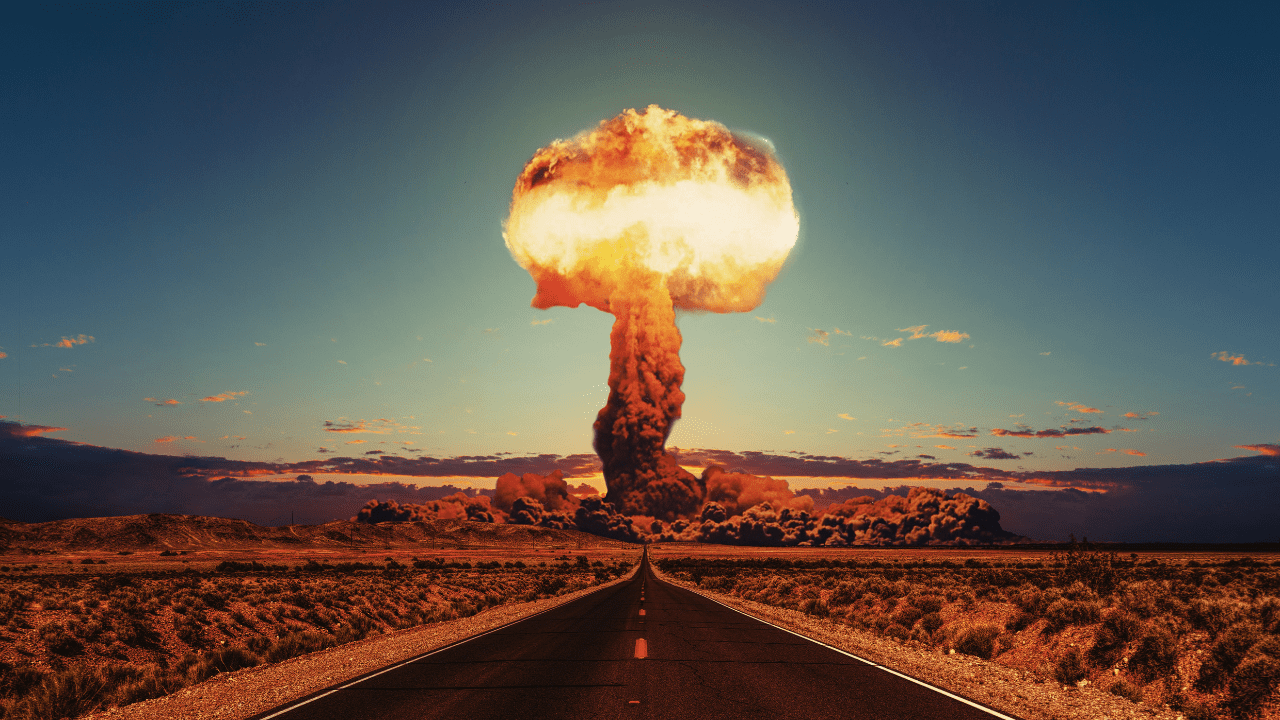
Every generation has its cross to bear. Those born at the turn of the 20th century survived two world wars. Baby boomers practiced hiding under their school desks in case of a nuclear attack during the peak of the Cold War. While I consider bad hairstyles and horrendous wardrobes the downfall of the 80s, most would probably point to the emerging popularity and complexity of technological devices. Our current generation has two vital challenges that now lay before us: ending the proliferation of nuclear weapons and stopping global warming. In every aforementioned crisis, the government of the United States has stepped up to the plate and made a major contribution, but in these two areas we have been noticeably absent from the field. In order for the United States to preserve its self-awarded title as the world's only superpower, the government must be much more assiduous in taking a leading role in solving these two problems, both of which have grabbed the attention of the general public. One could point to the recent increase in international tensions or the rising amount of celebrities driving hybrid cars and building 'green' houses as explanations for the issues' intensifying interest among Americans. Or perhaps the general constituency is simply realizing the perilous results these issues could produce if they are not resolved. Either way, U.S. citizens are watching with baited breath to see how their government will save them from future calamity. Traditionally, the United States has pursued a course of isolationism proposed by our first president, George Washington: rejecting an opportunity to join the League of Nations, spawned by U.S. President Woodrow Wilson; creating the Monroe Doctrine; and waiting until the final year to enter World War I. Despite increased international interaction since WWII, when action is required, the U.S. tends to adopt a unilateral strategy, the most obvious example being the current war in Iraq. To put it plainly, we do not play well with the other children in the sandbox. But this trend cannot be allowed to continue. The problems we now face are too large and complex for one nation to take on single-handedly. They can only be overcome if the United States begins to behave more like a super partner of the world instead of its lone superpower. While the United Nations is taking valiant strides to end the production of nuclear weapons and global warming, their resources are stretched precariously thin and their efforts prove largely ineffective without the cooperation and support of the world's leaders, especially the United States. Of these two problems, ending nuclear proliferation is the question that has haunted the leaders of the world essentially since the inception of nuclear weapons. The United States remains the only nation to have used nuclear weapons against another, with the dropping of the bombs on Hiroshima and Nagasaki during WWII. As the world witnessed the horrific consequences of these attacks, it began to question the practicality and morality of their existence. The Nuclear Non-Proliferation Treaty (NPT) was created in 1968 and entered into force in 1970. All five officially recognized nuclear powers- the U.S., Russia, Britain, France, and China- signed the treaty, pledging to gradually disarm their countries of nuclear weapons in exchange for the agreement of other signatories not to build them at all. The other nations, currently more than 180, that sign the NPT can receive aid in developing nuclear power for peaceful purposes. Under NPT, the International Atomic Energy Agency carries out inspections to ensure countries are abiding by the rules. Unfortunately, there is no way to monitor or restrict those countries - such as India or Pakistan- who refuse to sign the NPT. These countries have steadily been assembling their own nuclear arsenals and, in Pakistan's case, have been covertly selling parts and information to North Korea and other countries. Then there is the possibility that Iran's uranium enrichment is aimed at producing a bomb. As much as the world may desire to return to simpler times, there is no turning back of the clock; there is no way to erase the nuclear knowledge acquired and expanded on over the past 50 years. But is it still possible to stop nuclear proliferation and start dismantling bombs where they exist? And can the U.S. take responsibility to make this happen? While the global warming debate is not as old as nuclear proliferation, it is rapidly achieving equal status in the eyes of the public. Increasing temperatures, anomalous hurricanes and droughts stretching across the African continent have caught the attention of scientists who point to global warming as the crux of these events. Global warming, which most insist, has been brought about by humans. To combat these charges, the United Nations created the Intergovernmental Panel on Climate Change (IPCC) in 1988 and the United Nations Convention on Climate Change (UNCCC) in 1992.? UNCCC's current focus is ratifying the Kyoto Protocol, created on December 11, 1997 and entering into force on February 16, 2005. Under the Kyoto Protocol, 36 industrialized countries must reduce their greenhouse gas emissions by five percent over five years. Even though the U.S., under the advice of former Vice President Al Gore, signed the protocol in 1998, it was never ratified by a Republican Senate. Today, over 180 countries have ratified the protocol but not the United States. The current Bush administration cites the large loss of U.S. jobs the Kyoto Protocol could result in as an explanation for its aloofness. The need for a multilateral approach to achieve the elimination of global warming and nuclear weapons is an undeniable fact. The days of U.S. unilateralism must come to a close in order to solve these issues. The countries of the world need to unite amidst their differences in the next few crucial years to guarantee the safety of tomorrow's world. 06/13/2008 - 11:28amSupreme Court Ruling: A Step Towards Justice for Prisoners at GuantanamoPosted by Madeleine Lesser
History was made yesterday. The Supreme Court ruled, June 12, 2008, that prisoners held at Guantanamo warrant legal rights under the Constitution to challenge their detainment. No longer will inadequate excuses made by the Bush administration of denying due process to prisoners be tolerated. After two previous decisions made by the high court were circumvented by Congress to exclude detainee access to civilian court, justice is finally being served. The United States of America was founded on values and beliefs of certain inalienable human rights, and as the War in Iraq has progressed, our government has seemed to have forgotten those standards. Justice Kennedy's majority opinion included that "the laws and Constitution are designed to survive, and remain in force, in extraordinary times." As further information is disclosed regarding the inhumane treatment of prisoners at Guantanamo, and other prisons in Iraq, by the US military, justifying a denial of due process and human rights based on the rhetoric of the type of war and the type of enemy we face, becomes more difficult. We must not be fooled by the opinion of Justice Antonin Scalia. Noted in his dissent, he stated that the nation is "at war with radical Islamists," and the Supreme Court decision "will make the war harder on us. It will almost certainly cause more Americans to be killed." First, we are not at war with radical Islamists,and that must be made clear. The US is at war against the Taliban, Al Qaeda, and other terrorists. To make a statement that we are at war against a religious faction is irresponsible. Scalia is wrong to generalize and attack an entire sect of people, many of whom are not terrorists. Furthermore, Scalia's claim that giving rights to detainees will make Americans less safe, is the stark opposite of what many analysts argue. To not grant appropriate rights, and to torture detainees, fuels the animosity and hatred engrained in terrorists. Providing rights to prisoners may not only safeguard the American people more so than to not, but it is the right thing to do. What kind of message does a retraction from established values send to our citizens and to the rest of the world? The reality is, that with US hegemonic authority on the international stage, the responsibility to act as a leader is vital: we have a duty to uphold morality even in the roughest of times; otherwise, a slippery slope, including excuses as to why other states can reject "rules of war," will soon follow. When faced with adversity and confusing times, as the nature of war in the 21st century is undoubtedly changing, we need to rely more on principle, morality, and conscience to ensure that all humans are guaranteed justice. Tags:
03/11/2008 - 6:43amDavid Vitter: Bad Policy, Fuzzy MathPosted by Scott Paul
If this fundraising appeal from Louisiana Senator David Vitter for his campaign to defeat the Law of the Sea Convention weren't so dishonest and misleading it would be hysterical. Ok, actually, it's still amazingly funny. For starters, the note includes a header at the top that reads "Personal & Confidential." Not two lines later, he begins the note with the most personal of salutations: "Dear Fellow American." But that's just the beginning. The end is just as good. Vitter includes a postscript that reads: "I have an urgent goal of raising $1,000,000 in the next couple months to fund my defeat LOST campaign." That's nice. He must have forgotten what he wrote just one page earlier: "I'm willing to spend over $250,000 in the next critical few months to help put the U.S. Senate on notice that the American people want LOST to be defeated." In short, I really need a dollar so I can spend a quarter. Oh, by the way, the campaign to defeat the treaty happens to be called "David Vitter for Senate." That's where donors are asked to send their checks. I promise you, my organization wouldn't be in business for very long if we sent appeals bragging about 75% overhead. But we're not done -- there's plenty more. This appeal is the gift that keeps on giving. The reply memo includes the usual check boxes for donors to indicate the amount of their donation. This one, however, includes one check box for donations in the amount of $2,500. See a problem? The limit for donations to one candidate is $2,300 per election. Candidates can raise $4,600 for the primary and the general elections together in a single cycle, but the donations have to designated as such. See any directions for donors to do that? I don't. So, will Vitter for Senate be returning $2,500 dollar checks? Or issuing $200 "oopsies" refunds? Senator Vitter's analysis of the Law of the Sea Convention is just as ridiculous as the aforementioned gaffes. Vitter casts the Law of the Sea as a threat to national defense and "anti-American," but doesn't once mention that its supporters include: the President; the National Security Advisor; the Secretaries of Defense, State, Homeland Security, Commerce, and Interior; the Joint Chiefs of Staff; the Commandant of the Coast Guard, two former Secretaries of the Navy currently serving in the Senate (John Warner and Jim Webb); all living State Department Legal Advisors; and all living Chiefs of Naval Operations. These folks -- and this is far from a comprehensive list -- all believe that U.S. accession to the Convention is crucial to U.S. national security. The Navy and Coast Guard are making it crystal clear that accession will help them do their jobs and keep them out of harm's way. But Vitter knows better. He also says that the Convention is bad for business. Never mind that every ocean industry -- shipping, oil and gas, telecom, fishing, marine manufacturing, shipbuilding -- all strongly support joining the Convention. Here's a paragraph on page 2: "Articles 19 and 20 of LOST specifically require the U.S. Military to agree to not conduct key military operations or intelligence gathering activities in territorial waters without "permission" from this same nation!" Not sure what "nation" Vitter is referring to here, but here's the thing: we've already committed not to conduct military activities in the territorial waters of other countries. We did so when we ratified the 1958 Convention on the Territorial Sea and Contiguous Zone. Why did we want agreement on these provisions? Because we don't like the idea of Cuban submarines submerged a half-mile off of Miami Beach -- or, if we want to get a little closer to home, in the Mississippi river near New Orleans. So it stands to reason that Senator Vitter favors allowing foreign ships to conduct military activities on the Mississippi river and footsteps from the Louisiana shoreline. I'll share one more amusing detail. Vitter says "It will take 41 votes in the U.S. Senate to defeat LOST." But advice and consent to treaties requires two thirds of those voting and present in the Senate, so it would require no more than 34 opponents to block accession. Again Vitter's ignorance is on display for all to see. I really could go through this letter paragraph by paragraph picking out factual errors, misstatements and even grammatical errors -- but there's really no need to rebut stuff this outrageous and silly. I usually wouldn't get so excited about finding detail-level errors in a fundraising letter that some underpaid campaign staffer probably put together. But Vitter is casting himself as an expert on the Law of the Sea and a leader in the campaign to derail U.S. accession. That's why Senator Vitter's willingness to utterly ignore facts and details when it suits him -- or when he's simply lazy and doesn't feel like it -- captures my attention. So, Confidentially & Personally, Mr. and Mrs. Fellow American, please take Senator Vitter's analysis of the Law of the Sea Convention with a grain of salt. Tags:
418 7th Street SE, Washington, DC 20003-2796
Phone: (202) 546-3950 Fax: (202) 546-3749 Privacy Policy |
||||||||||
|
|
|||||||||||