Archives for: December 2007
12/19/07
Posted by Natasha Khianey
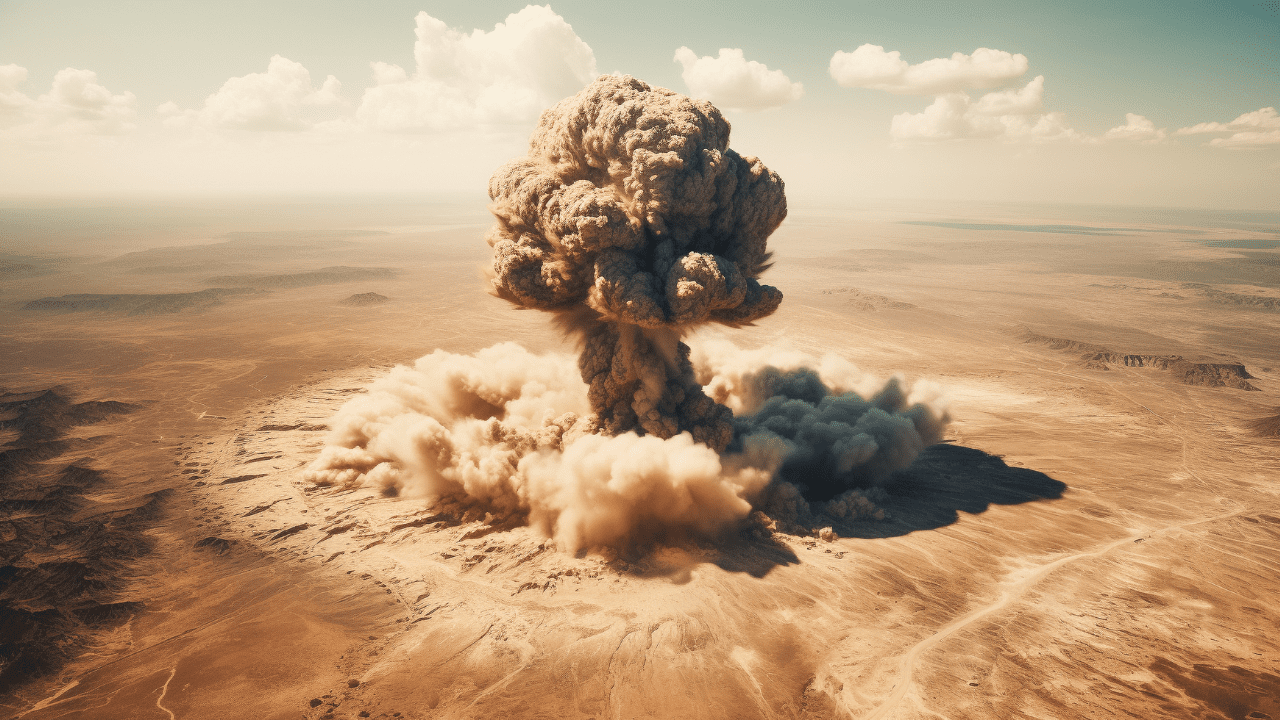
Yesterday, President Bush ordered a reduction of the U.S. nuclear stockpile, which would shrink to under 1/4th of its size at the end of the Cold War. This announcement supports a previous decision in 2004, which aimed to cut the stockpile by 50% of the 2001 level by 2012. Yesterday’s order will speed up the process; reductions are scheduled to take place by the end of this year. In addition, President Bush wants to cut the remaining stockpile by another 15% by 2012. How deep do these cuts run? The Federation of American Scientists (FAS) estimates that in 2001, the U.S. had approximately 10,500 warheads, thus the cut by the end of the year would reduce the stockpile to about 5,400. The remaining cut of 15% would leave the nuclear stockpile at 4,600 warheads. This is an important development, as it shows that the U.S. is willing to lead by example and cut its nuclear stockpile as well as abide by arms control treaties. This administration, however, has sent mixed messages to the world; it asked for $88 million in funding for a new breed of nuclear weapons, the Reliable Replacement Warhead program (RRW). These plans were hampered, as funding for this program was cut by Congress for the current fiscal year.
12/17/07
Posted by Raj Purohit
As the first session of the 110th Congress winds to a close, it is good to see that there are increased signs of cooperation between Democrats and Republicans on a issues that are critical to the well being of the country.
In particular, I was encouraged by comments from Rep. Hoekstra (the top Republican on the House Intel Committee) and Rep. Harman (D-CA) over the weekend. Hoekstra stated that “We want to hold the (intelligence) community accountable for what has happened with these tapes” and Harman echoed the sentiment when she suggested that Congress should resist the Department of Justice request for Congress to delay the investigation. As Harman noted, that request should be rejected by Congress because it “…smells like the cover-up of the cover-up.”
Readers of this blog know that we have supported an Independent Bipartisan Commission on Torture and U.S. Interrogation for some time. The destruction of these torture tapes confirms that such a Commission is needed. When it returns from the holiday recess, Congress should move quickly to create an Independent Bipartisan Commission on Torture and U.S. Interrogation Policy; it is past time that the U.S. comprehensively address the scandals of Abu Gharib and beyond.
An Independent Bipartisan Commission would bring together a broad range of experts able to collectively comprehend the totality of the issue, its consequences and necessary policy prescriptions. The experts would be drawn from the intelligence, foreign policy, law enforcement, military, veterans, legal and human rights community. Additional members could include representatives of the faith community, theologians, cultural specialists and historians. They could look holistically at an issue that grows increasingly complicated and multifaceted.
12/14/07
Posted by Scott Paul
So far, Hillary Clinton, John Edwards, Bill Richardson and Barack Obama
have returned Global Solutions Candidate Questionnaires. Much of what
they have to say is predictable, but there are a lot of important
differences in rhetoric and even some key differences in substance.
They're worth a read through.
Given all that's going on in Bali, it's worth taking a closer look
at what each of these candidates have to say about energy and climate.
It's worth noting that all of their policies are leaps and bounds
better than the status quo.
All of these candidates agree that something on the order of an 80
percent reduction in greenhouse gas emissions by 2050 is crucial. All
of them also agree that negotiating a strong climate agreement to take
hold after 2012 will be a priority, with Hillary Clinton going as far
as to promise personal engagement to make it happen. Interestingly,
despite explicitly being asked, none of the candidates offered a plan
to deal with the impediment that access to energy presents to poverty
eradication in the world's poorest countries.
But there are some important differences. Obama's domestic energy policy focuses mostly on the transportation sector.
Bill Richardson, whose energy policies I have praised before,
seems to still have the strongest grasp of the issue. On top of
aggressive moves in the transportation and electrical sectors,
Richardson mentions the importance of working with developing countries
and International Financial Institutions to help developing countries
switch to clean energy. He also proposes a North American Energy
Council to shore up our energy trade with our neighbors and a
multilateral arrangement to maintain security in the Persian Gulf
(presumably instead of U.S. forces). These are good ideas that push
back against the mirage of "energy independence."
Unfortunately, John Edwards falls into the "energy independence"
trap. Edwards suggests that we can somehow solve part of the energy
puzzle by cutting off oil imports from "hostile countries" instead of
trying to kick the oil habit altogether. He also puts a lot of faith in
geological carbon sequestration (storing CO2 underground), while
ignoring other more promising and safe technological fixes. However, it
should be noted that Edwards was the first candidate to jump out of the
gate on climate and capitalize on the grassroots enthusiasm for
forward-looking energy solutions, and that's got to count for something.
I mentioned one thing that sets Clinton apart from the pack, and
that is a promise to personally engage to get an international climate
treaty done right (though others may be willing to do so too). The
other distinguishing feature of her policy is a proposal to set up an
"E-8," a permanent forum for major carbon emitting nations to discuss
progress on the climate front. Good idea, so long as it doesn't
distract from the UNFCCC process as President Bush's major economies summit has done.
Check out the Candidate Questionnaires for more info: Clinton / Edwards / Obama / Richardson. And tell the candidate you support to fill out a CQ. Scott Paul
Posted by Scott Paul

As of this writing, the UN Framework Convention on Climate Change
talks in Bali have not yet produced a final agreement. That's ok. The
tectonic shift in international climate politics has already occurred.
It was clear almost from the beginning of the event that the U.S. was engaged in "hard obstruction,"
attempting not only to avoid commitments for itself but actively
working to block other countries from setting further targets for
greenhouse gas emissions reduction. That's been the policy in place for
the last seven years.
What has changed is the European position. In past years, Europeans
have been content to state their preference for a faster pace toward a
new set of emissions targets and then timidly give up 90 per cent of
their negotiating position to bring the U.S. on board. The diplomats
would then typically attempt to downplay any major rift and present a
far more united front than really exists.
This year is different. When the Americans flatly rejected any
mention of a new set of targets, the EU promised to boycott the
U.S.-hosted major emitters climate summit, which is at best a
complement and at worst a distraction to the UNFCCC process.
As a result, it looks likely that the U.S. may compromise.
But even if no compromise is reached or targets agreed to, this is a
major step forward. Environmental and civil society groups have long
been pushing for the Europeans to move forward with an ambitious agenda
that the U.S. may eventually catch up to. It seems at last that if the
U.S. will not come along, Europe is willing to make progress anyway. By
2009, we should all be on the same page.
I've heard that there has also been significant progress on the
adaptation and deforestation angles in Bali, but I have yet to read
through the details of either. Plus, I always like it when youth find their voice on this issue. Any way you slice it, this conference will be seen as a major step forward.
Scott Paul
Update: A deal has been brokered in a small group
that a larger plenary will consider in a few hours. It calls for a
"two-track" process, dealing with both Kyoto and the larger UNFCCC,
that will culminate in a new deal to be finalized in Copenhagen in
2009. Unclear as yet whether it includes any mention of concrete
targets. UN Dispatch, It's Getting Hot in Here, and Bali Buzz are following closely.
Posted by Howard Salter
I am not a lawyer and I didn’t even sleep at a Holiday Inn Express last night, but how could President Bush threaten to veto a bill that would require U.S. intelligence agencies to follow Army rules adopted last year that explicitly forbid waterboarding? The bill, which passed the House of Representatives last night, would also require interrogators to adhere to a strict interpretation of the Geneva Conventions on the treatment of prisoners of war. As signatures to the Geneva Conventions our nation needs to adhere to this vital and humane international treaty. However, this latest waving of the veto pen by our president appears to be just another act of defiance that must be turned around. Today’s New York Times notes this by editorializing: During the presidential campaign, candidates from both parties will warn of the risk of another terrorist attack on this country. Americans should insist that they also explain how they will repair the damage President Bush has done to America’s intelligence-gathering capabilities in the name of fighting terrorism….
The recent disclosure that the Central Intelligence Agency destroyed videotapes of the interrogation of two Al Qaeda prisoners was a stark reminder of the catastrophic blunder that Congress made by enacting the Military Commissions Act of 2006. In addition to creating kangaroo courts to try the Guantánamo detainees, the bill permitted Mr. Bush to abrogate the Geneva Conventions by creating secret, extra-legal rules for interrogations by intelligence agents.
Meanwhile, at The Huffington Post, political reporter Sam Stein writes about 30 retired admirals and generals urging members of Congress to ignore Bush’s veto threat and “pass legislation requiring U.S intelligence agents to follow strict standards for detainee treatment.” Isn’t it about time we as a nation live up to the standards we request of other nations when it comes to human rights? And, whatever happened to the Commander in Chief taking his lead from military leaders? On this issue – and many others – the president would be wise to listen more and put his pen in his pocket.
12/12/07
Posted by Scott Paul
In the last week, I've had over ten meetings with Senate staffers on the Law of the Sea Convention
(I hope this explains and excuses my recent absence from this blog). In
every meeting -- without exception -- staffers have agreed that U.S.
interests are served by ratification of the Convention. Yet, every
single staffer also added that they are being bombarded by calls from
right-wing activists who say that ratification would mean a loss of
sovereignty for the U.S.
These meetings were instructive for two reasons. First, it shows
that some senators are more than willing to put politics over
substance, which I think will come as little surprise to most readers.
Second, it shows how badly right-wing activists misunderstand both the
Law of the Sea Convention and the concept of sovereignty itself.
These activists misconstrue sovereignty as the notion that the U.S.
should be able to do what it wants, where it wants, however it wants.
And they reject the basic and legally indisputable premise that treaty
law is expressly recognized as the law of the land under the U.S.
Constitution.
Even the most traditional definition of sovereignty, the ability to
govern without external influence or meddling, would not be eroded with
ratification of the Law of the Sea Convention. In fact, it would be
enhanced. The U.S. would gain formal international recognition over its
claim of a 12-nautical mile territorial sea that would be subject to
U.S. laws, a huge, 200-nautical mile exclusive economic zone that would
be subject to U.S. economic control, and exclusive economic rights in
an extended continental shelf beyond that 200-mile limit. The idea that
the U.S. would sacrifice control of waters beyond that point is
ludicrous, as neither the U.S. nor any other country has sovereign
rights in international waters.
The fact is that sovereignty is a two-way street. Other countries
now suspect that America refuses to ratify the Convention because it
does not respect their sovereignty. And you can bet that Indonesia, India and Malaysia,
critical players in regional maritime security, will make a better
effort to accommodate the navigational rights of the U.S. Navy when
they are sure that the U.S. respects other countries' sovereign rights.
At some point I'll go into greater detail on how absenting ourselves
from the treaty actually does threaten sovereignty, but not now. More
on that later. Scott Paul
Posted by Raj Purohit
Details are still emerging from Algiers where two bombs
left dozens killed in and around the local United Nations offices. The death
toll will probably not be known for a number of days and the findings of the UN
security team will likely take longer to determine.
The destruction brought back painful memories of past
attacks on UN officials trying to complete important diplomatic tasks in
dangerous parts of the world. In particular, few reading about the attack by
Al-Qaeda in Islamic North Africa would have failed to reflect on its
similarities to the Al-Qaeda attack on the UN Iraq offices in 2003. That attack
claimed the life of Sergio Vieira de Mello and 22 others and robbed the world of
a man capable of solving the Iraq crisis.
The building that was targeted on Tuesday in
Algiers housed
core U.N. offices as well as those of the Development Program, the World Food
Program, the International Labor Organization and the U.N. Population Fund. The
comments attributed to Al Qaeda in Islamic North Africa indicate once more that
for the terrorist network, the United Nations is clearly the enemy.
And perhaps that fact is something that U.S.
based ideological critics of the UN would be wise to consider. Perhaps a period
of introspection may make them understand that cheering on John Bolton
(farcically appointed U.S. Ambassador to the UN by the Bush administration) as he
gleefully suggests that there would be no loss if the UN lost 10 floors from its
HQ is beyond the pale.
I sincerely hope that there are some in the anti-UN camp
here in the U.S. willing to reconsider their
willingness to condone such rhetoric. Civilian diplomats are targets because
they are doing work that we would consider to be in the American
national interest.
12/06/07
Posted by Raj Purohit
Some good news from Congress -- the Genocide Accountability Act has gone to the President for his signature. CGS supported the bill and we have been pushing for Congress to plug this, and similar gaps, for some time. Here is our statement:
"Citizens for Global Solutions welcomes the passage of the Genocide Accountability Act by the U.S. House of Representatives. Senator Durbin, Representative Berman and the bipartisan supporters of this initiative should be applauded for their hard work. We urge President Bush to promptly sign this bill into law and to ensure that it is implemented effectively.
The United States must not be a safe haven for war criminals and to that end we strongly urge Congress to build on this action by plugging remaining gaps in U.S. criminal law to ensure that anyone who commits torture, war crimes or crimes against humanity can be prosecuted in U.S. courts. The U.S. must contribute to preventing and punishing the crime of genocide by ensuring jurisdiction over every scenario of an offender committing this crime.”
12/05/07
Posted by Don Kraus
While logistical and political roadblocks have slowed down efforts to deploy peacekeeping force to Darfur, support is growing for a new tool to address grave humanitarian crises – a United Nations Emergency Peace Service (UNEPS). 54 organizations just sent a letter to members of Congress urging them to support H. Res. 213 , a resolution calling for the creation of UNEPS. As envisioned, UNEPS would be a U.N. integrated mission capable of intervening in the early stages of civil conflicts, genocides or other humanitarian crises. Signatories to the letter include an array of NGOs representing the peace and conflict resolution community, think tanks, civil rights, faith-based and human rights organizations. Among the groups signing the letter are: Save Darfur, Refugees International, the Center for American Progress, National Association for the Advancement of Colored People (NAACP), the Presbyterian Church, USA and Human Rights Watch. In the letter they say that:
“In recent years, the international community has been increasingly called upon to respond rapidly and effectively to emerging crises, yet lacks the tools to consistently answer this call. We believe the time has come for a permanent emergency response service, designed to complement the capacity of the United Nations to provide stability, peace, and relief in deadly emergencies.”
Another recent supporter of the concept is presidential candidate John Edwards who in response to Citizens for Global Solutions' candidate questionniare said:
"I support the formation and funding of the United Nations Emergency Peace Service (UNEPS). The UNEPS, an emergency response service, will allow the international community to respond rapidly and effectively to crises. UNEPS can help prevent early stage crises from escalating into national or regional disasters. It is an important step in providing the world community with the international emergency service it needs. "
H. Res. 213 was introduced by Reps. Albert Wynn (D-MD) and James Walsh (R-NY) and currently has 24 co-sponsors. In a recent letter to their colleagues in the House, Wynn and Walsh noted:
“If the United Nations Peace Service (UNEPS) that we propose were in existence today, the people of Darfur would be already enjoying the protection of a well-trained peacekeeping unit capable of accomplishing its mission.”
But UNEPS is not just about Darfur. It is about preventing future Darfurs from spiraling out of control. If a few more Members of Congress agree to co-sponsor the resolution, we can put it on the agenda of the House Foreign Affairs Committee. Don Kraus
12/04/07
Posted by Raj Purohit
First the good news - Republican Presidential Candidate Mike Huckabee came out and endorsed the position taken by Senator McCain on the use of water boarding:
“Senator McCain on this issue is right that torture should not be
the policy of the United States of America” Huckabee told reporters in
Iowa.
As we have discussed on this blog, the country needs the next
President to break from the pro-torture posture of the Bush
Administration — it is good to see Huckabee join McCain in opposition
to torture.
Now for the bad news - U.S. Secretary of State Condoleezza Rice plans to name Paul Wolfowitz,
the former deputy defense secretary and an architect of the Iraq war,
as chair of the International Security Advisory Board. This is a
terrible idea and we have just come out and urged her to
reconsider:
“Citizens for Global Solutions strongly urges Secretary Rice to
reconsider her decision to appoint Paul Wolfowitz to the chairmanship
of the State Department International Security Advisory Board. His lack
of judgment on critical security policy matters as deputy Defense
Secretary should preclude him from consideration for this prestigious
and key post. The Board is designed to provide the Secretary of State
with important independent insight and advice on all aspects of arms
control, disarmament, international security, and related aspects of
public diplomacy. Mr. Wolfowitz has shown that his analysis on weapons
of mass destruction and related security matters cannot be trusted;
therefore he is an inappropriate choice for this position.”
Posted by Howard Salter
Senator Joe Biden is hungry. How do I
know? He told me so in an e-mail
today. In fact, he’s so hungry he says he
will “eat Rudy Giuliani alive.” Here is
part of the text of Sen. Biden’s e-mail:
I can't wait to debate Rudy Giuliani. Over the weekend, Rudy Giuliani attacked the Biden plan for a political
solution in Iraq,
"They're saying, 'We will divide the country.' (The Iraqi government) has
to decide to divide the country. We're trying to create stability over
there." I will eat Rudy Giuliani alive at a
debate. The former mayor never misses an
opportunity to display how little he knows about foreign policy. My
plan is to give regions in Iraq
more control over their daily lives. It's a way for states to share power with
a central government and achieve a political solution to the chaos there and it
was endorsed by a bipartisan majority of 75 Senators, both Republican and
Democrat. We've already seen it play out -- where local authorities have been
given more control over their affairs, violence has gone down. Meanwhile, the
Bush administration's attempt to create a strong central government is still
not working -- for all the headlines the surge has created, we're no closer to
a political solution in Baghdad
than we were when the surge began months ago. Folks, we've seen how dangerous it is to elect a president who doesn't
understand how the world works. The last thing we need in the White House is
four years of George W. Giuliani, or George W. Romney. Notice we haven't heard
a word about their plans to reach a political solution in Iraq.
Maybe Biden is on to something here; after all, the electorate does seem to “hunger”
for a change in direction of our nation’s current foreign policy. But eating your opponent “alive”? Wow.
Posted by Raj Purohit
CGS is proud to support this important grassroots effort: Join Samantha Power, Nick Kristof and John Prendergast: Host a “Sand and Sorrow” House Party
Join thousands of activists and viewers across the country to watch the HBO premier of Sand and Sorrow , a powerful film about the tragic and ongoing genocide in Darfur, on Thursday, December 6 at 8:00 PM ET/PT. ENOUGH and Campus Progress have teamed up to coordinate and organize house parties across the U.S. to view and discuss the film together. Samantha Power, Nick Kristof and John Prendergast will host a conference call following the film. The chat will give you the opportunity to talk about the film and discover practical ways that you can make a difference to stop the genocide.
Sign up for the call here , and learn how to host a house party here .
Discussion questions are available here .
12/03/07
Posted by Scott Paul

"Should the anticipated discussions fail to clear the path
to the deployment of an effective force, the international community
will be confronted with hard choices: do we move ahead with the
deployment of a force that will not make a difference, that will not
have the capability to defend itself, and that carries the risk of
humiliation of the Security Council and the United Nations, and tragic
failure for the people of Darfur." -- UN Under Secretary-General Jean-Marie Guehenno in remarks to the Security Council, November 28. Only a few noticed, but Guehenno's report to the Security Council
last week was far more challenging and confrontational than the average
briefing from a UN official to member states, but these are not
ordinary circumstances. First, according to Guehenno, Khartoum is
threatening to renege on its promise: Five months ago (on
17 June) in Khartoum, this Council received President Bashir's
agreement with AU-UN plans for a peacekeeping operation in Darfur
without preconditions. During the Secretary-General's visit to Sudan in
September, President Bashir gave him personal assurances that his
Government would facilitate the deployment of UNAMID. Over the past few
weeks, the Government's reluctance to facilitate the practical
preparations for UNAMID as well as the public statements made by its
senior officials call into question that commitment.
Even if Sudan cooperates, there are a number of obstacles to success.
There are still serious gaps in the UNAMID force that, unless filled,
will ultimately doom the mission. Another major issue is funding. As we saw with the AU Mission in
Sudan, under-resourced peace operations fail. The U.S. is already
projected to be over a billion dollars behind in payments to UN
peacekeeping. That is a tremendous disincentive to other countries to
contribute troops. UNAMID
is the largest, most expensive UN peacekeeping mission in history.
Failure to meet our obligations jeopardizes not only UNAMID, but the
other UN peace operations that compete with UNAMID for funding.
Expectations for UN peacekeeping are sky high even though resources are nowhere to be found. I'm worried that the UN is being set up for failure.
President Bush included a $724 million for UNAMID in his war
supplemental. Regardless of what happens to the rest of the bill,
Democrats in Congress have to find a way to provide for the full
amount, and then need to do it soon.
By the way: next time a major crisis happens, wouldn't it be nice to
have a well-trained, interoperable service ready to deploy within days
instead of months? It's been a while since I've written about the proposed UN Emergency Peace Service. Today, 54 organizations -- including a lot of heavy hitters and new players in the peace operations arena -- signed a letter urging its creation. This is an idea whose time has come.
-- Scott Paul
|