![]() |
|
![]() |
|||||||||
SearchCategoriesCitizens for Global Solutions
The MinuteArchives
Misc |
Archives for: November 200711/27/07U.S. Climate Policy: Hard or Soft Obstruction
Posted by Scott Paul
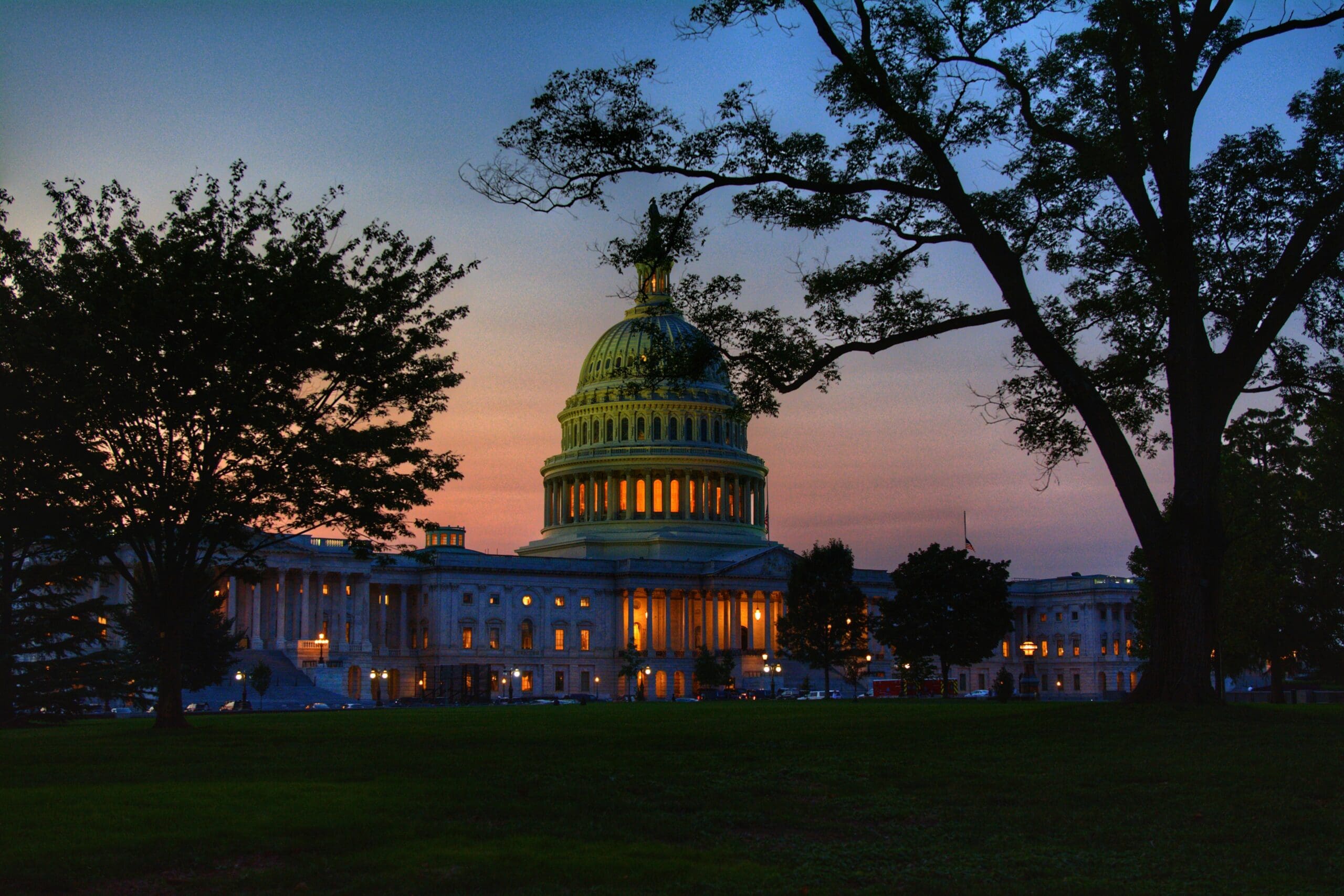
![]() (Under Secretary of State Paula Dobriansky will lead the U.S. delegation to the UN climate change conference next month in Bali. White House Environment Czar James Connoughton will also be there for the high-level section, while chief climate obstructionist Harlan Watson will run the day-to-day negotiations) Next month's conference on climate change in Bali will be the 13th Conference of the Parties (COP) to the UN Framework Convention on Climate Change (which includes the U.S.) and the third Meeting of the Parties (MOP) to the Kyoto Protocol (which excludes the U.S.). Over the past few years, negotiations have moved at a frighteningly slow pace. I remember at the 11th COP in Montreal, it was considered a great success that countries agreed to establish an "open-ended working group" to discuss the next phase of commitments under the Kyoto Protocol. These negotiations may be tedious, but they do forge progress over time. While the Bali conference is a crucial moment towards a climate agreement that can take effect after 2012 (when the first commitment period of the Kyoto Protocol expires), no one should expect anything final to be hammered out next month. With Australia now fully on board with global climate change efforts and even discussing immediate Kyoto Protocol ratification, the U.S. is more or less alone among industrialized countries in opposing internationally binding emissions limits - though it will, as usual, get some help from Saudi Arabia and other oil-producing states. Since President Bush took office, there has been some minor evolution in his administration's rhetoric but almost no change in policy (the one notable positive change is its interest in helping communities adapt to the effects of climate change, but it's unclear how exactly the administration intends to move forward on that front). The Bush administration could go one of two ways in the upcoming climate conference. The U.S. could continue its campaign of "hard obstruction" of the past seven years. This course entails preventing the creation of new binding rules on climate change. In other words, in addition to not participating in global efforts, the U.S. could attempt to block other countries from establishing new mechanisms with teeth. The stated rationale for this is that the U.S. opposes a "one size fits all" approach and believes no country should have to choose between economic development and environmental protection. More likely, the U.S. doesn't want any other agreement to be created that it will be forced to reject. This has been official U.S. policy since the beginning of the Bush administration and it has infuriated friends and foes alike. Alternatively, the U.S. could try a "soft obstruction." It could state its reservations about international climate agreements but not protest their adoption by others. This would entail no formal turnaround by the Bush administration, but it would leave the door open for the next administration to participate fully in international efforts. From a long-term perspective, ignoring the Bush administration and creating a more durable, ambitious climate framework would probably be the most constructive path for the international community to take. Both of these approaches are obstructionist. Neither are good. Ideally, President Bush would have a dramatic turnaround and take to international climate agreements with Schwarzenegger-like vigor, but I'm not holding my breath. I'll settle for some soft obstruction and a new administration that understands the importance of global warming and doing our share to solve global problems. Scott Paul Note: A shout out is due to the members of the SustainUS delegation, who are headed to Bali to represent the concerns of U.S. youth to other delegates. Read dispatches from youth delegates at the COP here and here. If you are a young person, send your message to the delegates here.
11/27/07 06:54:43 pm •
Leave a comment • Trackback (0)
•
Categories: Energy, Diplomacy, International Institutions, General, United Nations, U.S. Foreign Policy
11/16/07Students protest CIA torture
Posted by Tom Moran
On Wednesday a group of students from the University of California Santa Barbara sabotaged a CIA recruiting presentation to protest covert U.S. torture and rendition policies and waterboarding in particular. Dressed as clowns, one of the group was placed on a table in front of the recruiter, who subsequently made a quick exit, their hands bound and water poured over their head to simulate waterboarding, the controversial mock-drowning strategy practiced by the CIA. "I was aware of it on a purely intellectual level but actually seeing it in person is a whole different thing. It’s one thing to know its torture and say that’s really bad, that really sucks. But to see somebody screaming and coughing and choking in front of you, it’s a very emotional experience."
By Tom Moran
11/16/07 04:54:50 pm •
1 comment • Trackback (0)
•
Categories: International Law & Justice, Torture, Interrogation & Rendition
11/15/07What Would Reagan Do?
Posted by Scott Paul
Conservatives are asking What Would Reagan Do on the Law of the Sea. Personally, I don't care all that much and would defer to the unanimous judgment of today's national security, business, and environmental leadership. But some conservatives do care. The answer to WWRD? Ratify. It's not even close. All living Chiefs of Naval Operations, all living State Department Legal Advisors, and both of Reagan's Secretaries of State say that his objections were solely related to deep seabed mining. They agree that Reagan would have approved of the most recent version of the treaty. All that notwithstanding, opponents have maintained that Reagan was fundamentally opposed to the Law of the Sea. They cite an entry in The Reagan Diaries from June 29, 1982: "Decided in [National Security Council] meeting - will not sign 'Law of the Sea' treaty even without seabed mining provisions."Most members of the Reagan administration interpret this entry to mean that it would be unfeasible to sign the treaty without the seabed mining provisions. In other words, Reagan decided that it was an all or none proposition. So, WWRD? On January 29, 1982, Reagan said: "Last March, I announced that my administration would undertake a thorough review of the current draft and the degree to which it met United States interests in the navigation, overflight, fisheries, environmental, deep seabed mining, and other areas covered by that convention. Our review has concluded that while most provisions of the draft convention are acceptable and consistent with the United States interests, some major elements of the deep seabed mining regime are not acceptable. I am announcing today that the United States will return to those negotiations and work with other countries to achieve an acceptable treaty."After listing the problems with the seabed mining provisions, Reagan continued: "The United States remains committed to the multilateral treaty process for reaching agreement on Law of the Sea. If working together at the Conference we can find ways to fulfill these key objectives, my administration will support ratification."WWRD? I don't care all that much. But, for those of you that do, is there really any doubt? Scott Paul Note: If you haven't seen it yet, Kate Sheppard has a great piece on Law of the Sea for the American Prospect. In the National Journal, Corine Hegland has an entire piece on the Reagan dispute that gets to the heart of the matter.
11/15/07 11:48:34 pm •
Leave a comment • Trackback (0)
•
Categories: International Institutions, General, Treaties, U.S. Foreign Policy
The Human Face of Climate Change
Posted by Scott Paul
![]() (Huene Island, pictured above, part of the Carteret Island chain, has literally been cut in two by rising sea levels) Papua New Guinea's Mission to the United Nations recently announced that it would evacuate the Carteret Islands, a horseshoe-shaped group of islands in the South Pacific. 2,000 Carteret Islanders slanders will receive funding to resettle on Bougainville Island, which is a four-hour boat ride away. The Carteret Islanders are not the world's first climate refugees, but since they have all been displaced together, they may become some of the best known. Meanwhile, people like Jim Inhofe insist that we sit on our hands. Below is the press release from the Papua New Guinea Mission to the United Nations (I'd link to it, but as you can see, the PNG Mission web site isn't quite up and running). PNG TO RESETTLE CARTERET ISLANDERS AS SEA LEVEL RISES PORT MORESBY, Papua New Guinea (The National, Oct. 17) - The Carteret Islands are almost invisible on a map of the South Pacific, but the horseshoe scattering of atolls in eastern-most Papua New Guinea is on the front line of climate change, as rising sea levels and storm surges eat away at their existence. For 20 years, the 2,000 islanders living there have fought a losing battle against the ocean, building sea walls and trying to plant mangroves. Each year, the waves surge in higher, destroying vegetable gardens, washing away homes and contaminating fresh water supplies. Recently, Prime Minister Sir Michael Somare appropriated PGK4.1 million [US$1.4 million] to resettle PNG villagers affected by global warming. The funding was part of a PGK1.6 billion [US$569 million] supplementary budget handed down by Treasury and Finance Minister Patrick Pruaitch. Out of the PGK4.1 million funding, PGK2 million [US$712,000] will go to the Bougainville Autonomous Region's Carteret Islanders. The local Bougainville government has an ongoing resettlement program which it hopes to complete by the end of the year. Rising sea levels will not only displace human populations. Coral reefs are expected to be affected by changes in ocean levels and sea surface temperatures. Scott Paul
11/15/07 11:47:23 pm •
Leave a comment • Trackback (0)
•
Categories: International Institutions, General
The Weekly Gaff and John Warner's Wisdom
Posted by Scott Paul
This is the second "Weekly Gaff," a feature inspired by Frank Gaffney, who has engineered a campaign of misinformation in the pages of the Washington Times. In last week's edition, we touched on treaty arch-enemy Senator Jim Inhofe's attempt to "retrofit unilateralism" and his concession that the arguments against the treaty aren't actually true. This week, Gaffney only mentions the Law of the Sea as one of many instances of President Bush's selling out conservatives. He says the Law of the Sea would subject the U.S. to international tribunals, which is demonstrably false. I've explained that briefly here. It is explained further in this Duke University policy brief. Senator Inhofe even conceded as much here. Meanwhile, the Bush administration and Senator John Warner, who was the Secretary of Defense's representative for the framework talks on the Law of the Sea, both posted statements yesterday commending the Senate Foreign Relations Committee for favorably voting out the Law of the Sea. Warner is a thoughtful man whom the Senate will miss. While some senators are willing to sacrifice national security and prosperity to pander to the John Bolton and Frank Gaffney types, others, like Senator Warner, are sticking to their principles. His statement: As you may know, I was the representative for the Secretary of Defense to the framework talks for United Nations Convention on the Law of the Sea (UNCLOS) in Geneva from 1969 to 1973. The main principles behind UNCLOS have been supported by every U.S. president since Ronald Reagan. Foremost among these principles is a fulfillment of U.S. interests in having a comprehensive legal framework relating to competing uses of the world's oceans. However, there were several provisions of the original agreement that were unacceptable to the United States, including provisions relating to deep seabed mining that were inconsistent with free market principles. These concerns were addressed to the satisfaction of the United States in the formulation of a 1994 Agreement relating to the Implementation of Part XI of the United Nations Convention. As a result, President Clinton transmitted both the Convention and the 1994 Agreement to Congress for advice and consent in 1994, but the Senate did not act on the Treaty at that time. Both agreements are in effect based on ratification by other signatory countries. But without U.S. ratification, the United States is unable to participate in implementation of the Convention.Scott Paul
11/15/07 11:47:03 pm •
Leave a comment • Trackback (0)
•
Categories: International Institutions, United Nations
More Flop than Flip: McCain's Accidental Pander
Posted by Scott Paul
About a month ago, far-right activists pressed hard for Republican candidates for President to take a position on the Law of the Sea. Most of them did. Senator John McCain was asked about it on a bloggers' conference call. The answer he gave satisfied the bloggers at the time, but if it really does mean he opposes the convention, it is at odds with over a decade of his well-documented leadership in support of U.S. ratification. No matter what his position actually is, the Straight Talk Express has been seriously derailed. Here's what McCain said on the conference call: I'd like to make some changes to it. I think that we need a Law of the Sea. I think it's important, but I have not frankly looked too carefully at the latest situation as it is, but it would be nice if we had some of the provisions in it. But I do worry a lot about American sovereignty aspects of it, so I would probably vote against it in its present form.McCain says he'd "probably vote against" the treaty, but he leaves himself an opening wide enough to drive a truck through. My guess is that McCain favors U.S. accession to the convention but wanted to play to the crowd and simply slipped and went too far (hence the "more flip than flop" title of this post). To support that view, here's some e-mail dated yesterday that McCain's office sent out about his position on the treaty: November 14, 2007Again, McCain leaves himself room here, but there's no doubt this is a supportive letter. More important, though, is McCain's efforts to get the treaty ratified over the past ten years. In 1998, McCain joined Republican Senators Susan Collins, John Chafee, and Frank Murkowski on a letter to the Senate Foreign Relations Committee urging immediate consideration and approval of the Law of the Sea. A few years ago, when the Committee first considered the treaty under the direction of Chairman Richard Lugar, McCain was scheduled to testify in support of the treaty but backed out due to scheduling conflicts. Since the letter to SFRC isn't publicly available and McCain never testified before the Committee, that means McCain's off the hook, rightt? Wrong. McCain submitted written testimony, which was included in the Committee's report on the treaty to the full Senate. McCain can't run from this: October 14, 2003 - Senate Foreign Relations Committee Hearing Again, based on the written record and the mail he's sending
constituents, my guess is that McCain wanted to win over the
conservative blogger crowd and simply went a little overboard. More
flop than flip. But we will see.
11/15/07 11:46:43 pm •
Leave a comment • Trackback (0)
•
Categories: International Institutions, United Nations, Treaties
How Do Americans View the World?
Posted by Scott Paul
This week, I attended two fascinating briefings on how the American public is thinking about the world. The first was a press conference to unveil research sponsored by the UN Foundation and the second was a small working group organized by the Stanley Foundation. The major takeaway from both sessions? We're living in a post-Iraq world and looking for a post-Iraq foreign policy as of right now. The post-9/11 era that dominated U.S. opinion and decision-making for the early part of this decade is effectively over, except in the minds of the approximately 25 percent of Americans that represent the Republican base. This isn't a momentary change, either -- it's a more fundamental change in the way that Americans view the world. Americans want something different than what we've got now. People want the U.S. to work with other countries, forge global partnerships, and restore our standing in the world. "Go it alone," is a non-starter. Interestingly, Americans view the decline of our reputation as a major problem. The classic conservative mantra "foreign policy isn't a popularity contest" isn't really politically viable anymore. One disconcerting finding, though, is that there appears to be a new wave of isolationism, represented by folks like Lou Dobbs and Ron Paul. Both would probably object to "isolationist" as an appropriate label for their school of thought, but they do believe fundamentally that neither the U.S. nor the world is well-served when the U.S. is involved in global problem-solving. This group of citizens -- who are primarily young Kerry voters -- would prefer that the U.S. government focus its attention on domestic problems and worry less about global issues. In part, that's because this group can't conceive of a different form of global engagement other than the Bush foreign policy of pre-emptive military strikes and poorly executed occupation. Barring a catastrophic, public psyche-shaking event, the American electorate will not accept a candidate who proposes to continue President Bush's arrogant approach and emphasis on unilateral use of the military to solve problems. To satisfy many of these "new isolationists," the next President will have to present a compelling vision of positive American influence based on diplomacy, working with international institutions, and genuine global partnership. That will be hard -- but not impossible. Scott Paul
11/15/07 05:52:31 pm •
2 comments • Trackback (0)
•
Categories: 08 Elections, General, Foreign Policy, U.S. Foreign Policy
11/13/07The Weekly Gaff: Washington Times Finally Confirms Insanity
Posted by Scott Paul
While Frank Gaffney wrote his first column without any reference to the Law of the Sea in nearly half a year, he probably helped pen the lead editorial on the page opposite his column in the Washington Times. The Times makes two main claims against the treaty, neither of which has any legs. First, the Times says we should reject the Law of the Sea because Reagan did and argues that Reagan would still reject it. As I've written here, there's little doubt that President Reagan would enthusiastically embrace the Law of the Sea in its current form. After all -- he said so himself. Then, the Times says the treaty would interfere with John Bolton's Proliferation Security Initiative. None other than John Bolton has put that myth to rest. Regarding Iraq, the Washington Times has argued strenuously that we should blindly follow the advice of Gen. Petraeus and Amb. Crocker, despite serious disagreements among civilian and military leaders. Those same leaders unanimously favor U.S. accession to the Law of the Sea. The Times would do well to heed its own words. Scott Paul
11/13/07 07:00:18 pm •
Leave a comment • Trackback (0)
•
Categories: International Institutions, General, Treaties
11/12/07A Fair Bill for the World's Farmers
Posted by Howard Salter
More than 70 years ago, Congress created the Farm Bill. It was designed to give American farmers a safety net when the market bottomed out. Fast forward seven decades and this legislation hurts farmers in rural America and around the globe. Today's Farm Bill gives out large government checks — commodity subsidies — to producers of a small number of crops. Most American farmers get little or nothing. Meanwhile, people in rural communities are suffering. They lack medical services, good schools and their land suffers environmental degradation. According to Bread for the World, a leading anti-hunger organization, the times they are a changing from the birth of the Farm Bill:
In fact, the Farm Bill not only harms people in the U.S., it especially burdens farmers in developing countries. The current state of U.S. farm policy encourages domestic overproduction of crops such as cotton and rice. The commodity payment to large – mostly corporate-owned farms - creates a glut that drives down world prices, undermining the livelihoods of millions of small farmers around the world. Cotton farmers in countries like Senegal, Burkina Faso, Chad and Mali have much lower production costs than those in the U.S. However, these African farmers cannot survive when world prices are so low, thanks in part to U.S. cotton commodity payments. For these African nations, where 10 million people who earn roughly $1 to $2 a day depend directly on cotton, U.S. farm programs shatter hopes of reducing hunger and poverty. Rekha Basu, of the Des Moines Register, writes:
As Rekha notes, there has to be a better way, don’t you think?
11/12/07 01:17:28 pm •
Leave a comment • Trackback (0)
•
Categories: Energy, Foreign Policy, U.S. Foreign Policy
American and Russian Publics Favor Steps to Eliminate Nuclear Stockpiles
Posted by Natasha Khianey
Last Friday, World Public Opinion.org released a poll exploring American and Russian opinion on nuclear weapons policy. Results reveal that the public strongly favors steps towards the elimination of nuclear weapons; 73 percent of Americans and 63 percent of Russians support the elimination of nuclear weapons under the auspices of an effective international system. What’s more is that both publics (79 percent of Americans and 66 percent of Russians) want their governments to do more to achieve disarmament. Another key finding is the overwhelming support for the ratification of the Comprehensive Test Ban Treaty; 80 percent of Americans and Russians support ratification of the CTBT (And for another example of the foreign policy gap , 56 percent of Americans believe that the U.S. participates in the treaty) . Take a look at many more important findings in the full report here (PDF) . -Natasha
11/12/07 12:18:31 pm •
Leave a comment • Trackback (0)
•
Categories: Nuclear, Disarmament, Foreign Policy, Proliferation
11/09/07A Tale of Two Reviews
Posted by Scott Paul
I have no interest in paying $27 for John Bolton's Surrender is Not an Option, even if he were willing to sign it from me. But I have been enjoying recent reviews of the book. Mark Goldberg's take, written for the American Prospect, is especially sharp. As a reporter for the Prospect and my fellow co-contributor to the now fortunately defunct Bolton Watch blog, Mark was at the UN following Bolton's diplomatic mishaps from recess appointment to resignation. His review provides important context for the events described in the book. Granted, anything Mark, Steve Clemons , my colleagues at Citizens for Global Solutions or I have to say about John Bolton could be viewed as biased. After all, we actively worked to block his nomination. But if that's true, no one should waste even one second reading "The Courage of Conviction," a review of Surrender in the New York Sun. It was written by none other than Michael Ledeen, Bolton's AEI colleague, co-advisor to JINSA, and Iran war cheerleader extraordinaire. Any truth to the rumor that Messrs. Ledeen and Bolton co-wrote the review at the AEI company picnic? Of course not. I just started that rumor. But for those readers expecting an impartial review, Ledeen is way too close to Bolton to deliver. Scott Paul
11/09/07 01:33:07 pm •
Leave a comment • Trackback (0)
•
Categories: International Institutions, General, United Nations, U.S. Foreign Policy
11/07/07Bipartisan Partisanship
Posted by Don Kraus
Yesterday I took my annual pilgrimage from the global to the local and spent the day as poll watcher in Virginia. One of my duties was to hand out sample Democratic ballots to voters before they went inside to vote. The polling station had two parking lots on either side of the entrance. By law we needed to be at least 40 feet from the door. On a busy year there would have been at least two workers per party there, but this was an off year election so there was only one from each party. My Republican colleague Gary and I spent a good deal of energy scurrying from one side to the other to greet voters as they trickled in. He was an older fellow and at one time had been a chief of staff for a Senator on the Hill.
11/07/07 07:26:35 pm •
Leave a comment • Trackback (0)
•
Categories: 08 Elections, General
11/06/07Retired JAGs: 'Waterboarding is Torture'
Posted by Howard Salter
Just in case our recent array of posts and our organization's stand against Attorney General nominee Judge Mukasey are not convincing enough, here is a letter sent to the Chair of the Senate Judiciary Committee from four retired Judge Advocates General on the issue. November 2, 2007 The Honorable Patrick J. Leahy, Chairman United States Senate Washington, DC 20510 Dear Chairman Leahy, In the course of the Senate Judiciary Committee’s consideration of President Bush’s nominee for the post of Attorney General, there has been much discussion, but little clarity, about the legality of “waterboarding” under United States and international law. We write because this issue above all demands clarity: Waterboarding is inhumane, it is torture, and it is illegal. In 2006 the Senate Judiciary Committee held hearings on the authority to prosecute terrorists under the war crimes provisions of Title 18 of the U.S. Code. In connection with those hearings the sitting Judge Advocates General of the military services were asked to submit written responses to a series of questions regarding “the use of a wet towel and dripping water to induce the misperception of drowning (i.e., waterboarding) . . .” Major General Scott Black, U.S. Army Judge Advocate General, Major General Jack Rives, U.S. Air Force Judge Advocate General, Rear Admiral Bruce MacDonald, U.S. Navy Judge Advocate General, and Brigadier Gen. Kevin Sandkuhler, Staff Judge Advocate to the Commandant of the U.S. Marine Corps, unanimously and unambiguously agreed that such conduct is inhumane and illegal and would constitute a violation of international law, to include Common Article 3 of the 1949 Geneva Conventions. We agree with our active duty colleagues. This is a critically important issue - but it is not, and never has been, a complex issue, and even to suggest otherwise does a terrible disservice to this nation. All U.S. Government agencies and personnel, and not just America’s military forces, must abide by both the spirit and letter of the controlling provisions of international law. Cruelty and torture - no less than wanton killing - is neither justified nor legal in any circumstance. It is essential to be clear, specific and unambiguous about this fact - as in fact we have been throughout America’s history, at least until the last few years. Abu Ghraib and other notorious examples of detainee abuse have been the product, at least in part, of a self-serving and destructive disregard for the well- established legal principles applicable to this issue. This must end. The Rule of Law is fundamental to our existence as a civilized nation. The Rule of Law is not a goal which we merely aspire to achieve; it is the floor below which we must not sink. For the Rule of Law to function effectively, however, it must provide actual rules that can be followed. In this instance, the relevant rule - the law - has long been clear: Waterboarding detainees amounts to illegal torture in all circumstances. To suggest otherwise - or even to give credence to such a suggestion - represents both an affront to the law and to the core values of our nation. We respectfully urge you to consider these principles in connection with the nomination of Judge Mukasey. Sincerely, Rear Admiral Donald J. Guter, United States Navy (Ret.) Judge Advocate General of the Navy, 2000-02 Rear Admiral John D. Hutson, United States Navy (Ret.) Judge Advocate General of the Navy, 1997-2000 Major General John L. Fugh, United States Army (Ret.) Judge Advocate General of the Army, 1991-93 Brigadier General David M. Brahms, United States Marine Corps (Ret.) Staff Judge Advocate to the Commandant, 1985-88
11/06/07 10:39:55 am •
2 comments • Trackback (0)
•
Categories: International Law & Justice, Diplomacy, Treaties, Foreign Policy, Torture, Interrogation & Rendition
Daniel Levin: History Take Note
Posted by Howard Salter
Years from now, hopefully not too far off in the future, historians will note the heroism displayed by Daniel Levin. Who is Daniel Levin? He used to be the Acting Assistant Attorney General, who according to ABC News was:
Not surprisingly, Levin was overruled by the Bush White House and eventually let go when Alberto Gonzalez became Bush’s Attorney General. As Raj noted below with the amazing commentary by Keith Olbermann on MSNBC’s “Countdown” last night, Levin deserved better…and so do we. To read Levin's memo from 2004, click here. To view ABC's report, and why the Bush administration let Levin go, check out this.
11/06/07 10:05:17 am •
Leave a comment • Trackback (0)
•
Categories: International Law & Justice, Diplomacy, Treaties, U.S. Foreign Policy, Torture, Interrogation & Rendition
Torture and the White House
Posted by Raj Purohit
11/06/07 09:45:07 am •
Leave a comment • Trackback (0)
•
Categories: International Law & Justice
11/02/07The Carbon Tax and a Bloomberg Foreign Policy
Posted by Scott Paul
It's amazing that what passes for political courage in national politics seems commonsense at the municipal level. New York Mayor Mike Bloomberg told the U.S. Conference of Mayors: Last spring, as part of our PlaNYC initiative, we proposed a system of congestion pricing based on successful programs in London, Stockholm and Singapore. The plan would charge drivers $8 to enter Manhattan on weekdays from 6 a.m. to 6 p.m., which would help us reduce the congestion that is choking our economy, the pollution that has helped produce asthma rates that are twice the national average, and the carbon dioxide that is fueling global warming.Bloomberg goes on to suggest that in order to prevent the costs of climate change from spiraling out of control, we should be prepared to pay a smaller carbon tax now. Right on. Additionally, Bloomberg opens a window into his thinking on international affairs. He hasn't had too many opportunities to comment on his big-picture vision of U.S. foreign policy, so this paragraph is especially interesting: It's time for America to re-establish its leadership on all issues of international importance, including climate change. Because if we are going to remain the world's moral compass -- a role that we played throughout the 20th century, not always perfectly, but pretty darn well -- we need to regain our footing on the world stage. That means ending the "go-it-alone" approach to foreign affairs that has never served America well. It didn't work in the 1920s, when we tried to isolate ourself from the world, and it hasn't work in recent years, when we've tried to stand above it, pretending that vital international treaties can simply be ignored. The fight against global warming is a test of America's leadership -- and not just on the environment.Connecting the dots between climate change and foreign policy? Check. Working with allies? Check. Restoring moral credibility? Viewing multilateral treaties as a foundation for a stable international environment and prosperous United States? Check and check. Bloomberg may not have extensive foreign policy experience, but he is demonstrating excellent instincts here. Hopefully -- whether or not Bloomberg becomes a candidate for higher office -- there will be more where this came from. Scott Paul
11/02/07 04:23:05 pm •
Leave a comment • Trackback (0)
•
Categories: 08 Elections, Energy, International Law & Justice, Diplomacy, General, Treaties, Foreign Policy, U.S. Foreign Policy
Mukasey: 'the last, best hope'...oh my!
Posted by Howard Salter
As Raj Purohit and Scott Paul have noted, we are strongly opposed to Judge Mukasey’s nomination to be our country’s next Attorney General. Surprisingly, this decision became quite easy for Citizens for Global Solutions. After all, for the next Attorney General to be unable to say if torture is torture, how can this person be trusted to speak truth to power, that is the current White House? After Judge Mukasey’s first day of testimony before the Senate Judiciary Committee, his nomination appeared more than safe. He was honest and straight forward, saying that “Torture is unlawful….” Then, one day later, it became obvious that somebody got to him. Why? Because he then testified that he could not say if waterboarding
is torture. | ||||||||||